



Accutane is extraordinarily effective for severe acne. It is also one of the more complicated medications when it comes to hair — the side effect profile is real, the mechanism is not fully understood, and risk varies significantly by dose.
How Often Does Accutane Cause Hair Loss?
Hair loss is listed in Accutane's prescribing information, but frequency estimates have varied across studies. A 2023 systematic review, opens in a new tab found hair loss rates varied by dosage: approximately 3.2% of users at lower doses and 5.7% at higher cumulative doses reported hair loss during or after treatment. Most users complete treatment without significant hair changes.
What Type of Hair Loss Does Accutane Cause?
The most common pattern is diffuse telogen effluvium: shedding across the entire scalp weeks to months into treatment rather than immediately. A smaller number of users at higher cumulative doses have reported more persistent changes — finer or slower-growing hair even after completing the course. These data are limited by small sample sizes.
Why Isotretinoin Affects Hair
Isotretinoin is a retinoid — a derivative of vitamin A — that dramatically reduces sebaceous gland activity. Sebaceous glands are closely associated with hair follicles, and this reduction appears to affect the follicle's local environment. Two factors appear relevant:
- Retinoid signaling is involved in the regulation of the hair cycle — altering it at therapeutic doses may shift cycle timing
- Dose dependency: users on higher daily or higher cumulative doses report higher rates of hair loss, suggesting a threshold-dependent mechanism
What to Do If You're on Accutane and Losing Hair
Do not stop Accutane without talking to your dermatologist first. Stopping early may mean your acne returns and you need to restart, extending your total exposure.
Tell your dermatologist. They may consider whether a dose reduction is appropriate
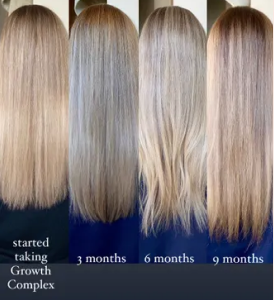
Support your follicles nutritionally. Zinc, selenium, and biotin all support follicle function during treatment. Women's Growth Complex addresses these mechanisms
Be honest about the timeline. Shedding starting two to four months after beginning Accutane is likely related
When Hair Comes Back
For the most common form — telogen effluvium — hair typically begins to recover within three to six months after completing or reducing Accutane. Full density recovery takes nine to twelve months in most cases. Users with a strong history of androgenetic alopecia may find Accutane accelerated thinning that was already in progress.
What the Evidence Tells Us
Accutane-related hair loss is real and dose-dependent. It affects a meaningful minority of users, presents as telogen effluvium in most cases, and resolves after treatment ends. Stay in close communication with your dermatologist, support your follicles nutritionally, and give your hair time to recover. For more on the hair cycle disruption mechanism, see the telogen effluvium post.


