


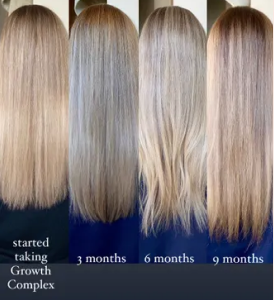

Argan oil has been used in hair care for centuries in Morocco, and it's earned its reputation — though not always for the reasons cited in marketing copy. If you've seen claims that argan oil "regrows hair" or "reverses thinning," that's an overstatement of the evidence. But argan oil is genuinely useful for hair health, and understanding what it actually does explains why it's worth using.
The Nourish + Repair Serum uses 100% organic cold-pressed argan oil as its primary ingredient — chosen for specific reasons that go beyond its conditioning properties. Here's what the research actually shows.
What Argan Oil Is
Argan oil is pressed from the kernels of the Argania spinosa tree, native to Morocco. The cold-pressed, unrefined form — often labeled as "cosmetic grade" — retains the full profile of active compounds: oleic acid, linoleic acid, tocopherols (vitamin E forms), polyphenols, and sterols.
It's predominantly oleic and linoleic acid (omega-9 and omega-6 fatty acids), with the specific ratio varying by source. The tocopherol content — particularly gamma-tocopherol — is high relative to other plant oils, which is directly relevant to its biological activity.
What Argan Oil Actually Does for Hair
Reduces oxidative stress at the scalp. The tocopherols in argan oil are potent antioxidants. Oxidative stress — caused by UV exposure, pollution, chemical processing, and normal cellular metabolism — damages hair follicles and contributes to premature shedding. Applying antioxidant-rich oil to the scalp may reduce this follicle-level oxidative damage over time. This is distinct from "regrowing hair" — it's preserving the function of follicles that are still active.
Repairs and strengthens the hair shaft. The fatty acid profile of argan oil penetrates the hair cortex (the inner structure of the strand), reducing protein loss and improving tensile strength. Research published in the Journal of Cosmetic Science, opens in a new tab (Rele & Mohile, 2003) demonstrated that mineral oil and plant-based oils including argan reduce protein loss and improve structural integrity of hair. This is the most solidly evidenced benefit.
Seals moisture into the cortex. Linoleic acid in particular improves the lipid layer of the cuticle, reducing moisture loss from the strand. This reduces frizz, improves manageability, and protects against dryness-related breakage — which can contribute to apparent thinning by reducing the hair count above a certain length.
Supports scalp skin health. The oleic and linoleic acid content has anti-inflammatory properties and supports the scalp's natural barrier function. A healthier scalp environment is better for the follicles housed within it.
What Argan Oil Cannot Do
Directly stimulate hair follicles to grow. There is no controlled research demonstrating that topical argan oil triggers dormant follicles or extends the anagen phase. It's not a growth stimulant in the way that, say, minoxidil is.
Reverse androgenic alopecia. Hair loss driven by DHT and follicular miniaturization requires interventions that act on androgen signaling or follicle biology — not surface conditioning.
Replace internal nutritional support. Argan oil treats the hair you have and the scalp surface. The biology of the hair cycle — whether follicles are healthy and active — is primarily determined internally by hormones, nutrition, and genetics. Topical application complements but doesn't substitute for internal support.
The Right Way to Use Argan Oil for Hair
As a pre-shampoo treatment: Apply to dry hair and scalp 30–60 minutes before washing. This allows the fatty acids to penetrate the cortex before the wash strips surface oils. It's particularly effective for reducing protein loss during washing.
As a leave-in finishing treatment: A small amount applied to damp hair after washing and before drying seals the cuticle, reduces frizz, and protects against heat styling damage. The key is using the right amount — argan oil is concentrated and a little goes a long way.
As a scalp treatment: For dry scalp or scalp massage sessions, argan oil applied directly to the scalp provides the antioxidant and anti-inflammatory benefits. Combine with scalp massage for improved circulation alongside the topical benefits.
For more on the application approach, the argan oil hair mask guide covers techniques in detail.
Cold-Pressed vs. Refined: Why It Matters
The processing method significantly affects the quality of argan oil. Cold-pressed, unrefined oil retains the full tocopherol and polyphenol content — the compounds responsible for most of the beneficial biological activity. Refined or "deodorized" argan oil undergoes heat and chemical processing that strips much of this content, leaving primarily the fatty acid profile.
For any meaningful biological benefit — as opposed to basic conditioning — look for cold-pressed, unrefined, ideally organic argan oil. The label should read "100% pure argan oil" with no added ingredients.
The Inside-Outside Principle
Argan oil is genuinely effective at what it does — reducing oxidative damage, strengthening the hair shaft, and supporting scalp health. But hair density and growth are primarily determined by what's happening at the follicle level, which is influenced by nutrition, hormones, and genetics.
The most effective approach combines topical care (argan oil, scalp serums) with internal nutritional support. The relationship between nutrition and hair health explains why the two approaches work better together than either does alone.
Using Argan Oil Effectively: A Quick Reference
Argan oil is a legitimate, well-evidenced ingredient for hair care — particularly for reducing breakage, improving hair shaft integrity, and supporting scalp health. It's not a direct hair growth stimulant, and claims that it "regrows hair" are not what the evidence supports. Use it consistently, in the right form (cold-pressed, unrefined), and as part of a broader approach to hair health that includes internal nutritional support. As a tool in the complete picture, it genuinely earns its place.
Frequently Asked Questions
Q: Does argan oil help with hair loss or thinning?
Argan oil helps with hair loss indirectly, primarily by reducing breakage — meaning less hair is lost to mechanical damage. It doesn't stimulate follicles or directly address the hormonal or nutritional root causes of thinning. For people whose apparent thinning is partly due to breakage (common with color-treated, heat-damaged, or dry hair), argan oil can produce noticeable improvements. For genuine follicle-level thinning, it supports but doesn't replace internal treatment.
Q: How much argan oil should I use on my hair?
A little goes a long way — argan oil is concentrated. For a leave-in treatment on medium-length hair, start with 2–3 drops applied to damp hair, focusing on mid-lengths and ends. For a pre-shampoo scalp treatment, use 5–8 drops massaged into the scalp and hair, left on for 30–60 minutes. Too much creates heaviness and greasiness; the goal is absorption, not coating.
Q: Can argan oil be applied directly to the scalp?
Yes — for dry scalp, scalp massage, or as a pre-shampoo treatment. Argan oil is non-comedogenic (unlikely to clog pores) and has documented anti-inflammatory properties appropriate for scalp application. Apply a small amount to the scalp, massage in for 2–3 minutes to support circulation, and rinse out after 30–60 minutes or leave overnight. It's less effective on the scalp than dedicated scalp serums with active growth-supporting ingredients.
Q: What's the difference between argan oil for hair and argan oil for skin?
Chemically, pure argan oil is the same product regardless of labeling. The differences are usually in grade and processing — "cosmetic grade" argan oil is typically deodorized and refined for skin application and may have lower active compound content than food-grade or cold-pressed varieties. For hair use, look specifically for cold-pressed, unrefined argan oil (also called "virgin argan oil") which retains the full tocopherol and polyphenol content.


