



If you've spent any time searching for hair growth vitamins, you know how quickly the options multiply. Biotin here, keratin there, a proprietary blend with seventeen ingredients you can't verify. It's a lot. So let's make it straightforward.
This post covers the vitamins and nutrients that have meaningful evidence behind them, what to look for on a label, and — equally important — what to skip.
The short answer: no single vitamin regrows hair on its own. Hair loss in women is almost always multifactorial — a combination of nutritional gaps, hormonal shifts, stress, and genetics. The HAIRLOVE Growth Complex is formulated around this reality, delivering several key nutrients together in a formula built around Cynatine® HNS, a clinically studied ingredient that addresses hair loss at the follicle level.
Why Nutrition Affects Hair Growth
Hair follicles are among the most metabolically active structures in the body. They cycle through phases — anagen (growth), catagen (transition), telogen (rest, then shed) — and they need a consistent supply of protein, vitamins, and minerals to sustain the active growth phase. When that supply is disrupted, the anagen phase shortens, more hairs enter the resting phase early, and shedding increases.
This is why nutritional deficiencies — even mild ones that don't produce other symptoms — are so frequently linked to hair loss in women. Iron, zinc, vitamin D, biotin, and certain B vitamins are the most commonly implicated. Correcting them can produce visible results, though it takes time.
The Ingredients Worth Looking For
Biotin (Vitamin B7): Biotin is the most recognized ingredient in hair supplements. It plays a direct role in keratin production — the protein that forms the structure of each strand. A real biotin deficiency causes notable thinning. Look for doses in the 2,500–5,000 mcg range. Worth noting: biotin deficiency is relatively uncommon in adults eating varied diets, but the body's ability to absorb and use nutrients declines with age and under stress.
Cynatine® HNS: This is the ingredient that distinguishes a serious hair supplement from a glorified multivitamin. Cynatine HNS is a patented, solubilized form of keratin with published clinical research showing statistically significant reductions in hair shedding and improvements in hair strength in as few as 90 days. It works by delivering bioavailable keratin directly to follicles — supporting the growth phase in a way standard biotin can't replicate.
Zinc: Zinc deficiency is one of the most common underlying contributors to hair loss in women, particularly during periods of hormonal fluctuation — postpartum, perimenopause, or high-stress periods. Zinc supports the enzymes involved in hair tissue repair and helps regulate sebum production around follicles. Its relationship with hair health is worth understanding before you buy.
Vitamin C: Vitamin C does two things relevant to hair. It supports collagen production, which provides the structural scaffolding that keeps follicles anchored in the scalp. And it significantly enhances the absorption of non-heme iron — the form found in plant foods and many supplements. Given how frequently iron deficiency contributes to hair loss in women of reproductive age, this cofactor role is underappreciated.
BioPerine® (Black Pepper Extract): A clinically studied bioavailability enhancer. Research suggests it may increase nutrient absorption from co-administered supplements, meaning more of what you take actually reaches your follicles.
What the Research Shows
Several controlled trials have examined hair-specific nutritional supplements. A 2015 randomized, double-blind, placebo-controlled trial in women with self-perceived thinning hair (Ablon, Dermatology Research and Practice, 2015; PMC4738482) demonstrated that a marine protein supplement significantly reduced shedding and improved hair volume over 90 days. Studies specifically on Cynatine HNS have shown statistically significant improvements in hair strength and reductions in shedding over 90-day trials.
Most credible hair supplement research shows meaningful results at the 90–180 day mark. If a product promises visible changes in 30 days, that's not how hair biology works.
What to Skip
Proprietary blends with undisclosed doses. A label that says "500mg Proprietary Hair Blend" tells you nothing about whether the individual ingredients are present at therapeutic levels. Fully disclosed formulas are a baseline quality signal.
Megadose biotin in isolation. Biotin-only supplements remain popular, but evidence for efficacy in women who aren't actually deficient is limited. High-dose biotin also interferes with certain thyroid and cardiac lab tests — worth knowing before your next bloodwork appointment.
Formulas without a bioavailability mechanism. A supplement is only as good as what your body actually absorbs. Look for a formula that includes a bioavailability enhancer or uses highly bioavailable ingredient forms.
How Long Before You See Results
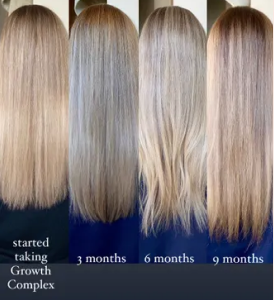
Hair grows roughly half an inch per month. Supplement effects take time to become visible because you're influencing the cycle, not the existing strand. Most people notice reduced shedding within 4–8 weeks. Visible changes in density and texture typically emerge around the 3-month mark. What to expect in the first three months is a useful guide if you're just starting.
The minimum meaningful trial window is 90 days. Evaluating earlier than that isn't a fair test.
What to Look For Before You Buy
The best hair growth vitamin for women delivers clinically studied, bioavailable ingredients at therapeutic doses — not just a high biotin count. Look for Cynatine HNS, zinc, vitamin C, and a bioavailability enhancer on the label. Give it the 90 days the biology requires. And if you're not sure where to start, that's exactly what the first three months on Growth Complex is designed to answer.
Frequently Asked Questions
Q: How long before hair growth vitamins start working?
Most people notice a reduction in shedding within 4–8 weeks. Visible changes in density and texture typically appear around the 3-month mark. The full effect builds over 6 months of consistent daily use — hair biology doesn't move faster than that regardless of the supplement.
Q: Can I take hair growth vitamins while pregnant or breastfeeding?
Always consult your OB-GYN before starting any new supplement during pregnancy or while breastfeeding. Many of the nutrients in hair supplements — biotin, zinc, vitamin C — are present in prenatal vitamins and are generally considered safe at supplement doses, but your provider should review your specific situation and current medications.
Q: Do hair growth vitamins actually work, or is it mostly marketing?
They work when they address a genuine deficiency or nutritional gap, at therapeutic doses, using bioavailable forms. The evidence base for Cynatine HNS is real — published clinical trials show statistically significant reductions in shedding. Biotin-only supplements show minimal effect in women who aren't deficient. The formula and dose transparency matter far more than marketing language.
Q: Is it safe to take hair vitamins every day long-term?
Yes, for most people. The key is using a formula with disclosed doses — so you know you're not exceeding safe limits for any ingredient. High-dose biotin (above 5mg) has a specific caveat: it can interfere with certain lab tests including thyroid panels, so let your doctor know if you're supplementing before bloodwork.


