



The Question Most People Get Wrong
The biotin vs collagen question is a common one, but it is framed wrong. People tend to think of it as an either/or choice. The better question is: what does each ingredient actually do for hair, at what dose and form does it work, and is there something better than both?
The short answer: biotin and collagen are both legitimate but limited hair ingredients. Both are frequently overstated in marketing. And there is a third option, Cynatine HNS (solubilized keratin), that addresses what both attempt to do with stronger direct evidence specifically for hair.
What Biotin Actually Does
Biotin (Vitamin B7) is essential for keratin production. Hair is primarily composed of keratin. Without adequate biotin, the body cannot efficiently produce the keratin that makes up hair. The critical nuance: biotin supplementation only produces hair benefits in people who are deficient. A 2016 study found that 38% of women presenting with hair loss had suboptimal biotin levels. For those women, correcting the deficiency improved hair quality. For women with adequate biotin status, supplementing additional biotin produces no measurable hair benefit.
What Collagen Actually Does
Collagen supplements for hair work through an indirect mechanism. Dietary collagen is digested into amino acids before it enters circulation. These amino acids, particularly proline and glycine, are building blocks the body uses to synthesize its own collagen. Collagen in the scalp's connective tissue provides the structural environment in which follicles are anchored, and it also provides amino acids that can be used in keratin synthesis.
The honest position: collagen provides useful amino acids that support the scalp environment. It is not without value. But it is indirect: the collagen you swallow is not the collagen that ends up in your hair.
Why Cynatine HNS Does This Better
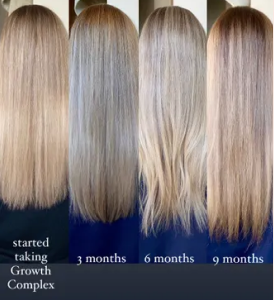
Cynatine HNS (solubilized keratin) is the active ingredient in HAIRLOVE Growth Complex, and it addresses the same goal as both biotin and collagen, but more directly. Keratin is what hair is actually made of. Providing the body with bioavailable keratin offers a more targeted supply chain. Standard keratin supplements resist digestion and are largely not absorbed. Cynatine uses a patented solubilization process that makes the keratin bioavailable. A randomized controlled trial (PubMed 23441059) found that Cynatine HNS produced significant improvements in hair shedding, strength, and brightness compared to placebo at 90 days.
The Practical Answer
Do you need biotin? If you are deficient, yes. Do you need collagen? It provides useful amino acids. Would Cynatine HNS serve you better for hair? The evidence is more direct and the mechanism more targeted. Growth Complex includes Cynatine HNS alongside a clinical dose of Biotin, plus Zinc, Selenium, and Vitamin C to address the nutritional deficiencies that amplify hair loss most commonly.


