



You had COVID, recovered, and then two or three months later you started losing far more hair than usual. You may have thought you were done with the worst of it. The hair loss feels like a second wave.
Post-COVID hair loss is one of the most widely reported long-COVID symptoms, and it follows a well-understood biological pattern. Here is what is happening, why the timing is what it is, and what to expect.
Why the Hair Loss Happens Months After Recovery
The hair you shed after COVID is not from the infection itself — it is from how your body responded to it. COVID-19 puts the body through a significant physiological stress: fever, systemic inflammation, immune activation, potential nutritional depletion, and psychological stress. Any severe physiological stressor can push a large number of follicles simultaneously into the resting phase.
The resting phase lasts approximately three months. That is why shedding peaks two to four months after the infection — not during it. This type of hair loss is called telogen effluvium.
How Common Is It?
An observational study of 39 post-COVID patients, opens in a new tab with PCR-confirmed diagnoses found that 92.3% of those experiencing post-COVID hair loss were female, and all had experienced excessive shedding within two to three months of their infection.
A larger study of 198 COVID patients found 48 developed hair loss after discharge. COVID was identified as a significant trigger of severe hair shedding, consistent with other febrile illnesses historically associated with telogen effluvium.
The Three Mechanisms at Work
- Physiological stress of the illness: fever, systemic inflammation, and immune activation all qualify as triggers for telogen effluvium. This is the primary mechanism
- Cytokine storm effects: COVID-19 elevates pro-inflammatory cytokines. Overabundance of interferons has been specifically linked to telogen effluvium by disrupting matrix cell function
- Nutritional depletion: illness and reduced appetite draw on nutrient stores. Iron, zinc, and vitamin D can become depleted during acute illness, independently triggering shedding
How Long-Lasting Is It?
In most cases, post-COVID telogen effluvium is temporary. Shedding typically peaks around month three to five after infection and then gradually reduces. Full density recovery takes six to twelve months in most cases. A minority experience prolonged shedding, particularly those with long COVID, ongoing nutritional deficiencies, or pre-existing androgenetic alopecia that COVID stress may have accelerated.
What Speeds Recovery
- Check ferritin specifically — not just hemoglobin. COVID can deplete ferritin without producing overt anemia
- Check vitamin D. COVID illness can worsen existing deficiency, and vitamin D is independently associated with hair cycle regulation
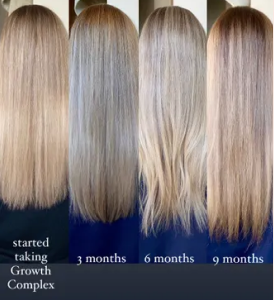
- Support follicles nutritionally. Zinc, selenium, and protein all support the follicle's return to growth phase. Women's Growth Complex provides these nutrients with Cynatine HNS for hair strength during recovery
- Manage stress. Post-illness psychological stress is a risk factor for prolonged telogen effluvium
What Recovery Actually Looks Like
Recovery from post-COVID telogen effluvium is gradual. Shedding reduces first — fewer hairs in the drain before density changes in the mirror. New growth appears as shorter, finer hairs near the scalp. Full density recovery takes nine to twelve months from when shedding began, which is normal for telogen effluvium from any cause.


