



DHEA doesn't come up in most conversations about hair loss, even though elevated DHEAS (the sulfate form of DHEA) is one of the most common hormonal findings in women with unexplained hair thinning. It is one of the most overlooked pieces of the hormonal puzzle.
What DHEA Is and Why It Matters for Hair
DHEA (dehydroepiandrosterone) is produced primarily by the adrenal glands and exists in the bloodstream largely as DHEAS — the stable sulfate form. DHEA is an androgen precursor: it can be converted in peripheral tissues into testosterone and then into DHT.
When DHEAS levels are elevated, the body has more raw material to convert into active androgens. In women who are genetically sensitive to androgens, elevated DHEAS can drive hair thinning even when testosterone levels appear normal — which is why checking DHEAS specifically matters for a complete hormonal workup.
What Causes Elevated DHEAS in Women
- Adrenal hyperactivity or adrenal hyperplasia: the adrenal glands produce more DHEA than normal, usually due to stress response dysregulation or structural changes
- PCOS: some women with PCOS have elevated DHEAS as part of the overall androgen excess picture
- DHEA supplementation: over-the-counter DHEA products can raise DHEAS significantly in women who were not deficient to begin with
- Chronic stress: elevated cortisol from HPA axis dysregulation can affect DHEA production
The OTC Supplement Problem
DHEA is sold over the counter in the US as a dietary supplement. What marketing claims do not typically mention is that DHEA is a biologically active androgen precursor that can be converted to testosterone and then to DHT in scalp tissue.
Women who take DHEA supplements without medical supervision are at risk of developing or worsening androgenetic alopecia, increased facial hair growth, and acne — particularly with existing androgenic sensitivity. If you are considering DHEA supplementation for any reason, check your baseline DHEAS level first and have the conversation with your prescriber.
How DHEAS-Driven Hair Loss Presents
- Diffuse thinning across the crown and top of the scalp, often with widening of the part
- Gradual onset over months to years rather than sudden shedding
- Accompanying signs may include increased facial or body hair, jawline acne, or irregular menstrual cycles
If your standard hormonal panel — estrogen, progesterone, total testosterone — came back normal but you have these symptoms, DHEAS is worth specifically requesting.
What to Do If Your DHEAS Is Elevated
- Stop any DHEA supplements: if supplementation is the cause, stopping will allow levels to normalize
- Address adrenal dysfunction: if adrenal hyperactivity is identified, targeted treatment addresses the root cause
- Manage PCOS: if PCOS is the driver, insulin sensitization and androgen-targeted approaches improve the whole androgen profile
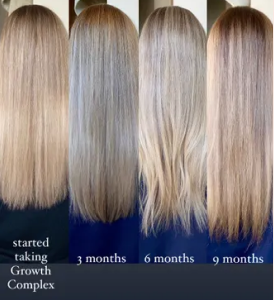
Nutritional support for your follicles is a useful parallel approach. Women's Growth Complex supports the follicle environment with zinc, selenium, and Cynatine HNS while hormone levels are being assessed and adjusted.
A Pattern Worth Investigating
DHEAS is a frequently overlooked variable in hormonal evaluations for hair loss, particularly when standard panels come back normal. If your hair is thinning and testosterone, estrogen, progesterone, and thyroid have all been checked without a clear answer, ask specifically about DHEAS. It is a simple blood test that can unlock specific treatment approaches general hair loss management does not address.


