




If you've tried a hair supplement that didn't work, you're not alone. The category is crowded with products that promise a lot and deliver ambiguously. So let's be direct about what the research actually shows — including what works, what doesn't, and what factors determine whether a supplement is worth trying.
The honest answer: yes, hair supplements can work — but only under specific conditions. The ingredients have to be at therapeutic doses, they need to be bioavailable, and they work best when they're addressing an actual deficiency or a gap the follicles need filled. That's the foundation the Growth Complex is built on.
The Problem with Most Hair Supplements
Before discussing what works, it's worth being clear about why so many products in this category disappoint.
Underdosed ingredients. A supplement can list an impressive array of ingredients while including each at a dose too small to have any measurable effect. Without full label transparency (exact doses of each ingredient), there's no way to know.
Biotin-forward formulas. Biotin became the default hair supplement ingredient because it's recognized, cheap, and easy to market. But research consistently shows that biotin supplementation only produces meaningful hair improvements in people who are actually biotin-deficient — which is relatively uncommon in adults eating varied diets. Taking 10,000 mcg of biotin when you're not deficient adds mostly expensive urine.
No bioavailability consideration. Many nutrients require specific conditions or cofactors to be absorbed. A supplement that doesn't account for this provides raw ingredients that may not actually reach the follicle.
Measuring the wrong outcome. Some products are evaluated based on increased hair growth rate — but hair grows at a genetically determined pace. The more meaningful clinical outcomes are reduced shedding, improved hair strength, and increased density.
Ingredients With Meaningful Evidence
Cynatine® HNS (Solubilized Keratin). This is the ingredient that stands out in the published literature. Cynatine HNS is a patented form of keratin that has undergone controlled clinical trials. A randomized study demonstrated statistically significant reductions in hair shedding and improvements in hair tensile strength over 90 days, opens in a new tab (Figueiredo et al., Journal of Food and Nutritional Disorders, 2013). It works differently from other ingredients — rather than providing building blocks the body must convert, it delivers bioavailable keratin directly in a form follicles can use.
Marine Collagen Proteins. A randomized, double-blind, placebo-controlled trial, opens in a new tab (Ablon, Dermatology Research and Practice, 2015) found that a marine protein supplement significantly reduced shedding and improved volume in women with self-perceived thinning. Marine proteins provide the amino acid profile (particularly glycine and proline) that supports keratin synthesis.
Zinc. Zinc deficiency is one of the most consistently documented nutritional causes of hair loss. Clinical studies show that correcting zinc deficiency improves hair loss, and observational studies consistently find lower zinc levels in people with alopecia compared to controls. The mechanism is well-understood: zinc is required for the enzymes involved in hair follicle cycling and repair.
Selenium. Selenium is essential for thyroid hormone metabolism, and thyroid dysfunction is a major — and frequently overlooked — driver of hair loss. Selenium at appropriate doses (not excessive) supports thyroid function and has antioxidant effects at the follicle level.
Vitamin C. Not primarily a hair growth ingredient on its own, but important as a cofactor. It supports collagen production (which anchors follicles) and significantly enhances iron absorption. Given how frequently iron deficiency contributes to hair loss, its role as an absorption enhancer makes it genuinely useful in a formula.
BioPerine® (Piperine). Research demonstrates that piperine — the active compound in black pepper extract — may enhance the bioavailability of nutrients taken simultaneously. Including it in a formula is a sign the formulation is thinking about absorption, not just ingredients.
What the Research Doesn't Support (at Least Not Yet)
Saw palmetto. Often included in hair supplements for its claimed DHT-blocking properties. Evidence is limited and inconsistent — some small studies show modest benefit in men, less evidence in women. Worth watching, not yet a must-have.
Collagen powder taken orally for scalp delivery. Dietary collagen is broken down into amino acids before it reaches the scalp. The amino acids are useful (they support keratin synthesis), but the specific anti-aging effects sometimes claimed for topical or oral collagen are not well-evidenced at the scalp level.
Essential oil topicals. Rosemary oil has small-scale evidence for hair growth promotion comparable to 2% minoxidil (Panahi et al., Skinmed, 2015). Interesting, but early. Not a replacement for addressing root cause.
How to Evaluate a Supplement Before Buying
A quick framework:
1. Full label transparency. Every ingredient dose disclosed. No proprietary blends.
2. Clinically studied primary ingredient. Not just "contains biotin," but an ingredient with actual trial data.
3. Dose alignment. Do the listed doses match the amounts used in the studies?
4. Bioavailability mechanism. Does the formula include ingredients that support absorption?
5. Realistic claims. Does the marketing say "may support" and "clinical studies show" — or does it say "regrow your hair in 30 days"?
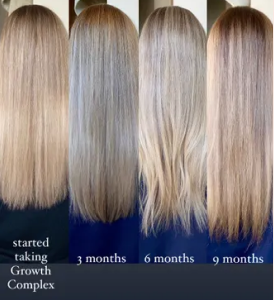
The transformations documented by Cynatine HNS users give a realistic picture of what evidence-backed supplementation can produce over a 3–6 month window.
The Honest Expectation
Hair supplements that actually work produce results over months, not weeks. The most common pattern: reduced shedding within 4–8 weeks, visible improvements in density and strength at the 3-month mark, more significant changes at 6 months. What the first 90 days typically look like is worth reading before you start.
This isn't a fast fix. It's a sustained investment in the biology of your follicles — and when the right ingredients are present at the right doses, it works.
How to Know If a Supplement Is Actually Worth Your Money
Hair supplements that actually work take 90–180 days to produce visible results and contain clinically studied ingredients at disclosed, therapeutic doses. If the formula doesn't tell you how much of each ingredient is present, it can't be evaluated — and shouldn't be trusted. The category has earned skepticism; a handful of ingredients have earned the right to cut through it. Know which ones those are before you spend money on anything else.
Frequently Asked Questions
Q: What is the most effective supplement for hair loss in women?
The most evidence-supported approach is a formula that addresses multiple factors simultaneously — not a single-ingredient supplement. Cynatine HNS (clinically studied solubilized keratin), zinc, selenium, biotin at therapeutic doses, and a bioavailability enhancer like BioPerine form the strongest evidence-based stack currently available in supplement form.
Q: Are expensive hair supplements worth it compared to drugstore versions?
Price correlates with ingredient quality and dose more reliably than with branding. The key questions are: are the ingredients disclosed with individual doses, are the forms bioavailable, and are the doses aligned with the levels used in clinical studies? A mid-range supplement with full transparency and clinically studied ingredients is worth more than an expensive one with undisclosed doses in a proprietary blend.
Q: Can hair supplements cause any side effects?
At standard doses, most hair supplement ingredients are well-tolerated. The main caveat is biotin at high doses (5mg+) interfering with thyroid and cardiac lab tests. Some people experience mild GI upset when starting a new supplement — taking it with food usually resolves this. If you're on any medications, check with your pharmacist for potential interactions, particularly with zinc and iron if taken together with other minerals.
Q: Should I take a hair supplement or just eat better?
Both, ideally. Dietary foundations (adequate protein, diverse micronutrient intake) should come first. Supplements address the gaps that diet alone doesn't reliably fill — particularly if you have increased requirements, absorption issues, or are in a period of higher physiological demand (postpartum, perimenopause, high stress). They're most effective as a layer on top of good nutrition, not a replacement for it.


