



Hair thinning is one of the more distressing — and less discussed — symptoms of PCOS.
It gets overshadowed by conversations about fertility, irregular cycles, and weight, but for many women with polycystic ovary syndrome, changes to hair density are among the most visible and emotionally difficult parts of managing the condition.
If you have PCOS and your hair is thinning, particularly at the temples and crown, you're experiencing androgenic alopecia — hair loss driven by elevated androgen hormones. Understanding the mechanism makes the approach to managing it much clearer. Nutritional support through a supplement like the Growth Complex can help address contributing factors, but PCOS-related hair loss has layers that benefit from a multi-pronged approach.
The PCOS–Hair Loss Mechanism
PCOS is a hormonal condition characterized by elevated androgens — male sex hormones like testosterone and its more potent derivative, DHT (dihydrotestosterone). Women produce androgens normally, but in PCOS, levels are higher than typical.
DHT is the primary driver of androgenic hair loss. It binds to receptors in genetically susceptible hair follicles and triggers a process called follicular miniaturization — the follicle gradually shrinks over repeated cycles, producing thinner and shorter hairs until it may stop producing hair altogether. The pattern in women tends to be diffuse thinning at the crown and widening of the part, rather than the distinct receding hairline seen in male pattern baldness.
The catch: not all women with elevated androgens will experience significant hair loss, and not all women with PCOS-related hair thinning have dramatically elevated androgen levels on standard tests. Follicular sensitivity to DHT varies between individuals, and that sensitivity is partly genetic.
What Makes PCOS Hair Loss Different
A few things make PCOS-related hair thinning distinct from other types:
It may start earlier. Unlike the gradual thinning associated with menopause, PCOS-related hair loss can begin in the 20s and 30s — sometimes before a woman even knows she has PCOS.
It's often accompanied by the opposite problem elsewhere. Many women with PCOS experience scalp hair thinning while simultaneously noticing increased body or facial hair growth (hirsutism). This contrast — less hair where you want it, more where you don't — reflects the androgen imbalance directly.
It doesn't always respond to standard nutritional approaches alone. Because the root cause is hormonal, treating nutritional deficiencies helps but may not fully reverse the loss without also addressing androgen levels.
The Nutritional Layer That Matters
Even though PCOS-related hair loss is primarily hormonal, nutritional status significantly affects how severe the loss is and how well hair recovers. Several deficiencies are especially common in women with PCOS:
Zinc: Zinc has a well-documented relationship with androgen metabolism. It may help inhibit 5-alpha reductase, the enzyme that converts testosterone to DHT. It also supports follicle function directly. Zinc deficiency — common in women with PCOS — can amplify androgen-driven hair loss.
Vitamin D: Vitamin D deficiency is significantly more prevalent in women with PCOS than in the general population, and low vitamin D is independently associated with hair loss. It's worth checking your level specifically.
Iron and ferritin: Irregular or heavy periods (common in PCOS) increase the risk of iron depletion, which compounds androgenic shedding.
Inositol: While not a standard supplement ingredient, inositol (particularly the myo-inositol and D-chiro-inositol combination) has shown promising evidence for improving insulin sensitivity and androgen levels in PCOS. This is a conversation worth having with your doctor.
What Supports Hair Growth with PCOS
A realistic approach to PCOS-related hair loss involves several layers:
Address the hormonal root cause. This usually means working with your OB-GYN or endocrinologist. Options range from hormonal birth control to spironolactone (an anti-androgen) to metformin (for insulin resistance, which often accompanies PCOS and further elevates androgens).
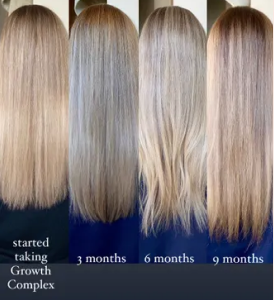
Correct nutritional deficiencies. Zinc, iron, vitamin D, and B vitamins are the priorities. A supplement formula that addresses the nutritional deficiencies underlying hair loss — like Growth Complex, which includes zinc, selenium, and biotin — provides a useful foundation. It won't override the hormonal driver, but it removes the nutritional amplifiers.
Manage blood sugar. Insulin resistance is present in most women with PCOS and contributes to elevated androgens. Diet changes that stabilize blood sugar — reducing refined carbohydrates and increasing protein and fiber — may help lower androgen levels over time.
Be patient with the timeline. The hair cycle takes time to reflect internal changes. Even with effective hormonal treatment, hair recovery typically takes 6–12 months to become visible. Managing expectations honestly reduces the temptation to abandon approaches that are actually working.
Scalp Health Matters Too
Androgenic alopecia in women is often accompanied by increased sebum production and scalp sensitivity. Keeping the scalp environment healthy — clear of buildup, well-circulated, not inflamed — supports the follicles that are still active. Signs that your scalp needs attention is a useful reference for recognizing when the scalp environment is contributing to the problem.
Managing PCOS-Related Hair Loss: What Actually Moves the Needle
PCOS-related hair thinning is real, it's hormonal at its core, and it's manageable with the right approach. The starting point is getting properly diagnosed and working with a provider on the hormonal treatment side. Nutritional support, scalp care, and realistic timeline expectations all contribute — but they work best when the underlying hormonal driver is being addressed at the same time. This is a multi-year process for most women, not a 90-day fix.
Frequently Asked Questions
Q: Can PCOS-related hair loss be reversed?
Partially, in many cases — especially when caught early. Follicular miniaturization that has progressed significantly is difficult to fully reverse. But reducing androgen levels through treatment, correcting nutritional deficiencies that amplify the loss, and supporting the scalp environment can meaningfully slow progression and improve the appearance of existing hair. Earlier intervention gives better outcomes.
Q: Does treating PCOS stop hair thinning?
Treating the hormonal root cause — whether through hormonal contraception, anti-androgens like spironolactone, or insulin sensitizers like metformin — is the most effective intervention for stopping progression. It doesn't guarantee regrowth of already-miniaturized follicles, but it removes the primary driver of ongoing loss. Expect 6–12 months before seeing meaningful hair response to hormonal treatment.
Q: What vitamins are most important for hair loss with PCOS?
Zinc is the highest priority — it has the most documented relationship with androgen metabolism and is consistently low in women with PCOS. Vitamin D is frequently deficient in PCOS and independently associated with hair loss. Iron/ferritin matters if you have irregular or heavy periods. Inositol (not a standard supplement but worth discussing with your doctor) has evidence for improving androgen levels in PCOS specifically.
Q: Is the hair loss from PCOS the same as androgenic alopecia?
Yes — PCOS-related hair loss is a form of androgenic alopecia (specifically female pattern hair loss), driven by the same mechanism: elevated DHT activity at genetically susceptible follicles. The pattern tends to be diffuse thinning at the crown and widening part rather than the distinct receding hairline seen in male pattern baldness.


