




What PRP Is and How It Works
Platelet-rich plasma therapy draws a small amount of your own blood, processes it through centrifugation to concentrate the platelets to 5-10 times their normal concentration, and injects the resulting plasma directly into the scalp. Platelets contain growth factors including platelet-derived growth factor (PDGF) and vascular endothelial growth factor (VEGF). When concentrated and delivered directly to hair follicles, these growth factors stimulate follicle activity, extend the anagen growth phase, and improve hair density.
Most protocols recommend three to four sessions spaced four to six weeks apart, followed by maintenance sessions every 12 to 18 months.
What the Research Shows
A 2024 systematic review and meta-analysis by Yuan et al. published in Skin Research and Technology focused specifically on female hair loss, analyzing randomized controlled trials from January 2000 to May 2024. The conclusion: PRP therapy effectively enhances hair density and thickness in women with hair loss, with a favorable safety profile.
A 2025 systematic review and meta-analysis identified 43 randomized controlled trials involving 1,877 participants. Activated PRP was effective in increasing hair density and minimizing recurrence compared to placebo. Activated PRP performed better and with fewer side effects than non-activated PRP.
Realistic Expectations
- Initial results visible at 3-6 months after completing the first course of treatment
- 30-40% increases in hair density reported in clinical studies
- Results are not permanent: maintenance sessions typically needed every 12-18 months
- Best results in early-to-moderate stage androgenetic alopecia with viable follicles
- Less effective in areas of complete baldness or scarring alopecia
PRP and Nutritional Support
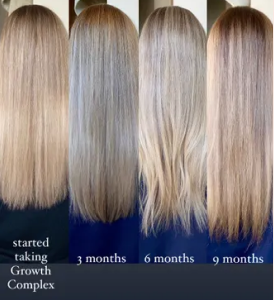
PRP stimulates growth factors at the follicle site. Ensuring follicles are nutritionally supported gives PRP-stimulated follicles the raw materials they need to respond. Women who are iron or zinc deficient at the time of PRP treatment may see reduced response. HAIRLOVE Growth Complex provides the nutritional foundation: Cynatine HNS, Zinc, Selenium, and Vitamin C. The scalp serum addresses the topical environment in between PRP sessions.


