


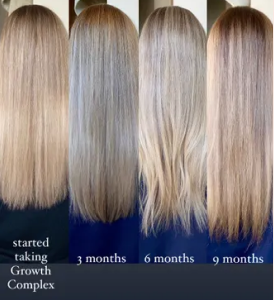

A scalp serum is a targeted topical treatment applied directly to the scalp — not the hair shaft. The distinction matters. Hair serums are designed to coat and smooth existing strands. Scalp serums are designed to influence the environment where new hair grows. They're doing different jobs, and mixing them up leads to disappointment.
If you're dealing with thinning hair or slow growth, a well-formulated scalp serum is one of the more practical tools available — working externally while a supplement works internally. The HAIRLOVE Scalp Serum is formulated around copper peptides and a supporting ingredient stack designed specifically for this. But whether you're evaluating that product or another, here's what the ingredients actually do.
What a Scalp Serum Is Actually Targeting
Hair follicles sit in the dermal layer of the scalp, anchored in a structure called the hair follicle unit. The health of the follicle — its size, its cycling behavior, its ability to produce a full, thick strand — is influenced by the environment around it: blood flow, inflammation, DHT activity, and the state of the extracellular matrix (the scaffold of proteins and collagen that supports the tissue).
A scalp serum works by delivering active ingredients to the scalp surface, where some are absorbed into the dermis. The goal is to improve scalp microcirculation, reduce follicle-level inflammation, support the extracellular matrix, or modulate DHT activity — depending on the formula.
The Ingredient That Separates Good Scalp Serums from Marketing
Copper Peptides (GHK-Cu): Copper peptides are small proteins with well-documented biological activity in skin and scalp tissue. At the follicle level, GHK-Cu has been shown in laboratory and clinical research to stimulate follicle stem cell activity, extend the anagen (growth) phase, and support the collagen and elastin structures that anchor follicles. It may also have anti-inflammatory properties relevant to follicle health.
Copper peptides are not a new ingredient — they've been studied extensively in wound healing and skin regeneration contexts, and the hair follicle application has a growing body of research behind it. They're also expensive to formulate with properly, which is why many "hair growth serums" don't include them at meaningful concentrations.
Caffeine: Topical caffeine has been studied specifically for hair loss, with some evidence that it may counteract the inhibitory effect of DHT on follicles and extend the anagen phase when applied topically. The mechanism is distinct from oral caffeine. Research published in the British Journal of Dermatology, opens in a new tab (Fischer et al., 2014) demonstrated differential growth-promoting effects on human hair follicles in both men and women, with caffeine counteracting testosterone-induced suppression of hair shaft elongation.
Niacinamide (Vitamin B3): Niacinamide improves scalp microcirculation and has anti-inflammatory properties. Better blood flow to follicles means better nutrient delivery and waste removal. It also supports the skin barrier function of the scalp.
Biotin (Topical): Topical biotin has a more limited evidence base than oral biotin, but it's a reasonable inclusion in a scalp serum at appropriate concentrations. Worth having; not the star ingredient.
Peptide complexes and growth factors: Some premium formulas include additional peptides or growth factor analogs designed to signal follicle cycling. Evidence varies by specific ingredient; copper peptides are the best-studied in this category.
What Doesn't Belong in a Scalp Serum
Essential oil concentrations without scalp testing. Tea tree, peppermint, and rosemary oils are popular inclusions and have some evidence behind them, but concentrated essential oils can cause scalp irritation and contact dermatitis in sensitive individuals. A formula that leads with these as primary actives rather than as supporting ingredients is prioritizing trendiness over evidence.
Silicones. Common in hair serums, silicones don't belong on the scalp. They can create buildup that clogs follicles and interferes with the very environment the serum is trying to improve.
Alcohol as a primary solvent. Some alcohol is acceptable in topical formulations, but high-alcohol bases dry the scalp, disrupt the skin barrier, and can cause chronic scalp irritation over time.
How to Use a Scalp Serum Effectively
Scalp serums work best when applied to a clean scalp — immediately after washing, to a slightly damp but not soaking scalp. Parting the hair in sections and applying directly to the scalp surface (not the hair shaft) ensures the active ingredients reach where they need to go.
Consistency matters more than any single application. Most scalp serum studies evaluate outcomes at 8–16 weeks of daily use. Building a scalp care routine that sticks is worth reading alongside this — the serum is more effective when the scalp environment it's working in is clean and well-maintained.
The Inside-Outside Approach
The most effective approach to hair thinning combines topical and internal support. Scalp serums improve the follicle environment from the outside; a well-formulated supplement addresses the nutritional and hormonal factors that affect follicle behavior from the inside.
Signs that your scalp needs more than just topical attention can help you assess where the gaps are — and whether scalp treatment, internal support, or both are the priority for your situation.
Is a Scalp Serum Right for Your Situation?
The best scalp serums for hair growth contain copper peptides, caffeine, and niacinamide as primary actives — applied consistently to a clean scalp, evaluated over an 8–16 week window. They work best as part of a broader approach rather than in isolation. If you're experiencing significant thinning, a serum is a meaningful tool — it's just not the complete answer. The internal and topical layers work better together than either does alone.
Frequently Asked Questions
Q: How often should I use a scalp serum for hair growth?
Most scalp serums are designed for daily or twice-daily use on a clean scalp. Apply after washing or on dry scalp between washes, parting hair in sections to ensure direct scalp contact. The key is consistency over weeks — not how much you apply in a single session. Most clinical studies on scalp serum ingredients evaluate outcomes at 8–16 weeks of regular use.
Q: Can I use a scalp serum and a hair growth supplement at the same time?
Yes — in fact, that's the recommended approach. They address different aspects of the same problem. The supplement supports follicle health from the inside via the bloodstream. The serum improves the local scalp environment from the outside. Neither compensates for the other; both contribute to the same outcome from different directions.
Q: How long before a scalp serum shows results?
Give any scalp serum a minimum of 8 weeks before evaluating it, and 12–16 weeks for a meaningful assessment. Scalp-level changes (improved circulation, reduced inflammation, follicle stimulation) happen gradually and don't produce visible density changes overnight. Reduced shedding is typically the first sign you'll notice, followed by improved texture, and then density at 3–4 months.
Q: Should I apply scalp serum to wet or dry hair?
Slightly damp scalp — immediately after washing and lightly towel-drying — is ideal. The scalp is clean, pores are open, and the dampness helps with distribution. Avoid soaking-wet hair, which dilutes the serum before absorption. On non-wash days, dry scalp application is fine. The most important thing is applying directly to the scalp surface, not the hair shaft.


