


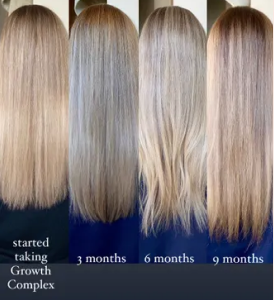

Biotin has been the go-to hair supplement ingredient for decades, which has led to an arms race on dosing — products advertising 5,000 mcg, 10,000 mcg, even higher. The assumption is that more is better. The evidence doesn't support this.
Here's what the research actually shows about biotin dosage for hair growth, including what the effective range looks like, why megadosing doesn't help, and the important caveats that don't appear on most supplement labels.
The Growth Complex includes biotin at a therapeutically meaningful dose — alongside the other ingredients (Cynatine HNS, zinc, selenium) that address the factors biotin alone doesn't cover.
What Biotin Does (and Doesn't Do) for Hair
Biotin (vitamin B7) is a water-soluble B vitamin that acts as a cofactor for several enzymes involved in fatty acid synthesis, amino acid metabolism, and gluconeogenesis. Its relevance to hair comes from its role in keratin production — keratin is the protein that forms the structure of each strand.
When biotin is genuinely deficient, hair loss can be significant: thinning, breakage, and changes in texture. Correcting a true biotin deficiency produces visible hair improvement.
The problem: true biotin deficiency is uncommon in healthy adults eating varied diets. The body synthesizes some biotin from gut bacteria, and small amounts are present in eggs, nuts, salmon, sweet potatoes, and many other foods. Unless there's a specific absorption issue or certain genetic conditions, frank biotin deficiency is rare.
What this means for supplementation: biotin works for hair growth primarily when there's a deficiency to correct. Adding more biotin above the corrective threshold doesn't produce additional benefits.
The Effective Dose Range
The Adequate Intake (AI) for biotin established by the Institute of Medicine is 30 mcg/day for adults. This is the estimated requirement to prevent deficiency — not a target for therapeutic supplementation.
Research on biotin and hair loss uses doses that vary considerably, but meaningful clinical evidence generally falls in the 2,500–5,000 mcg range. A 2017 systematic review in Skin Appendage Disorders, opens in a new tab (Patel et al.) examined all reported cases and clinical data on biotin for hair and nail changes, finding that improvements occurred in people with documented deficiency — but no evidence supported supplementation in healthy individuals without a documented deficiency.
There is no credible evidence that 10,000 mcg produces better outcomes than 2,500–5,000 mcg in people who are not severely deficient. The body can only use what it needs; the rest is excreted in urine. The high-dose marketing is about differentiation, not efficacy.
The Lab Test Interference Issue
This is the caveat that most biotin supplement labels don't include, and it matters: high-dose biotin supplementation interferes with immunoassay-based laboratory tests. These tests use biotin-streptavidin binding chemistry, and supplemental biotin competes with the test reagents, producing falsely elevated or falsely low results.
The specific tests affected include:
- Thyroid function (TSH, T3, T4)
- Cardiac troponin (used in heart attack diagnosis)
- Hormone panels including FSH, LH, and estradiol
The FDA issued a safety communication on this in 2017, opens in a new tab, opens in a new tab and has since updated it as more affected assays have been identified. If you're taking high-dose biotin (above 5 mg), stop supplementation before bloodwork and mention it to your doctor — the timing varies by dose and the specific test being run.
Who Actually Benefits from Biotin for Hair
People with diagnosed deficiency. Rare, but real. Certain genetic conditions affecting biotin metabolism, prolonged antibiotic use (which disrupts gut bacteria that produce biotin), chronic alcohol use, and some medications (including certain anticonvulsants) can cause depletion.
People with poor overall B vitamin status. B vitamins work synergistically. Someone with generally poor micronutrient intake may benefit from biotin as part of a comprehensive B-complex approach rather than biotin in isolation.
People with increased requirements. Pregnancy increases biotin requirements; some research suggests mild biotin insufficiency is common in pregnant women, though it's typically below the threshold for clinical deficiency.
People experiencing hair changes with age. As absorption efficiency declines with age, supplementing at moderate doses provides insurance against borderline insufficiency even without documented deficiency.
Biotin in Context: Why It's Not the Whole Answer
The biggest limitation of biotin for hair growth is that it addresses only one of many factors. Hair loss in women is almost always multifactorial — hormones, iron status, zinc, thyroid function, stress, and genetics all play roles. A biotin-only supplement addresses exactly one piece of the puzzle.
For a comprehensive approach, what the biotin research actually shows provides additional context, and the broader question of which supplements have the best evidence is covered in more depth in the hair supplements that actually work post.
Getting Biotin Right: Dose, Form, and Context
Biotin for hair growth: effective when there's a deficiency to correct, at doses in the 2,500–5,000 mcg range. Not more effective at 10,000 mcg than at 2,500 mcg. Important to flag to your doctor before bloodwork if you're taking any supplemental dose. Works best as part of a formula that addresses multiple nutritional factors — because hair loss in women rarely comes from a single deficiency acting alone.
Frequently Asked Questions
Q: What is the best form of biotin for hair growth?
Standard biotin (D-biotin) is the bioavailable form — there's no meaningful distinction between "biotin" and "D-biotin" for absorption purposes in healthy adults. The dose and delivery vehicle matter more than the specific form. Biotin in a capsule with a complete formula (including zinc and BioPerine to enhance absorption) is more effective than biotin in isolation at the same dose.
Q: Does biotin work for everyone with hair loss?
No — biotin supplementation only produces meaningful hair improvements in people with an actual deficiency or with conditions that impair biotin absorption. In people with adequate biotin status (the majority of adults eating varied diets), supplementation adds excess that the body excretes. This is why biotin-heavy supplements often "don't work" for many people — they're addressing a deficiency that wasn't present to begin with.
Q: How soon does biotin start working for hair loss?
In true deficiency, improvements in hair and nail quality can begin within 4–8 weeks of supplementation, because you're correcting a deficiency that was directly limiting keratin production. In people without deficiency, there's no evidence of a meaningful timeline because the supplement isn't producing an effect to measure. This is one of the reasons consistent before-and-after documentation is important — it gives you actual data rather than a subjective impression.
Q: Can I take biotin at the same time as other hair supplements?
Yes — biotin is water-soluble and doesn't compete with fat-soluble vitamins for absorption. It's compatible with zinc, selenium, and vitamin C in the same formula. The main interaction to be aware of is with iron — biotin and iron should ideally be taken at different times from calcium supplements, as calcium can reduce absorption of both. Taking with food generally optimizes absorption for all of them.


