




Dihydrotestosterone (DHT) is the primary driver of androgenetic hair loss in both men and women with genetic sensitivity. The question of whether diet can meaningfully modulate DHT levels is worth answering directly, because the information online ranges from well-supported to completely fabricated.
Here is the honest evidence: some foods have documented mild DHT-modulating properties. None come close to the effects of finasteride or dutasteride. Dietary DHT modulation is a supportive strategy, not a primary treatment.
How DHT Drives Hair Loss
5-alpha-reductase is the enzyme that converts testosterone into DHT. In people with androgenetic alopecia, follicles in genetically sensitive areas (typically the scalp temples and crown) have androgen receptors that are more sensitive to DHT. DHT binding to these receptors progressively shortens the anagen phase and miniaturizes the follicle, eventually producing vellus (fine, colorless) hair instead of terminal (thick, pigmented) hair.
Finasteride inhibits 5-alpha-reductase pharmacologically, reducing scalp DHT by approximately 60 to 70%. Dietary strategies that modulate this pathway do so at a much smaller magnitude, but with no side effect profile and as a sustainable long-term dietary practice.
Foods With Evidence for DHT Modulation
Pumpkin seed oil: the most clinically studied dietary DHT modulator. A 24-week randomized controlled trial in men with androgenetic alopecia found that pumpkin seed oil supplementation produced a 40% increase in hair count compared to placebo. The proposed mechanism involves phytosterol inhibition of 5-alpha-reductase. Pumpkin seeds consumed regularly provide the same phytosterols in a dietary form.
Green tea (EGCG): epigallocatechin gallate, the primary catechin in green tea, has documented 5-alpha-reductase inhibitory activity in vitro and mild androgenic modulation in animal models. Human evidence is preliminary, but regular green tea consumption is a low-risk, reasonable practice.
Lycopene (tomatoes, watermelon): lycopene has documented anti-androgenic properties in prostate research, and some preliminary evidence for DHT pathway modulation. Regularly eating cooked tomatoes (cooking increases lycopene bioavailability) is a reasonable dietary inclusion.
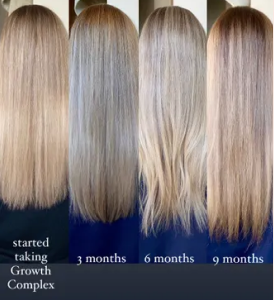
Zinc: zinc is a component of 5-alpha-reductase and adequate zinc status is associated with lower 5-alpha-reductase activity. Zinc deficiency allows the enzyme to operate more actively. Zinc is included in Growth Complex at a meaningful dose for this and its direct follicle matrix cell function roles.
What Promotes DHT Activity
Excess simple carbohydrates and sugar: associated with higher insulin levels, which stimulate androgen production. High-glycemic diets have been associated with worse androgenetic alopecia outcomes in some studies.
Alcohol: increases the conversion of androgens to estrogen but also raises DHT through other pathways. The net androgenic effect of heavy alcohol consumption is net-positive for DHT in most men.
The Realistic Limits of Dietary DHT Modulation
The dietary approaches described above are supported by evidence but produce modest effects relative to pharmaceutical DHT blockers. For men or women with significant androgenetic alopecia, dietary DHT modulation is a supportive practice alongside medical or topical treatment, not a substitute for it. For people with mild or early-stage pattern thinning looking to slow progression, a dietary approach may be meaningful as part of a comprehensive strategy.
Growth Complex addresses the nutritional environment the follicle needs to function within whatever androgenetic context is present. The Inside-Out Bundle adds Scalp Serum for the topical layer.
A Practical Weekly Dietary Approach
Incorporating the evidence-based DHT-modulating foods into a weekly dietary pattern does not require dramatic changes. A practical starting point: eat two to three portions of tomato-based foods per week (pasta sauce, salsa, roasted tomatoes, all increase lycopene bioavailability compared to raw tomatoes), have a handful of pumpkin seeds as a snack three to four times per week, drink one to two cups of green tea daily, and maintain adequate zinc through nuts, seeds, and lean meats or through supplementation.
This is not a treatment protocol. It is a dietary approach that, sustained over months, may provide a mild supportive effect on the DHT environment alongside a more comprehensive hair health strategy. For anyone using Growth Complex, the zinc component of the formula already addresses the zinc-5-alpha-reductase relationship at a meaningful supplemental dose.


