



You have seen Divi's Scalp Serum everywhere and you want to know what you are actually putting on your scalp every day before you buy in. Here is a clear breakdown of the side effects people report, what causes them, and the detail the glowing reviews skip.
What Is Actually Inside Divi Scalp Serum
Divi is a water-based, leave-in scalp serum you apply once daily and do not rinse. The active story is copper tripeptide-1, caffeine, acetyl tetrapeptide-3 (the Capixyl complex), and biotin, supported by hyaluronic acid and amino acids. It also carries a notable load of essential oils: tea tree, peppermint, eucalyptus, and rosemary. Those essential oils are where most of the side effects come from.
The Most Commonly Reported Side Effects
The tingling Divi frames as proof it is working is the menthol and peppermint, and for most people it is harmless. The effects that come up more often are scalp irritation, some initial adjustment shedding in the first few weeks, and the practical issue that the small bottle can run out in three to four weeks, so the real monthly cost can be higher than it looks.
The Concern That Gets the Least Attention: the Essential-Oil Load
Here is the piece worth flagging. Tea tree, peppermint, and eucalyptus are common contact allergens, and a leave-on product applied to the scalp every single day is a meaningful, repeated exposure. For a sensitive or reactive scalp, that can mean itching, redness, or contact irritation that builds over time rather than showing up on day one.
It is also worth knowing what the efficacy claim rests on: Divi's headline results come from a 12-week self-assessment of 31 people, not a large controlled trial. The serum can genuinely improve the look of density for some, but the evidence is softer than the marketing suggests.
Who Should Be Cautious
Anyone with a sensitive or reactive scalp, eczema or seborrheic dermatitis, or a known essential-oil allergy should patch test first and introduce it slowly.
Are These Risks Unique to Divi?
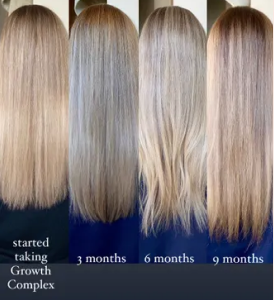
A heavy essential-oil blend is a formulation choice, not a requirement. And a scalp serum only ever works on the surface. HAIRLOVE takes a gentler, two-part approach: a Scalp Serum for the topical job without the same essential-oil load, plus the Growth Complex, which supports hair from within with Cynatine HNS keratin. That covers both the scalp environment and the strand itself.
Making Any Scalp Routine Work Better
Give a scalp serum at least 90 days, apply to a clean scalp, and avoid layering it with strong actives that could compound irritation. And rule out internal drivers of shedding, since a topical alone will not fix an iron or vitamin D deficiency.
Reading Between the Lines
Divi's Scalp Serum is lightweight and helps some people over time, and for most the tingle is nothing to worry about. The essential-oil load is the real side-effect story, especially for reactive scalps, and the evidence base is more modest than it looks. If your scalp reacts easily, a gentler serum paired with inside-out support is worth considering.


