



Many women who notice their hair thinning in their 30s assume they're either too young for it to be hormonal or too old for it to be postpartum. Both assumptions are often wrong. The hormonal changes that affect hair don't begin at menopause, they can start in the mid-to-late 30s, sometimes earlier, and the patterns are distinct from both the postpartum shedding of the early 30s and the perimenopause changes of the late 40s.
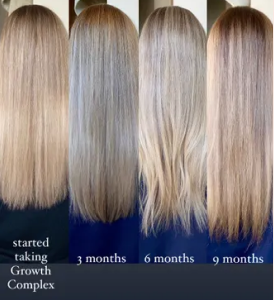
If your hair feels noticeably thinner than it did a few years ago, you're noticing the early effects of a hormonal transition that most women aren't warned about. The Growth Complex is designed to address the nutritional factors that amplify this type of hormonally driven loss, and understanding the mechanism helps set realistic expectations for what supplement support can accomplish.
What Actually Changes in Your 30s
Several hormonal shifts become significant in the 30s, though they vary considerably by individual:
Estrogen begins its long decline. Estrogen levels don't drop sharply until perimenopause, but a gradual decline in baseline estrogen can begin in the mid-to-late 30s. Estrogen prolongs the anagen phase and supports the collagen layer where follicles are anchored. A gradual reduction in these protective effects means the hair cycle may begin to shorten, producing finer hairs and a slightly shorter maximum length than in the 20s.
Progesterone declines. Progesterone has a natural DHT-moderating effect. As progesterone levels fall, DHT activity on follicles may increase, accelerating miniaturization in women with genetic sensitivity.
Androgens become relatively more dominant. Even without an absolute increase in androgen levels, the ratio of androgens to estrogen and progesterone shifts as the latter decline. This relative androgen dominance drives the hair thinning pattern that most closely resembles early female-pattern hair loss.
Cortisol effects accumulate. The 30s are often peak stress years. Chronic elevated cortisol disrupts the hair cycle by pushing follicles into telogen prematurely. Stress-related shedding in the 30s can be significant and is often mistaken for hormonal loss, or occurs alongside it.
What the Hair Loss Actually Looks Like
Hair loss in the 30s tends to look different from the dramatic postpartum shedding many women have experienced:
Gradual reduction in density. Rather than acute heavy shedding, many women in their 30s notice their ponytail is thinner, their part looks wider, or they can see more scalp than they remember. The process is slow enough that it's hard to pinpoint when it started.
Finer individual strands. As follicles begin miniaturizing (however slightly), they produce finer hairs. The overall density may look similar but the strands themselves are thinner, which affects volume and styling.
Slower growth. Anagen shortening means maximum hair length potential decreases, hair that used to grow long readily may seem to plateau at a shorter length.
Changes at the crown and part. For women with genetic sensitivity to DHT, the crown and part line show earliest changes, mirroring the female androgenic pattern.
How to Distinguish the Causes
Several things can produce similar symptoms and are worth distinguishing:
Thyroid dysfunction. Particularly Hashimoto's (autoimmune hypothyroidism), which often develops in the 30s and 40s. Thyroid-related hair loss tends to be more diffuse and often comes with other symptoms (fatigue, cold intolerance, weight changes). Get a full thyroid panel including antibodies if you haven't.
Iron deficiency. Ferritin depletion from heavy periods, inadequate intake, or post-pregnancy recovery. Often coexists with hormonal hair loss and amplifies it.
PCOS. Often diagnosed in the 20s but sometimes not recognized until the 30s when the hair changes become noticeable. Check for other PCOS markers (irregular cycles, acne, weight changes) if you haven't had a formal workup.
Perimenopause onset. Can begin in the late 30s for some women (sometimes called "premature perimenopause"). The perimenopause and hair thinning guide covers this transition in detail.
A full panel: TSH, ferritin, sex hormones (FSH, LH, estradiol, testosterone), DHEAS, gives a much clearer picture than any single test.
What Helps Hormonally Driven Hair Loss in the 30s
Address nutritional deficiencies. Zinc, iron/ferritin, vitamin D, and selenium are the priorities. Correcting these removes the nutritional amplifiers that make hormonally driven loss more severe. This is where a well-formulated supplement provides meaningful, measurable support.
Manage cortisol. Stress management isn't a generic wellness platitude in this context, it's a specific intervention for a specific mechanism. Elevated cortisol pushes follicles into telogen. Consistent sleep, regular physical activity, and stress reduction practices have documented effects on the hair cycle.
Consider hormonal evaluation. If nutritional correction and lifestyle management don't produce improvement over 3 to 6 months, hormonal workup and consideration of treatment options (hormonal contraception with anti-androgen properties, low-dose finasteride in appropriate candidates, which is prescription-only and requires physician consultation) may be warranted. These are physician conversations.
Topical support. Signs that your scalp environment needs attention covers the scalp side of the equation. Circulation, buildup, and inflammation all affect how severely the hormonal changes manifest at the follicle level.
Your 30s Are Not Too Early, and Not Too Late
Hair thinning in your 30s is real, it's hormonal in origin, and it's earlier than most women expect. The gradual estrogen and progesterone decline of the mid-to-late 30s begins shifting the hormonal environment before perimenopause begins in earnest. Nutritional correction, cortisol management, and where appropriate medical evaluation form the effective response. Understanding the mechanism makes the timeline and the interventions make sense. And starting earlier consistently produces better outcomes than waiting until the loss is severe.
Frequently Asked Questions
Is hair loss in your 30s permanent?
It depends on the cause. Telogen effluvium triggered by stress, illness, or nutritional depletion is temporary, follicles recover when the trigger is resolved and nutritional status is restored. Androgenic hair loss (female pattern) is progressive if untreated but manageable, especially when addressed early. Hormonal hair loss from thyroid dysfunction, PCOS, or early perimenopause can often be stabilized or partially reversed with treatment. Early identification of the specific cause determines the outlook.
What hormone test should I ask for if I'm losing hair in my 30s?
A comprehensive panel: TSH (thyroid), Free T3 and T4, TPO antibodies, ferritin (not just serum iron), vitamin D, and a sex hormone panel including FSH, LH, estradiol, testosterone, DHEAS, and SHBG. Progesterone testing is also useful but more complicated by cycle timing. This panel gives a full picture of the most common hormonal and nutritional contributors to hair loss in this age group. Many of these won't be included in a standard check-up, request them specifically.
At what age does female hair loss typically start?
Female pattern hair loss can begin as early as the late 20s or early 30s, though it's more commonly noticed in the 40s and 50s as estrogen decline accelerates. However, the underlying process often begins a decade or more before it becomes visually obvious. Women with a family history of female pattern baldness and those with PCOS are at higher risk of earlier onset. This is part of why early supplementation and scalp health investment makes practical sense.
Can stress in your 30s cause permanent hair loss?
Stress-triggered shedding (telogen effluvium) is almost always temporary, follicles are not permanently damaged. However, chronic, unmanaged stress elevates cortisol over months and years, which can accelerate the progression of underlying androgenic hair loss in genetically susceptible women. The "permanent" risk isn't from the stress-triggered shedding itself, but from stress as a long-term amplifier of a hormonal process that was already underway.
Sources
American Academy of Dermatology; Cleveland Clinic; NIH/PubMed Central (female pattern hair loss and hormonal contributors).


