



Hair loss after hysterectomy is common but underexplained by most surgical teams. The experience is often distressing precisely because it comes from two separate mechanisms operating at once — and understanding both matters for knowing what to expect and how to respond.
Mechanism One: Surgical Telogen Effluvium
Every major surgery, including hysterectomy, causes some degree of hair loss through surgical telogen effluvium. The physiological stress of anesthesia, blood loss, caloric restriction around surgery, and the healing inflammatory response all push hair follicles into the resting phase. Two to four months later, those follicles shed. For most surgical patients, this shedding is temporary and resolves within six to nine months. This mechanism does not depend on whether the ovaries were removed.
Mechanism Two: Hormonal Disruption from Oophorectomy
When a hysterectomy includes removal of the ovaries (bilateral oophorectomy), a second hormonally distinct mechanism adds to the picture. The ovaries are the primary source of estrogen and progesterone. Removing them produces immediate surgical menopause — a sudden drop in both hormones.
As estrogen declines, the anagen phase shortens, opens in a new tab. As progesterone declines, natural inhibition of 5-alpha reductase weakens, allowing more testosterone to convert to DHT. The result is accelerated androgenic hair loss layered on top of surgical TE. Hysterectomies that preserve the ovaries involve only the surgical TE mechanism in the immediate recovery period.
The Different Recovery Timelines
Hysterectomy with ovaries preserved
Primarily surgical TE. Recovery timeline of six to twelve months, with shedding peaking at months two to four.
Hysterectomy with oophorectomy
Both mechanisms apply. Initial recovery from surgical TE within six to twelve months, but ongoing hormonal thinning will continue unless hormonal status is addressed.
The Role of HRT After Oophorectomy
For women who have had their ovaries removed, estrogen replacement is generally recommended for both symptom management and long-term health. For hair, restoring estrogen restores some of its protective effect on the anagen phase. The type matters — bioidentical progesterone is more hair-friendly than synthetic progestins with androgenic activity. For the full HRT and hair discussion, see the HRT and hair loss post. Any HRT decisions should involve your prescribing physician.
Nutritional Support During Recovery
- Ferritin: frequently depleted from surgical blood loss. Request ferritin specifically — not just hemoglobin
- Protein: elevated requirements during healing. Inadequate intake directly impairs new hair growth
- Zinc and selenium: support follicle function and may be depleted during surgical recovery
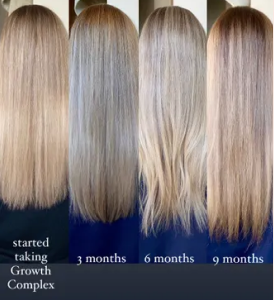
HAIRLOVE's Women's Growth Complex provides these nutrients alongside Cynatine HNS to support recovery from both mechanisms.


