



Losing weight is often a health win, and then a few months later your hair starts coming out in the shower at a rate that feels alarming. It's one of the more discouraging side effects of significant weight loss — and it's common enough that it has a name: telogen effluvium.
The good news: hair loss after weight loss is almost always temporary. The frustrating part: "temporary" can mean 3–9 months of increased shedding before the cycle stabilizes. Understanding why it happens, and what supports faster recovery, is worth knowing — especially before you're in the middle of it.
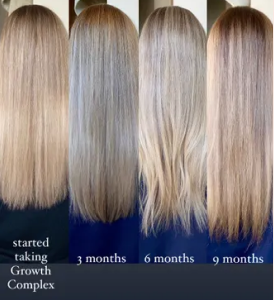
The Growth Complex is specifically designed to address the nutritional factors that drive post-weight-loss shedding. But the nutritional piece is one part of a bigger picture.
Why Weight Loss Causes Hair Shedding
Significant caloric restriction — especially rapid weight loss — sends physiological stress signals to the body. Hair follicles are not essential for survival. When the body perceives physiological stress (caloric deficit, nutrient depletion, or surgical stress in the case of procedures like bariatric surgery), it redirects resources away from non-essential functions, including hair growth.
The result is that a large number of follicles simultaneously enter the telogen (resting/shedding) phase — more than the usual 10–15%. Two to four months later, those hairs shed en masse. Because of this delay, many women don't connect the shedding to the diet at all.
The telogen effluvium mechanism is the same one behind postpartum shedding, thyroid-related loss, and stress-triggered hair loss. The trigger varies; the pathway is similar.
The Nutritional Dimension
Caloric restriction almost always creates nutritional gaps, even with careful eating. Several specific deficiencies consistently appear in post-weight-loss hair loss:
Protein. Hair is made of keratin — a protein. Insufficient protein intake is one of the fastest routes to hair loss, because when the body is protein-deficient, it deprioritizes the protein being used for hair production. Adequate protein (most estimates suggest 0.7–1.0g per pound of body weight) is essential for maintaining the hair cycle during and after weight loss.
Iron and ferritin. Caloric restriction can reduce iron intake simply by reducing total food volume. Ferritin — stored iron — is depleted with diet-related blood loss and poor intake. Low ferritin is a primary driver of post-weight-loss shedding in women. Worth checking specifically, not just serum iron.
Zinc. Zinc is rapidly depleted during periods of weight loss. It's involved in virtually every aspect of hair follicle function and DNA repair. Deficiency is one of the faster paths to increased shedding.
Biotin. Dramatic caloric restriction and elimination diets can reduce biotin intake. While biotin deficiency is less common than zinc or iron deficiency, it contributes to the overall nutritional profile that supports or undermines hair health.
Vitamin D. Stored in adipose tissue, vitamin D levels can drop during significant fat loss as stores are mobilized. Low vitamin D is independently associated with hair follicle cycling problems.
Post-Bariatric Surgery: A More Severe Version
Weight loss from bariatric surgery — sleeve gastrectomy, gastric bypass, and similar procedures — creates more pronounced shedding than dietary weight loss alone, for two reasons. The physiological stress of surgery is a major telogen effluvium trigger. And the drastic reduction in food volume makes nutritional deficiencies almost universal without aggressive supplementation.
If you've had bariatric surgery, standard supplementation protocols are likely part of your post-surgical care. A hair-specific supplement addresses the additional micronutrient layer that bariatric multivitamins don't always cover at optimal levels — particularly zinc, selenium, and bioavailable keratin.
GLP-1 Medications and Hair Loss
GLP-1 receptor agonists (Ozempic, Wegovy, Mounjaro) have become widely used for weight loss and have their own associated shedding pattern. The mechanism is the same — rapid weight loss triggers telogen effluvium — compounded by the caloric deficit these medications create. Managing nutritional status is the primary mitigation strategy. What's happening with hair loss and GLP-1 medications covers the specific considerations for this population.
How to Support Recovery
The practical approach has a few layers:
Meet protein targets. Prioritize protein intake during and after weight loss — particularly lean sources with high bioavailability (eggs, poultry, fish, Greek yogurt, legumes).
Check ferritin, not just serum iron. Get the specific lab value. If ferritin is below 30–40 ng/mL, that's a meaningful contributor to shedding, and it takes targeted intervention to correct.
Supplement comprehensively. A formula that covers zinc, selenium, biotin, vitamin C, and bioavailable keratin addresses the multi-nutrient gap that typically underlies post-weight-loss shedding. Piecemeal supplementation (biotin alone, zinc alone) is less effective than addressing the full nutritional picture.
Don't slow weight loss if it's medically warranted. The instinct to slow or reverse weight loss to stop the shedding is understandable, but it usually isn't the right answer. Hair loss after weight loss is a temporary consequence of the body adjusting. Nutritional support is more effective than reversing the weight loss itself.
Give it time. Hair regrows. The cycle that produces visible density improvements after telogen effluvium typically takes 6–12 months from the triggering event. Supplementing consistently — not just for a few weeks — is necessary to see the full effect.
Recovery Is the Goal — Here's the Realistic Timeline
Hair loss after weight loss is a predictable physiological response to caloric stress and nutritional depletion. It's almost always temporary. Addressing protein, iron, zinc, and key micronutrients accelerates recovery and reduces the severity of shedding. It requires patience — the hair cycle responds over months, not weeks — but it does respond. The key is not abandoning the process because six weeks in, nothing looks different yet.
Frequently Asked Questions
Q: How long does hair loss last after weight loss?
For most people, shedding peaks 2–4 months after the period of greatest caloric restriction and resolves within 6–9 months total from the triggering event. The timeline extends if nutritional deficiencies aren't corrected — particularly low ferritin, which can keep the shedding cycle elevated for much longer. Active supplementation and protein intake during the recovery phase shortens the window.
Q: Will my hair grow back after weight loss hair loss?
Yes, for the vast majority of people. Post-weight-loss telogen effluvium is temporary. The follicles are not damaged — they're cycling out of a prolonged resting phase. Once nutrition is restored and the body's stress response normalizes, new growth emerges. You may notice short new hairs at the hairline and crown as regrowth begins, usually 3–6 months after shedding peaks.
Q: Does losing weight slowly prevent hair loss?
Gradual weight loss (0.5–1 lb per week) produces significantly less telogen effluvium than rapid loss. The key variables are severity of caloric deficit and nutritional completeness — crash diets create both a large caloric deficit and nutritional depletion simultaneously, which is the worst combination. Slower loss with adequate protein and micronutrient intake reduces — though may not eliminate — shedding.
Q: What should I eat to stop hair loss from dieting?
Protein is the highest priority — target 0.7–1.0g per pound of body weight daily. Then focus on iron-rich foods (especially if your ferritin is low), zinc-containing foods (red meat, pumpkin seeds, legumes), and vitamin D (fatty fish, fortified foods, sun exposure). If dietary intake is limited by caloric restriction, a comprehensive supplement that covers these micronutrients fills the gap.


