



If you're taking Ozempic, Wegovy, Mounjaro, Zepbound, or another GLP-1 medication, you've probably experienced the benefits firsthand. Reduced appetite. Feeling full faster. The scale moving in a direction it hasn't budged in years.
But a few months in, you might have noticed something else. Something nobody warned you about.
Your hair is falling out.
You're finding more strands in your brush. More hair swirling down the shower drain. Your ponytail feels thinner. Your part looks wider.
If this is happening to you, take a deep breath. You're not imagining it, you're not alone, and in most cases, it's not permanent.
But understanding why it's happening is the first step to doing something about it.
The Explosion of GLP-1 Medications
GLP-1 receptor agonists have become one of the most significant breakthroughs in weight loss and metabolic health in decades. These medications, which include semaglutide (sold as Ozempic for diabetes and Wegovy for weight loss) and tirzepatide (sold as Mounjaro and Zepbound), work by mimicking a naturally occurring hormone that regulates blood sugar and appetite.
The results have been remarkable. Studies show potential weight loss of up to 20% of total body weight within a year, compared to 7-10% with traditional weight loss approaches.
The popularity has skyrocketed accordingly. A recent KFF poll found that about 1 in 8 adults in the United States say they are currently taking a GLP-1 drug to treat a chronic disease, for weight loss, or both. That's a significant increase from previous years.
With millions of people now using these medications, patterns are emerging that weren't fully captured in clinical trials. And one of the most discussed among users? Hair loss.
Is Hair Loss Really Happening?
Yes. While hair loss isn't prominently listed as a side effect in all the prescribing information, the data and clinical observations tell a clear story.
In the clinical studies for Wegovy (semaglutide), hair loss was reported in 3% of adults using the medication compared to 1% using a placebo. For children and adolescents, the numbers were even more striking: 4% versus 0%.
For Mounjaro (tirzepatide), clinical studies reported hair loss in 4.9% to 5.7% of participants using various doses, compared to just 0.9% of those on placebo.
But dermatologists working with patients in the real world suggest the actual numbers might be higher. Dr. Emily Zhou, an endocrinologist at Cleveland Clinic, estimates that 25% to 33% of people taking GLP-1 medications for weight loss experience some degree of hair loss. Dr. Marisa Garshick, a board-certified dermatologist at Weill Cornell Medicine, confirms it's "definitely a common thing" she's seeing in her practice.
The FDA has even announced it's evaluating reports of hair loss associated with these medications, along with other potential side effects.
The Real Culprit: It's Not the Medication
Here's what the research and expert consensus tells us: the GLP-1 medications themselves aren't directly damaging your hair follicles. The hair loss is caused by what happens in your body as a result of taking them.
Specifically, two main factors are at play.
Factor #1: Rapid Weight Loss and Metabolic Stress
When your body experiences rapid weight loss, it interprets this as a significant stressor. And when your body is stressed, it goes into a kind of triage mode, directing resources toward essential survival functions and away from things it considers non-essential.
Hair growth, unfortunately, falls into the "non-essential" category.
This triggers a condition called telogen effluvium, one of the most common forms of temporary hair loss. Here's what happens:
Your hair grows in cycles. At any given time, about 85-90% of your hair is in the anagen (growth) phase, while the rest is in the catagen (transition) or telogen (resting) phase. After the telogen phase, hair naturally sheds to make room for new growth.
When your body experiences a major stressor like rapid weight loss, it can push a much larger percentage of hair follicles into the telogen phase prematurely. Instead of the normal 10-15% of hair being in the resting/shedding phase, that number jumps significantly.
The result? Noticeable, sometimes alarming, hair shedding that typically begins 3 to 6 months after the stressor (in this case, starting the medication and beginning to lose weight rapidly).
Dr. Adam Rossi, a dermatologist at Memorial Sloan Kettering Cancer Center, explains it this way: when your body needs to "shift priority from nonessential things to more essential things," hair becomes expendable. "Hair is a nonessential appendage," he notes.
What makes GLP-1-associated hair loss unique is that unlike a one-time stressor (like surgery or childbirth), the weight loss is ongoing. As Dr. Jenni Holman, a dermatologist and Fellow of the American Academy of Dermatology, explains: "The continued weight loss is a continued stressor. Unlike a singular exposure or event, the ongoing weight loss often slows the body's ability to reset the hair shedding cycle."
Factor #2: Nutritional Deficiencies
The second major factor is perhaps even more significant: what you're eating (or not eating) while on these medications.
GLP-1 medications work partly by suppressing appetite and making you feel full faster. This is great for weight loss, but it creates a significant challenge: when you're eating substantially less food, you're also taking in substantially fewer nutrients.
Dr. Rossi says some patients on GLP-1s are essentially "in a chronic malnourished state" because the medication suppresses their appetite so effectively. "If you're not getting enough of these micronutrients, your body is not going to be prioritizing anagen hair growth," he explains. "So it's a mix of metabolic stress and then this relative caloric protein deficiency that happens."
Your hair is primarily made of a protein called keratin. When protein intake is insufficient, your body uses what's available for more critical functions (like maintaining organs and muscles), and hair production takes a back seat.
But it's not just protein. Deficiencies in iron, zinc, vitamin D, vitamin B12, folate, and essential fatty acids have all been linked to hair shedding and can all occur when food intake drops dramatically.
Why Your Protein Needs Are Actually Higher
Here's something that surprises many people: if you're on a GLP-1 medication, you actually need MORE protein than the average person, not less.
The general recommendation for protein intake is about 0.8 grams per kilogram of body weight per day. But for people on GLP-1 medications, experts recommend significantly more: 1.0 to 1.6 grams per kilogram of body weight daily.
Anabel Kingsley, a consultant trichologist (hair and scalp specialist), notes that this higher protein recommendation exists because "hair is non-essential tissue" and is "incredibly sensitive to internal fluxes, particularly to our nutritional status."
For a 150-pound (68 kg) person, that means aiming for 68 to 109 grams of protein daily. For context, a chicken breast contains about 30 grams, an egg about 6 grams, and a cup of Greek yogurt about 15-20 grams.
When you're not very hungry and eating smaller portions, hitting those protein targets becomes genuinely challenging. Many people simply aren't managing it.
The Nutrients Your Hair Needs
Beyond protein, several specific nutrients are critical for hair health and are commonly deficient in people on GLP-1 medications:
- Iron: Essential for carrying oxygen to hair follicles. Iron deficiency is one of the most common causes of hair loss in women generally, and reduced food intake makes it even more likely. Dr. Rossi specifically mentions ferritin (iron stores) as a key marker to monitor.
- Zinc: Supports cell growth, repair, and protein synthesis in hair follicles. Zinc-rich foods include oysters, beef, pumpkin seeds, and chickpeas.
- Vitamin D: Deficiency is linked to hair loss, particularly telogen effluvium. Since it's difficult to get enough vitamin D from food alone, many people require supplementation, especially those eating less overall.
- B Vitamins (especially B12 and Folate): Support cellular metabolism in rapidly dividing hair follicle cells. Deficiencies are common after reduced food intake or weight loss surgery.
- Omega-3 Fatty Acids: Essential for scalp health and hair density. Found in fatty fish, walnuts, flaxseeds, and avocados.
As Dr. Rossi summarizes, each person needs adequate protein daily "for keratin renewal and adequate ferritin, zinc, and vitamins B, D and B-12 for healthy hair."
When Does It Start? When Does It Stop?
If you've just started a GLP-1 medication and your hair seems fine, don't assume you're in the clear. Telogen effluvium typically has a delayed onset.
Most people report increased shedding beginning 3 to 6 months after starting the medication. This timeline aligns with the hair growth cycle: it takes that long for hair pushed into the resting phase to actually shed.
The good news is that this type of hair loss is usually temporary. Once your weight stabilizes and your body adjusts to its new normal, the shedding typically slows and eventually stops.
However, the timeline for recovery varies. Dr. Garshick notes that "because hair takes a long time to grow, sometimes you might not see those changes for six to twelve months" after weight stabilizes. Dr. Holman provides a slightly longer estimate: "12-18 months once weight is stable" for the body to fully reset the shedding cycle.
The key phrase there is "once weight is stable." If you're continuing to lose weight (which is the goal of the medication), the stressor is ongoing, which can prolong the shedding.
What You Can Do About It
The frustrating reality is that if you're on a GLP-1 medication and experiencing hair loss, completely preventing it may not be possible. But there's a lot you can do to minimize it and support your hair through this period.
Prioritize Protein at Every Meal
This is the single most important thing you can do. Even though you're eating less overall, make sure that what you do eat is protein-rich.
Aim for 70-100+ grams of protein daily (or calculate based on your body weight using the 1.0-1.6 g/kg guideline). Include protein at every meal and snack. Good sources include:
- Lean meats (chicken, turkey)
- Fish and seafood
- Eggs
- Greek yogurt
- Cottage cheese
- Legumes and beans
- Tofu and tempeh
If hitting protein targets through food alone is challenging (and for many people on GLP-1s, it genuinely is), consider a high-quality protein supplement.
Monitor and Address Nutritional Gaps
Work with your healthcare provider to check your levels of key nutrients, particularly:
- Ferritin (iron stores)
- Vitamin D
- Vitamin B12
- Zinc
- Folate
If deficiencies are identified, targeted supplementation can help. However, experts caution against randomly taking supplements without knowing what you actually need. More isn't always better, and some nutrients (like iron and zinc) can be harmful in excess.
Consider a Hair-Specific Supplement
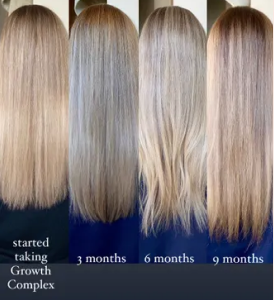
A comprehensive hair supplement that includes the nutrients your follicles need can serve as nutritional insurance. Look for formulas that include bioavailable forms of key ingredients like keratin, biotin, zinc, and B vitamins.
Slow Down If Possible
Rapid weight loss (more than 2-3 pounds per week) is more likely to trigger significant shedding than gradual weight loss. If hair loss is a major concern, discuss with your prescribing physician whether adjusting your dose or titration schedule might help slow the rate of weight loss while still achieving your goals.
Don't Skip Meals
Even when you're not hungry, try to eat regular, nutrient-dense meals. Diets under 1,000 calories per day can severely deprive follicles of what they need. Sustainable caloric intake supports both weight loss and hair health.
Take Care of Your Scalp
A healthy scalp creates the best environment for hair growth. Some people reduce their washing frequency when they notice shedding, but this can actually backfire by leading to buildup, inflammation, and clogged follicles.
Continue washing regularly with a gentle shampoo, and consider incorporating scalp treatments that support follicle health.
Be Patient
This might be the hardest advice to follow, but it's important. Telogen effluvium is, in most cases, self-limiting. Once the stressor resolves (weight stabilizes, nutrition improves), hair typically begins to regrow.
The shedding can be alarming and emotionally difficult, but it doesn't mean you're going bald. The hair loss is diffuse (all over the scalp rather than in patches), and the follicles themselves are not damaged.
When to Seek Professional Help
While GLP-1-related hair loss is usually temporary telogen effluvium, it's worth seeing a dermatologist or trichologist if:
- Hair loss is severe or progressive
- You're also seeing specific patterns (temples, crown, widening part) that might indicate androgenetic alopecia
- Shedding continues for more than 6 months without improvement
- You're experiencing other symptoms alongside hair loss
A specialist can rule out other causes, check for nutritional deficiencies, and recommend treatments like topical minoxidil if appropriate.
The Bottom Line
If you're experiencing hair loss on a GLP-1 medication, know this: it's a recognized phenomenon, it's almost certainly not permanent, and there are real things you can do to minimize it and support your hair's recovery.
The medications themselves aren't attacking your follicles. Your body is responding to rapid weight loss and potentially inadequate nutrition by temporarily deprioritizing hair growth.
By focusing on protein intake, monitoring your nutritional status, and giving your body the building blocks it needs for healthy hair, you can help mitigate the effects and come out the other side with both the weight loss you wanted and the hair you deserve.
It might take time. Hair doesn't operate on our preferred timeline. But for most people, the shedding does stop, and the hair does come back.
In the meantime, be gentle with yourself. Your body is going through a significant change, and so is your hair. Support both as best you can.


