




There's something almost magical about January 1st.
The ball drops. The calendar flips. And suddenly, anything feels possible. That thing you've been meaning to do? This is the year. That habit you've been trying to break? History. That version of yourself you've been imagining? Finally within reach.
For a moment, it's intoxicating.
Then February hits, and... well, we all know how that usually goes.
But here's the thing: that surge of motivation you feel at the start of a new year isn't some naive self-deception. It's not just holiday optimism clouding your judgment. There's actual psychology behind why fresh starts feel so powerful — and understanding that science might be the key to making your next resolution actually stick.
The Fresh Start Effect: It's Not Just in Your Head
(Well, technically it is. But in a really cool way.)
Researchers at Wharton Business School, led by Katherine Milkman, have spent years studying what they call "The Fresh Start Effect." And their findings are fascinating.
Here's the basic idea: certain dates feel like new beginnings. They create a psychological boundary between our "old self" and our "new self," making it easier to take action on goals because we feel disconnected from our past failures.
January 1st is the obvious example, but the fresh start effect kicks in at other times too — the start of a new week, a new month, a birthday, the beginning of a new semester, even moving to a new city. Any "temporal landmark" that feels like a dividing line between past and present can trigger it.
The research shows that people are significantly more likely to pursue goals immediately after these temporal landmarks. Gym attendance spikes at the beginning of each week, each month, and each year. Commitment to healthy eating increases after birthdays. Online searches for "diet" surge every January, every Monday, and even at the start of each month.
It's not coincidence. It's psychology.
Why Fresh Starts Actually Help
So what is it about these mental "new chapters" that makes us more likely to follow through?
A few things are happening in your brain when you experience a fresh start:
Psychological Distance from Past Failures
When you think about "last year's you," you're literally creating mental distance between your current self and the person who failed at previous attempts. This isn't delusion — it's actually helpful. It allows you to approach your goals without the weight of past failures dragging you down.
Research shows that people think about their past and future selves almost as if they're different people. Fresh starts tap into this by giving you "permission" to be different this time.
Increased Big-Picture Thinking
Temporal landmarks prompt us to step back and look at the bigger picture of our lives. Instead of getting caught up in day-to-day minutiae, we start asking bigger questions: What do I want? Who do I want to be? What really matters to me?
This big-picture thinking is actually crucial for motivation. It connects our daily actions to larger, more meaningful goals — which makes us much more likely to follow through.
A Sense of Optimism and Possibility
Fresh starts come with a built-in dose of hope. And hope, it turns out, is a powerful psychological resource. When we believe change is possible, we're more willing to put in the effort to make it happen.
Why Most Resolutions Fail (And Why Yours Doesn't Have To)
If fresh starts are so powerful, why do most New Year's resolutions crash and burn by Valentine's Day?
A few reasons:
The Intention-Action Gap
Having a goal is not the same as having a plan. And this is where most resolutions fall apart.
You might have a clear intention — "I want to be healthier" — but no specific action plan to make it happen. What does "healthier" actually mean? What specific actions will you take? When will you take them? What obstacles might come up, and how will you handle them?
Without answers to these questions, motivation fades and old habits take over.
Goals That Are Too Vague
"Be healthier." "Take better care of myself." "Be more confident."
These are beautiful aspirations, but they're terrible goals. How do you know when you've achieved "better self-care"? How do you measure "more confidence"?
Effective goals are specific and measurable. "Take a daily supplement for 90 days." "Walk for 20 minutes every morning." "Complete a 30-day meditation challenge." You know exactly what success looks like, and you can track your progress.
Relying on Motivation Alone
Here's the truth about motivation: it's unreliable. It shows up when you're excited about a new beginning and disappears the moment life gets busy, stressful, or boring.
The people who successfully change their habits don't rely on motivation — they rely on systems. They set up their environment to make the desired behavior easy and the undesired behavior hard. They create routines that don't require willpower. They build in accountability.
Expecting Too Much Too Fast
Sustainable change is slow. It's gradual. It's often invisible in the early stages.
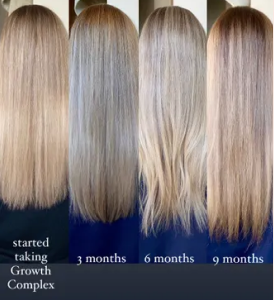
But we live in a world of before-and-after photos and 30-day transformations. We expect dramatic results immediately, and when they don't appear, we assume it's not working and give up.
The irony is that most people quit right before they would have started seeing results.
What Makes Some Fresh Starts Stick
So how do you harness the power of a fresh start without falling into the usual traps? Here's what the research — and practical experience — tells us:
Get Specific
Instead of "take better care of my hair," try "take Growth Complex every morning with breakfast for 90 days." Instead of "be healthier," try "add one serving of vegetables to lunch every day."
The more specific your goal, the more likely you are to achieve it. Specificity removes the mental effort of deciding what to do, which means you're more likely to actually do it.
Tie Actions to Identity
One of the most powerful predictors of behavior change is whether you see the behavior as part of who you are, not just something you do.
Instead of "I'm trying to eat healthier," think "I'm someone who nourishes my body." Instead of "I'm trying to take better care of my hair," think "I'm someone who prioritizes my health from the inside out."
This subtle shift matters. When a behavior is part of your identity, skipping it feels wrong — like you're betraying yourself.
Build in Accountability
Accountability dramatically increases follow-through. This could be a friend who's working on the same goal, a community or group challenge, or simply tracking your progress somewhere visible.
When someone else is watching — or when you know you'll have to face your own record — you're much more likely to show up.
Plan for Obstacles
Every goal will face obstacles. The difference between people who succeed and people who quit is whether they've thought ahead about how to handle those obstacles.
What will you do when you're traveling and your routine is disrupted? What about when you're sick, stressed, or just not feeling it? Having a plan for these situations means they won't derail you.
Give It Time
Real change takes longer than you think. And often, the benefits aren't visible immediately.
This is especially true for anything related to health. Whether you're trying to get stronger, lose weight, improve your skin, or grow healthier hair, you're often looking at weeks or months before you see tangible results. That doesn't mean it's not working — it means change is happening below the surface.
The key is committing to a timeframe, not just a goal. "I'm doing this for 90 days, regardless of what I see in the first few weeks." This kind of commitment gets you through the patience gap that kills most resolutions.
The Best Time to Start
Here's one final insight from the research: while fresh starts are powerful, they're not limited to January 1st.
Every Monday is a fresh start. Every new month is a fresh start. Your birthday, a new job, moving to a new place — these are all fresh starts.
And here's a secret: you can even create your own fresh starts. You don't have to wait for a calendar date to give you permission. If you wake up tomorrow and decide that today is the start of a new chapter, your brain will cooperate. The fresh start effect is psychological, which means you can activate it whenever you choose.
So yes, January 1st is a powerful opportunity. Use it.
But if you miss that window, or if you stumble and need to restart, remember: the next fresh start is always available to you. A new week, a new day, a new hour.
The best time to start was yesterday. The second best time is right now.


