




Volume for thin hair comes in two fundamentally different categories: cosmetic volume (making hair look fuller today) and structural density (actually having more or thicker hair over time). Both are legitimate goals. Confusing the two leads to frustration when a volumizing mousse that makes hair look great in the morning does not change what the mirror shows three months later.
Here is an honest breakdown of both categories and what each approach actually delivers.
Cosmetic Volume: What Works Today
Products and techniques that create the appearance of volume work by coating the hair shaft (adding temporary diameter), lifting the root (creating the illusion of thickness at the base), or distributing hair to cover areas of visible scalp more effectively.
- Volumizing shampoos and conditioners: deposit lightweight polymers on the hair shaft that temporarily increase its diameter. The effect lasts until the next wash. These do not change the actual density of hair on the scalp.
- Root-lifting sprays and powders: applied at the root, these create friction between the hair shaft and the scalp, keeping the hair elevated and preventing it from lying flat. Effective at creating the appearance of fullness. Purely cosmetic.
- Blow drying with a round brush from roots: lifts the hair shaft away from the scalp at the root, which is the highest-impact styling technique for creating visible fullness in fine hair. The lift lasts until the hair is washed or becomes damp again.
- Hair texture powders: absorb excess sebum at the root and create grip that adds visible lift. More durable than sprays for maintaining volume through the day.
Structural Density: What Changes Over Time
Real density change requires new follicle activity and thicker hair shaft production. This is slower and requires addressing the biological variables that limit follicle performance.
Scalp circulation: follicles need adequate blood flow to receive nutrients and hormonal signals. Regular scalp massage using the Detox Scalp Massager addresses this by stimulating the dermal papilla circulation. The Koyama 2016 study showed increased hair shaft diameter (not hair count) after 24 weeks of consistent daily scalp massage. Thicker individual strands produce more visual volume even at the same density.
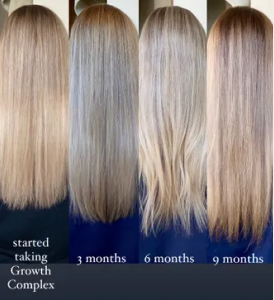
Internal nutrition: follicle matrix cells that are nutritionally well-supported produce thicker, stronger hair shafts than follicles in a nutritionally depleted state. Growth Complex provides Cynatine HNS (the bioavailable keratin that is the raw material for the hair shaft), zinc, selenium, and biotin at doses relevant to follicle function. The visual result over six months of consistent supplementation is measurably thicker individual strands and reduced shedding, both of which contribute to visible density improvement.
Post-shower technique: the microfiber Luxury Hair Towel and avoiding vigorous rubbing reduces the daily mechanical damage that makes thin hair look thinner. Hair that retains its length and is not being broken off at the mid-shaft appears denser than hair that is the same density but shorter from breakage.
Combining Both Approaches
The most practical approach for most people with thin hair is to use cosmetic volume techniques (volumizing shampoo, root spray, blow-dry technique) for immediate appearance management while building the structural density approach (supplementation, scalp massage, protective tools) for the longer-term result. Neither is a substitute for the other. The cosmetic approach makes today more manageable; the structural approach changes the baseline over months.
What Does Not Work
Thick coatings of oil on thin hair: heavy oils flatten the shaft and make thin hair look thinner, not fuller. If you use scalp oils, apply them to the scalp only and not to the mid-lengths or ends of fine hair.
Over-washing: frequent washing strips sebum that provides natural coating to the shaft. Every-other-day or every-two-day washing with a volumizing formula is typically better for thin hair volume than daily washing.
Post-Shower Technique for Maximum Volume
The post-shower routine is the highest-leverage styling moment for adding cosmetic volume to fine hair. Applying a volumizing mousse or spray to the root area on wet or damp hair, then blow-drying with a round brush while lifting the roots away from the scalp, produces the longest-lasting root lift of any technique. The key is applying the volumizing product before blow-drying rather than after, so the heat sets the lift into the hair shaft rather than just sitting on top of the dried hair.
For anyone using the Luxury Hair Towel, the plop method after washing (which encases the hair rather than rubbing it) preserves the hair's natural volume-ready state better than a vigorous cotton towel rub, which can compact the hair flat and remove the root lift before styling even begins.


