




Of all the nutritional variables associated with hair loss, ferritin is the most commonly missed and the most commonly misinterpreted. Most doctors check hemoglobin for anemia. Hemoglobin can be normal while ferritin is low enough to cause significant hair shedding. These are different measures of iron status, and for hair loss specifically, ferritin is the more relevant one.
What Ferritin Is and Why It Matters
Ferritin is the body's primary iron storage protein. It reflects how much iron the body has in reserve, independent of how much is circulating in the blood. Hemoglobin reflects circulating iron used for red blood cell production. You can have normal hemoglobin (no anemia by standard criteria) and low ferritin (depleted iron stores) simultaneously.
Hair follicle cells are among the most rapidly dividing cells in the body. They have a high iron requirement and are directly sensitive to ferritin depletion. Research consistently shows that ferritin below approximately 30 to 40 mcg/L is associated with hair shedding and slowed hair growth, even in the absence of frank anemia.
The Lab Test to Request
If you are experiencing hair loss and have not had ferritin specifically tested, ask your doctor for a serum ferritin test, not just a hemoglobin or standard CBC. These are different tests. A CBC without ferritin will not reveal the storage iron deficit that may be driving your shedding.
The test interpretation for hair loss is different from the interpretation for anemia. A ferritin of 15 to 20 mcg/L is 'normal' by many laboratory reference ranges (because it is above the threshold for anemia) but is below the level typically associated with optimal hair growth. For hair health, a ferritin of 70 to 80 mcg/L or above is often cited as the target, though this varies by individual.
What Depletes Ferritin
Menstruation: monthly blood loss is the most common reason women have lower ferritin than men. Heavy periods significantly accelerate depletion.
Caloric restriction and weight loss: reduced dietary iron intake alongside increased physiological stress depletes stores faster than maintenance eating.
Pregnancy and postpartum: iron demands of pregnancy are high, and delivery involves blood loss that further depletes stores.
Plant-forward diets: non-heme iron from plant sources is less bioavailable than heme iron from animal sources. Vegetarian and vegan diets require more careful attention to iron intake and absorption.
Malabsorption conditions: celiac disease, inflammatory bowel disease, and other conditions affecting gut absorption reduce iron uptake.
How to Raise Ferritin
If your ferritin is below the target range for hair health, the primary intervention is dietary and supplemental iron (in the form recommended by your doctor, since iron supplementation requires matching the form and dose to your specific level of depletion).
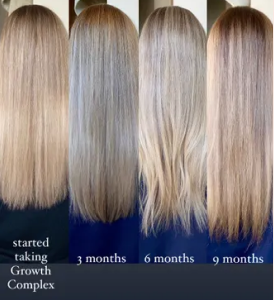
Vitamin C taken alongside iron-rich foods significantly improves non-heme iron absorption. Growth Complex provides vitamin C as part of its formula, which is relevant to iron absorption from dietary sources. Zinc, also in Growth Complex, supports the overall mineral environment for hair follicle function. However, Growth Complex does not contain iron, and ferritin depletion severe enough to cause significant hair loss requires direct iron supplementation, not a vitamin and mineral supplement as a primary treatment.
The Timeline for Ferritin Recovery
Ferritin repletion takes months, not weeks. Raising ferritin from 15 mcg/L to 70+ mcg/L typically requires three to six months of consistent iron supplementation depending on the form, dose, and your individual absorption. Hair improvement follows ferritin improvement on a similar timeline: hair growth responds to the improved storage iron environment as follicles return to anagen over the subsequent three to six months.


