




Hair loss affects many people with lupus, but it is not all the same type of hair loss, and that distinction matters significantly for what happens next and whether regrowth is possible.
Diffuse Non-Scarring Hair Loss — Lupus Hair
The most common form is directly tied to disease activity. During lupus flares, systemic inflammation and immune dysregulation, opens in a new tab disrupt the hair cycle, pushing follicles into the resting phase. The result is diffuse shedding across the scalp. This type is typically reversible — when the flare resolves and inflammation is brought under control, hair usually grows back.
Discoid Lupus Erythematosus — Scarring Hair Loss
This form warrants the most urgency. Discoid LE causes inflammatory plaques that destroy the hair follicle structure. When a follicle is destroyed by the inflammatory process, the hair loss is permanent in that area. DLE is characterized by erythematous, scaly patches, opens in a new tab that can progress to depigmentation and permanent alopecia if left untreated.
The window for treatment matters. Catching DLE early, before significant follicle destruction has occurred, gives the best chance of limiting permanent loss. Any person with lupus noticing patchy scalp lesions or scaling should seek evaluation promptly.
Telogen Effluvium from Medication
Many lupus medications — including hydroxychloroquine, methotrexate, and corticosteroids — can themselves trigger telogen effluvium, adding complexity to the picture. Hair loss in lupus may be from the disease, the treatment, or both. See the medications hub for more.
Alopecia Areata Coexisting with Lupus
People with lupus have a higher risk of developing other autoimmune conditions, including alopecia areata. Research documents a bidirectional association between alopecia areata and SLE, opens in a new tab, meaning each condition elevates the risk of the other. AA in the context of lupus presents as distinct patchy bald spots rather than diffuse thinning.
How to Tell Which Type You Have
- Diffuse thinning that tracks with disease flares and improves with SLE control: likely lupus hair or medication-related TE
- Patchy loss with scaling, inflammation, or skin texture changes on the scalp: suspect DLE until evaluated
- Distinct round bald patches without scarring: may indicate alopecia areata coexisting with lupus
What Actually Helps
- Diffuse non-scarring loss: bring underlying SLE under better control with appropriate medication
- Discoid LE on the scalp: topical or intralesional corticosteroids, hydroxychloroquine, and in refractory cases newer agents such as JAK inhibitors
- Medication-related TE: discuss dose adjustments with your rheumatologist without changing medications unilaterally
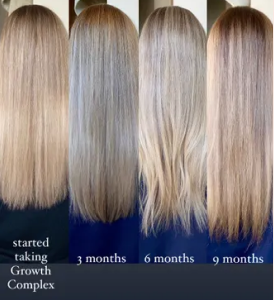
Nutritional support matters across all types. Women's Growth Complex provides zinc, selenium, and Cynatine HNS without botanical ingredients that might interact with lupus medications.


