




You started a new medication and, a few months later, you noticed your hair thinning. The timing feels too coincidental to ignore, but your prescriber didn't mention this as a side effect.
Drug-induced hair loss is more common than most people realize, and it is more often reversible than people fear. Here is what is happening, which medications are most commonly involved, and what you can do about it.
How Medications Disrupt Hair Growth
Hair grows in cycles. The active growth phase (anagen) lasts two to six years. The resting phase (telogen) lasts about three months, after which the hair sheds naturally. Under normal conditions, roughly 90% of your follicles are in anagen at any given time.
Medications disrupt this cycle in two main ways:
Telogen effluvium: the drug pushes an unusually large number of follicles into the resting phase at the same time. Two to four months later, those follicles all shed at once, causing diffuse thinning across the scalp. This is the most common type of drug-induced hair loss, opens in a new tab and is usually reversible once the trigger is addressed.
Anagen effluvium: the drug disrupts follicles actively in the growth phase, causing shedding within days to weeks. This is less common and is mainly associated with chemotherapy agents and high-dose immunosuppressants, not the medications covered on this page.
The Two-to-Four Month Delay
One of the most confusing things about drug-induced hair loss is the timing. Hair shedding typically appears two to four months after the medication starts, not immediately. This lag happens because the follicle enters the resting phase when the drug disrupts it, then sheds three months later when the resting phase ends.
This delay is why people often don't connect their shedding to a medication they started months earlier. If you started a new drug and noticed significant shedding two to three months afterward, the connection is worth raising with your prescriber.
Medications Most Commonly Associated with Hair Loss
Antidepressants and mood medications
Bupropion (Wellbutrin) has the strongest association with hair loss among antidepressants, with one large observational study finding a higher relative risk compared to SSRIs. Other antidepressants including SSRIs carry a low but real risk. The Wellbutrin and hair loss post covers the mechanism and timeline in detail.
GLP-1 medications for weight loss and diabetes
Semaglutide (Ozempic/Wegovy), tirzepatide (Zepbound/Mounjaro), and related GLP-1 receptor agonists are among the most frequently reported in current FDA adverse event data. The mechanism is primarily telogen effluvium secondary to rapid weight loss rather than a direct drug effect on follicles. See the dedicated posts on Zepbound and hair loss and Mounjaro and hair loss for details.
Blood pressure medications
Beta-blockers (metoprolol, atenolol) and ACE inhibitors are associated with hair loss in a small percentage of users. The mechanism is believed to be telogen effluvium.
Hormonal medications
Spironolactone, used for blood pressure and acne, has a complex relationship with hair loss in women. It is also used to treat hair loss. The full picture is covered in the spironolactone and hair loss post.
Acne medications
Isotretinoin (Accutane) can trigger telogen effluvium, though the mechanism is not fully understood. Some users also experience permanent follicle changes at high cumulative doses. See the Accutane and hair loss post.
Diabetes medications
Metformin has been associated with hair loss in some users, partly through its effect on vitamin B12 levels, which can become depleted with long-term use. The metformin and hair loss post covers this.
ADHD medications
Adderall and Vyvanse (amphetamine-based stimulants) can contribute to hair loss through appetite suppression leading to nutritional deficits, and through stress effects on the hair cycle. See the Adderall and hair loss post.
What to Do If You Suspect Your Medication
Do not stop your medication without talking to your prescriber first. Abrupt discontinuation carries its own risks, and hair loss from medication is usually temporary
Note when the shedding started and when you started the medication. Two to four months apart is the typical pattern for telogen effluvium
Get bloodwork. Iron deficiency, low ferritin, thyroid dysfunction, and vitamin B12 deficiency can all compound drug-induced shedding and are worth ruling out
Ask about dose adjustment. Many cases of drug-induced hair loss are dose-dependent and improve when doses are reduced without changing the treatment
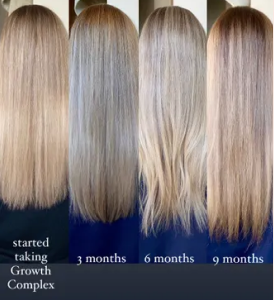
Support your follicles nutritionally. Rapid hair loss depletes the nutrients your remaining follicles need. Zinc, selenium, and biotin all support follicle function during and after the disruption. HairLove's Women's Growth Complex addresses these nutritional gaps with clinically studied ingredients
When Hair Comes Back
In most cases of drug-induced telogen effluvium, hair begins to regrow three to six months after the trigger is removed or reduced. Full recovery typically takes nine to twelve months. The follicle is not permanently damaged; it has simply been resting.
Cases that do not improve, or where shedding continues to progress, may involve an underlying androgenetic pattern that the medication is accelerating rather than causing. In those situations, addressing the drug trigger alone may not be sufficient.
The Bigger Picture
If a medication is working for your health, the decision to stay on it, adjust the dose, or switch is a medical one that belongs with your prescriber, not something to make based on hair alone. What you can control is the nutritional environment your follicles are working with throughout the process.
Use this page as a starting point and the individual posts linked above as your deeper reference for each specific drug or drug class.


