



You started Mounjaro for type 2 diabetes or weight management, and a few months in, you noticed significantly more hair in your brush. You're not alone, and you're not imagining it.
Mounjaro and its weight management counterpart Zepbound are the same drug — tirzepatide. The question of whether it causes hair loss is worth taking seriously, because the evidence from clinical trials shows a real pattern, and the mechanism matters for how you respond.
What the SURMOUNT Clinical Trials Actually Found
In the SURMOUNT-1 trial evaluating tirzepatide for weight management, alopecia was reported as an adverse event in 5.7% of participants, opens in a new tab at the highest dose, compared to 0.9% in the placebo group. That is a meaningful gap. Women were disproportionately affected, with rates approaching 7% in female participants compared to under 1% in men.
FDA adverse event reporting data confirms this pattern: tirzepatide shows higher reporting rates for alopecia than older GLP-1 medications. Researchers note that tirzepatide's association with telogen effluvium specifically points to rapid weight loss as the primary driver rather than a direct drug effect on follicles.
Why Rapid Weight Loss Causes Shedding
When the body undergoes rapid weight loss, it experiences a physiological stress response that pushes a large number of follicles into the telogen (resting) phase simultaneously. Two to four months later, those follicles all shed at once, creating the noticeable hair fall.
This is telogen effluvium, opens in a new tab, and it is not caused by direct follicle damage. The follicle is temporarily resting, not permanently harmed — the same mechanism seen after surgery, illness, and childbirth.
The Nutritional Gap That Compounds It
Mounjaro works by substantially reducing appetite. Eating significantly less means lower intake of the nutrients follicles depend on:
- Ferritin: below 30 mcg/L is consistently associated with telogen effluvium in women, and caloric restriction is a well-documented cause of ferritin decline
- Zinc: depletion impairs keratin production and follicle protein synthesis
- Protein: falling below maintenance levels directly reduces the raw material needed for hair growth
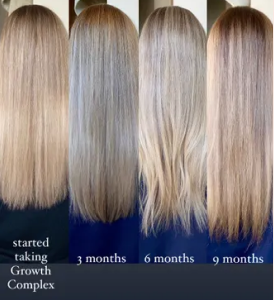
Addressing these gaps proactively is where supplementation helps. Women's Growth Complex provides zinc, selenium, and Cynatine HNS — a bioavailable keratin studied for hair strength and thickness — to support follicles during caloric restriction.
An Unexpected Finding
One counterintuitive piece of data: a case report published in PMC, opens in a new tab documented a 57-year-old man with androgenetic alopecia who experienced significant improvement in hair density after six months on tirzepatide. The researchers proposed that improved insulin sensitivity may have reduced follicle miniaturization associated with metabolic syndrome. Tirzepatide's effects on hair are not uniformly negative.
What to Expect and What Helps
- Shedding typically begins two to four months after the most rapid phase of weight loss and stabilizes as the rate of loss slows
- Protein intake is the most critical variable. Most guidelines suggest 1.2 to 1.6g per kg of body weight daily during active weight loss
- Check ferritin specifically — not just hemoglobin. Ferritin can be low enough to affect hair even when standard blood counts are normal
- Most cases of Mounjaro-related hair loss are temporary. Recovery typically begins three to six months after shedding peaks
Connecting the Evidence
Mounjaro-associated hair loss is real, documented in trial data, and more common in women. The mechanism is primarily the physiological stress of rapid weight loss. The follicle is not permanently damaged, recovery is realistic, and the most actionable response is nutritional. For more on GLP-1 medications and hair, see the Zepbound and hair loss post and the medications hub.


