



You've been on Wellbutrin for a few months and you're feeling better. Then you start noticing more hair in your brush, more on the shower floor, more collecting on your pillowcase. The timing is hard to ignore.
You're not imagining it, and you're not alone. Wellbutrin is the antidepressant most associated with hair loss, and it's worth understanding what's actually happening so you can make sense of your situation and know what your options are.
Is Wellbutrin Really Linked to Hair Loss?
Yes, though the risk is lower than many online forums suggest. A large observational study published in International Clinical Psychopharmacology, opens in a new tab found that people taking bupropion (the generic name for Wellbutrin) were 46% more likely to report hair loss compared to those on fluoxetine (Prozac). That sounds alarming until you put it in context: the absolute risk was about one additional case per 242 people over two years.
Postmarketing data, which tracks real-world reports after a drug is approved, suggests roughly 1 to 4% of Wellbutrin users experience noticeable hair shedding. That's not rare enough to dismiss, but not common enough to expect.
Why Wellbutrin Affects Hair Differently Than Other Antidepressants
Wellbutrin works as a norepinephrine-dopamine reuptake inhibitor (NDRI), which is a different mechanism than SSRIs like Prozac or Lexapro. The specific reason why NDRIs are more associated with telogen effluvium than SSRIs is not fully understood, but the association is consistent across multiple data sources.
The mechanism is telogen effluvium: the drug pushes an abnormally large number of follicles out of the active growth phase and into the resting phase prematurely. Two to four months later, when those follicles complete their resting cycle, they all shed at once, creating the noticeable increase in daily hair fall that brings most people to search for this topic.
The Timeline to Expect
- You start Wellbutrin and begin the dose titration over the first few weeks
- Hair appears normal for the first six to ten weeks
- Increased shedding typically begins two to four months after starting the medication
- Shedding usually peaks and then plateaus as the body adjusts to the medication
- In most cases, shedding reduces or stops within three to six months of starting, even without any changes to the medication
- If the medication is stopped or reduced, hair regrowth typically begins within three to six months after that
Who Is Most Likely to Notice Wellbutrin Hair Loss?
- Women are more commonly affected than men
- Those starting at higher doses or with faster dose increases tend to notice more shedding
- People with existing low ferritin, iron deficiency, or thyroid dysfunction may experience more pronounced shedding because their follicles are already under nutritional stress
- Those with a personal or family history of androgenetic alopecia may find the medication accelerates thinning that was already in progress
What You Should Not Do
Do not stop Wellbutrin without talking to your prescriber first. Abrupt discontinuation of bupropion carries genuine risks, including discontinuation symptoms and return of the condition being treated. Hair loss, while distressing, is typically temporary. Stopping an effective medication for depression is a significant decision that should involve your prescriber.
What Actually Helps
- Tell your prescriber. They may consider a dose adjustment, which can reduce shedding in dose-dependent cases. If hair loss is significant, a dermatology referral may be appropriate
- Get bloodwork. Ferritin, TSH, free T4, and vitamin D are the first-line tests for compounding factors. Low ferritin in particular amplifies drug-induced shedding and is commonly low in women on antidepressants
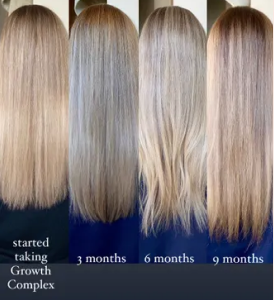
- Address nutritional gaps. Zinc, selenium, biotin, and adequate protein all support follicle function during the period of disruption. HAIRLOVE's Women's Growth Complex addresses these specifically with clinically studied ingredients
- Be patient with the timeline. Most drug-induced telogen effluvium resolves within six to nine months even without stopping the medication, as the body adapts
What This Means for You
Wellbutrin-related hair loss is real but usually temporary. The follicle is not being permanently damaged. What is happening is a disruption to the hair cycle that pushes more follicles than usual into resting at the same time. Those follicles will return to growth; the timing is the hard part.
If you are experiencing this, the most useful things you can do right now are: mention it to your prescriber, check your iron and thyroid levels, and support your follicles nutritionally to give them the best environment to recover in. For a broader look at how antidepressants compare on this front, the medications that cause hair loss hub covers the full picture.


