



Does Spironolactone Cause Hair Loss?
Spironolactone sits in an unusual position in the hair loss conversation. It appears on lists of medications that cause hair loss and also on lists of treatments dermatologists prescribe for hair loss. Both are accurate. The outcome depends entirely on why you're taking it and what's driving your hair loss.
What Spironolactone Is and How It Works
Spironolactone (brand name Aldactone) is primarily a potassium-sparing diuretic prescribed for high blood pressure and heart failure. It also has significant anti-androgenic properties: it blocks androgen receptors and weakly inhibits androgen production, which is why it has been used off-label for years to treat hormonally-driven acne and female pattern hair loss.
When Spironolactone Is Used to Treat Hair Loss
For women with female pattern hair loss driven by androgen excess, spironolactone can reduce the androgenic pressure on hair follicles by blocking DHT's effect at the receptor. A systematic review of oral and topical spironolactone for androgenetic alopecia, opens in a new tab found it to be an effective option for women who did not respond well to topical minoxidil.
A 2024 randomized, double-blind, placebo-controlled pilot study, opens in a new tab found that oral spironolactone 100mg daily combined with topical minoxidil improved hair density and diameter in premenopausal women over 24 weeks. A UCLA study of 166 women found that 74.3% of patients reported stabilization or improvement, opens in a new tab, opens in a new tab in hair loss.
When Spironolactone May Cause or Worsen Hair Loss
For men, spironolactone's anti-androgenic effects can cause scalp and body hair changes — it is rarely prescribed for hair loss in men. For women at the beginning of treatment, an increase in shedding during the first four to eight weeks as the hair cycle adjusts is common. This is a transitional response, not a sign of ongoing damage.
Side Effects Women Should Know
- Menstrual irregularities in roughly one-third of users
- Hyperkalemia (elevated potassium): rare but serious, particularly with kidney disease or potassium supplements
- Dizziness and lightheadedness at higher doses
- Not safe during pregnancy: contraindicated in women actively trying to conceive
- Breast tenderness in some users
Supporting Hair Alongside Spironolactone
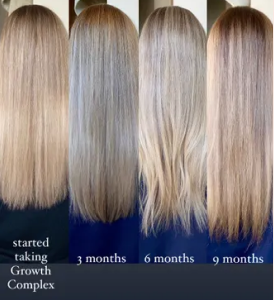
Nutritional support matters alongside any prescription approach. Women's Growth Complex provides zinc, selenium, and Cynatine HNS to support the follicle environment. For a broader overview of how androgens drive hair loss in women, see the testosterone and hair loss in women post.
Two Sides, One Drug
Spironolactone's relationship with hair reflects how much context matters in hormonal hair loss. For women with androgen-driven female pattern hair loss, it can meaningfully slow or stop progression. For the wrong patient or without attention to side effects, it adds complexity without benefit. The decision belongs with a dermatologist who can assess your specific hormonal picture.


