



If you have fine or thinning hair, the way you handle it immediately after washing is one of the highest-risk windows for mechanical damage. Wet hair loses structural integrity, and the friction of a regular cotton towel creates the kind of cuticle roughening and shaft stress that, repeated daily, compounds into visible breakage and thinning over time.
Why Wet Hair Is Different
The hydrogen bonds that give hair its structure are temporarily broken by water. A wet strand can stretch up to 30% beyond its dry length before breaking, compared to approximately 10% when dry. This means the shaft is temporarily structurally weaker and more vulnerable to mechanical stress.
The conventional towel-drying habit, wrapping and rubbing hair vigorously in a cotton towel, applies significant friction and tension to hair in its most vulnerable state. The cuticle scales roughen, the shaft stretches beyond its elastic limit in some areas, and over time this produces breakage that is indistinguishable in appearance from hair loss.
Why This Matters More for Thinning Hair
Thinning hair typically has a smaller diameter than full-density hair. A thinner shaft has less structural material to withstand mechanical stress before breaking. Hair that is in a telogen effluvium shed phase is also cycling toward release from the follicle, and the mechanical stress of aggressive towel drying can accelerate the shedding of hairs that were already preparing to shed.
What Microfiber Does Differently
- Lower friction against the hair shaft. Microfiber absorbs water from the hair through capillary action rather than friction, removing the need for rubbing.
- Greater water absorption per stroke. Microfiber holds significantly more water per unit of fabric than cotton, so less physical contact is needed to achieve the same drying result.
- Reduced mechanical stress on the cuticle. The fine fiber structure is less abrasive to the hair shaft surface than the coarser fibers of standard cotton terry towels.
How to Use a Microfiber Towel Correctly
After washing, gently squeeze excess water from sections of hair rather than rubbing or wringing. Then wrap the hair in the microfiber towel using the plop method (lean forward, place the towel flat, lower hair into the center, fold the towel forward and twist the sides at the nape) and leave it for 10 to 20 minutes. Remove gently and allow hair to air dry or finish with a diffuser on low heat. No rubbing. The rubbing is the problem.
The Internal Side of the Equation
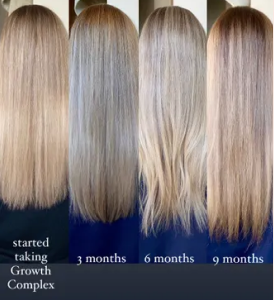
Protecting fragile hair from mechanical damage during drying is one part of the picture. The other is ensuring the follicle is producing a structurally strong hair shaft in the first place. Growth Complex supports the internal nutritional environment that determines hair shaft quality. The Luxury Hair Towel handles the post-shower protection step.
Building the Post-Shower Habit
The technique matters as much as the towel. Switching to a microfiber towel but continuing to rub vigorously will reduce some of the mechanical damage but not eliminate it. The full benefit comes from the combination of the lower-friction material and the squeezing and plopping technique that eliminates rubbing entirely.
For people who have been rubbing their hair dry for years, the first few weeks with a microfiber towel and the new technique will feel slower. The hair will take slightly longer to reach the damp-not-wet state before air drying. Over time the technique becomes automatic, and the reduction in daily breakage at this step becomes part of the cumulative improvement in hair density and length retention.
Microfiber for Color-Treated and Fine Hair
Color-treated hair presents a particular challenge for post-shower care. The coloring process opens the cuticle to deposit pigment, and even after the cuticle re-closes, it is more porous and more vulnerable to mechanical stress than virgin hair. For anyone with both thinning hair and color treatment, switching to a microfiber towel addresses both vulnerabilities simultaneously: reduced friction for the thinning diameter strands, and reduced cuticle lifting for the chemically opened cuticle structure.
The Luxury Hair Towel is appropriate for all hair types and particularly beneficial for fine, color-treated, or fragile hair where the mechanical damage from cotton towel drying is most consequential.


