




Rheumatoid arthritis can cause hair loss through three separate mechanisms, the disease itself, the most commonly used first-line medication, and some of the biologics used when first-line treatment fails. Understanding which mechanism is driving your hair loss changes what your options are.
Mechanism One: Disease-Driven Telogen Effluvium
RA is a systemic autoimmune inflammatory disease. During periods of high disease activity or flares, the body-wide inflammatory burden, elevated cytokines, immune activation, and physiological stress, can push hair follicles into the resting phase. The result is diffuse telogen effluvium that tracks with disease activity: hair loss increases during flares and often improves when the disease is better controlled.
This type of hair loss is generally reversible when RA is brought under better control with appropriate medication. The better your RA is managed, the less of this mechanism applies.
Mechanism Two: Methotrexate and Folate Depletion
Methotrexate is the cornerstone first-line treatment for RA and works by inhibiting dihydrofolate reductase, the enzyme that activates folate. This is the mechanism by which it suppresses the immune system, rapidly dividing immune cells are the primary target.
But hair follicle matrix cells are also among the most rapidly dividing cells in the body, and they are also affected by methotrexate's folate-depleting mechanism. Hair loss from methotrexate is dose-dependent and typically presents as diffuse shedding two to four months after starting or increasing the dose.
The standard management is folic acid supplementation, typically 1 to 5mg daily on the days you do not take methotrexate. This largely preserves the drug's immunosuppressive effect while reducing the folate-depletion side effects including hair loss. If you are on methotrexate for RA and have not been prescribed folic acid, this is worth raising with your rheumatologist.
Mechanism Three: Biologics and Alopecia Areata
This is the least intuitive mechanism but the most important to recognize. Some anti-TNF biologic medications used for RA, including adalimumab, etanercept, and infliximab, have been documented to paradoxically trigger alopecia areata in susceptible individuals, even though TNF-alpha is normally pro-inflammatory and alopecia areata is driven by a different immune pathway.
Biologic-induced alopecia areata presents as patchy bald spots rather than diffuse shedding, which is how you can distinguish it from the other two mechanisms. If you develop patchy hair loss while on a biologic for RA, it should be evaluated by a dermatologist before assuming it is telogen effluvium from the disease.
How to Navigate Hair Loss Alongside RA Treatment
-
Tell your rheumatologist. They need to know about the hair loss to help distinguish between mechanisms and consider whether any adjustments are appropriate
-
If on methotrexate without folic acid supplementation: ask whether folic acid is appropriate. This is standard of care in most protocols
-
If the hair loss is patchy and appeared after starting a biologic: request a dermatology referral rather than assuming it is TE
-
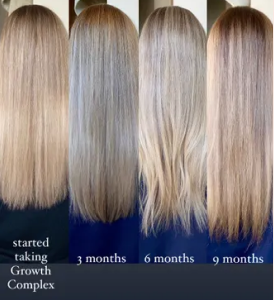
Support nutritional status broadly. RA and its treatments can deplete folate, zinc, and selenium. Women's Growth Complex, opens in a new tab provides zinc, selenium, and Cynatine HNS to support follicle health during RA management
For the full autoimmune hair loss context, see the autoimmune hair loss hub, opens in a new tab.


