




Autoimmune diseases can affect hair in fundamentally different ways. Some directly attack the hair follicle. Some cause body-wide inflammation that disrupts the hair cycle. Some damage the gut or tissues, making it harder to absorb the nutrients follicles depend on. And the medications used to treat these conditions can add a layer of their own.
Understanding which type you're dealing with is the most important step, because treatments and expectations are completely different depending on the answer.
Alopecia Areata — Immune System Attacking the Follicle Directly
Alopecia areata (AA) is caused by loss of immune privilege at the hair follicle bulb during the anagen phase. Autoreactive CD8 T cells attack the follicle, opens in a new tab, driven by upregulation of IFN-gamma and the JAK-STAT pathway. The result is patchy, non-scarring hair loss in round or oval areas. Follicles remain alive — suppressed, not destroyed — which is why regrowth is possible, sometimes spontaneously and sometimes with treatment.
AA is associated with thyroid disease, celiac disease, rheumatoid arthritis, type 1 diabetes, and SLE. Having one significantly increases risk of others.
Lupus — Multiple Mechanisms, Different Outcomes
SLE can cause diffuse non-scarring shedding during flares from systemic inflammation; scarring hair loss from discoid LE lesions that permanently destroy the follicle; and telogen effluvium triggered by lupus medications. The scarring form is the most urgent. See the lupus and hair loss post for the full breakdown.
Hashimoto's Thyroiditis — Diffuse Shedding from Thyroid Disruption
Hashimoto's is the most common cause of hypothyroidism and is itself autoimmune. Thyroid hormones are essential for normal hair cycle regulation — both hypothyroidism and hyperthyroidism cause diffuse telogen effluvium. Hair loss from Hashimoto's is typically diffuse and is one of the most treatable causes of autoimmune hair loss: correcting thyroid levels with medication typically resolves it within six to twelve months.
Rheumatoid Arthritis — The Medication Mechanism
RA itself can cause diffuse shedding through systemic inflammation. In practice, RA-related hair loss is more often driven by treatments: methotrexate depletes folate, and some anti-TNF biologics can paradoxically trigger alopecia areata. See the rheumatoid arthritis and hair loss post.
Celiac Disease — The Malabsorption Mechanism
Celiac causes hair loss through nutrient malabsorption (iron, zinc, selenium, B12, vitamin D) and autoimmune cross-reactivity where tTG antibodies may attack follicle structures. A strict gluten-free diet addresses both mechanisms. See the celiac disease and hair loss post.
What All Autoimmune Hair Loss Conditions Share
- The immune system is involved — either attacking the follicle directly or creating systemic conditions that disrupt the hair cycle
- Diagnosis matters before treatment: the approach for AA is completely different from lupus, which is different from celiac
- Nutritional status is compromised in most autoimmune conditions. Supporting follicle nutrition — zinc, selenium, B vitamins, protein — is relevant across all types
- Multiple autoimmune conditions commonly coexist. Comprehensive screening is important when hair loss does not respond as expected
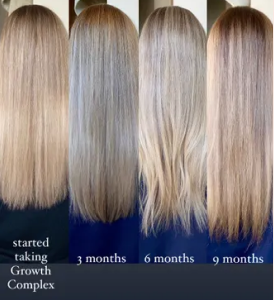
Regardless of the specific condition, Women's Growth Complex provides Cynatine HNS, zinc, selenium, and biotin without botanical ingredients that might interact with immunomodulatory medications.
The Diagnostic Step That Changes Everything
Autoimmune hair loss is not one condition — it is a family of conditions with different mechanisms. The common thread is that immune dysregulation disrupts the follicle cycle, either directly or through collateral damage. Getting the right diagnosis is the most valuable first step. A dermatologist can distinguish between types based on pattern, scalp examination, and biopsy when needed.


