



The silk pillowcase is one of the most talked-about hair accessories in the last several years. The claims range from accurate to significantly overstated. Here is exactly what a silk pillowcase does for hair, based on what friction reduction actually means for the hair shaft, and what it cannot address.
The Friction Problem
Cotton pillowcases have a relatively rough surface texture that creates significant friction against the hair shaft during sleep. Most people move their head between 20 and 40 times per night. Each movement creates friction between the hair and the pillowcase surface. Over weeks and months of nights, this cumulative friction contributes to:
- Cuticle damage: the outermost layer of the hair shaft is made of overlapping cuticle scales. Friction roughens these scales, creating the frizzy texture caused by raised cuticles and weakening the shaft structurally.
- Mechanical breakage: weakened cuticles and shaft structure lead to breakage, particularly in the mid-length and at areas of repeated friction (typically the back of the head).
- Tangling: rough fabric catches and tangles hair, and the mechanical stress of detangling tangled sleep-matted hair is a significant breakage event in itself.
What Silk Actually Does
Silk has a lower coefficient of friction than cotton. Hair moves against silk with less resistance. Less resistance means less cuticle roughening, less mechanical breakage, and less tangling overnight. For hair that is already fragile, fine, chemically processed, or in a shedding phase, this mechanical protection is more meaningful than for thick, healthy hair.
What It Does Not Fix
A silk pillowcase cannot address the cause of hair loss. If hair is shedding due to nutritional deficit, hormonal imbalance, thyroid dysfunction, androgenetic alopecia, or any other internal cause, reducing overnight friction will not treat that cause. The silk pillowcase is protective, not curative.
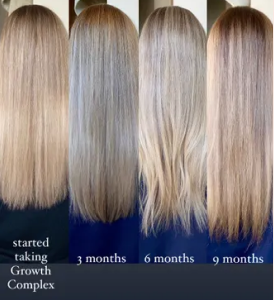
Healthy hair that is protected from mechanical damage starts with a well-nourished follicle. Growth Complex addresses the internal side. The Silk Beauty Pillowcase addresses the external side. Both matter.
Breakage vs Loss: How to Tell the Difference
Hair that breaks from friction has a blunt, flat end, because the shaft snapped mechanically. Hair that sheds naturally from the follicle has a tapered, pointed tip at the root end (the bulb), which is the natural end of the telogen-phase strand. If most of your shed hairs have flat ends, breakage is the primary issue and protective tools like silk pillowcases are directly relevant. If most have pointed root bulbs, the issue is follicle-level loss and internal support is the priority.
How Long Before You Notice a Difference
The primary mechanical benefit of a silk pillowcase is cumulative. One night on a silk pillowcase does not transform damaged hair. After two to four weeks of consistent use, people with fine or fragile hair typically notice reduced morning tangles and smoother hair texture, because the nightly cuticle roughening is no longer compounding daily. After two to three months of consistent use, a reduction in mid-length breakage often becomes visible in the daily shed count.
These are protective benefits, not growth benefits. Silk protects the hair that is there from unnecessary mechanical stress. The internal work of growing stronger, denser hair happens at the follicle level through consistent nutritional support.
Using Both Silk Pillowcase and Growth Complex Together
The internal and external dimensions of hair protection are complementary. Growth Complex supports the follicle's ability to produce a structurally strong hair shaft with the right protein and mineral inputs. The Silk Beauty Pillowcase protects that hair shaft from the mechanical wear that cotton creates overnight. Hair that is produced well and protected well grows longer and denser over time than hair that is either nutritionally compromised or mechanically damaged.
For people in an active shed phase, the protective role of the silk pillowcase is particularly relevant: the hairs that are still attached to the scalp are more vulnerable to mechanical breakage during telogen effluvium because the follicle's grip on them is loosening. Reducing overnight friction protects these hairs from premature breakage during the period when they are most at risk.


