



Wet hair is structurally weaker than dry hair. Fine hair is structurally thinner than thick hair. Wet fine hair is the most vulnerable hair type at the most vulnerable moment, and the brush you use in this window makes a meaningful difference to your daily breakage count.
Why Fine Hair Breaks Easily When Wet
The hydrogen bonds that hold the hair shaft in its natural structure are temporarily disrupted by water. This makes the shaft more flexible and stretchable, but also more susceptible to snapping under tension before those bonds reform. Fine hair has a smaller cross-sectional diameter, which means there is less structural material providing resistance to breakage under the same mechanical force.
A brush that creates tension, resistance, or catches and pulls on tangles will cause disproportionately more breakage on fine wet hair than on thick dry hair. The tool choice here is a mechanical damage question, not a cosmetic preference.
What Makes a Brush Good for Wet Fine Hair
- Flexible or cushioned bristles that give when they encounter a tangle rather than pulling through it forcefully.
- Wide-spaced rows that allow the brush to slide through hair with minimal resistance rather than compressing sections together.
- A base that flexes to follow the contours of the section being brushed rather than applying rigid pressure.
- Bristle tips that are smooth and do not snag the cuticle surface.
The Denman Brush for Wet Fine Hair
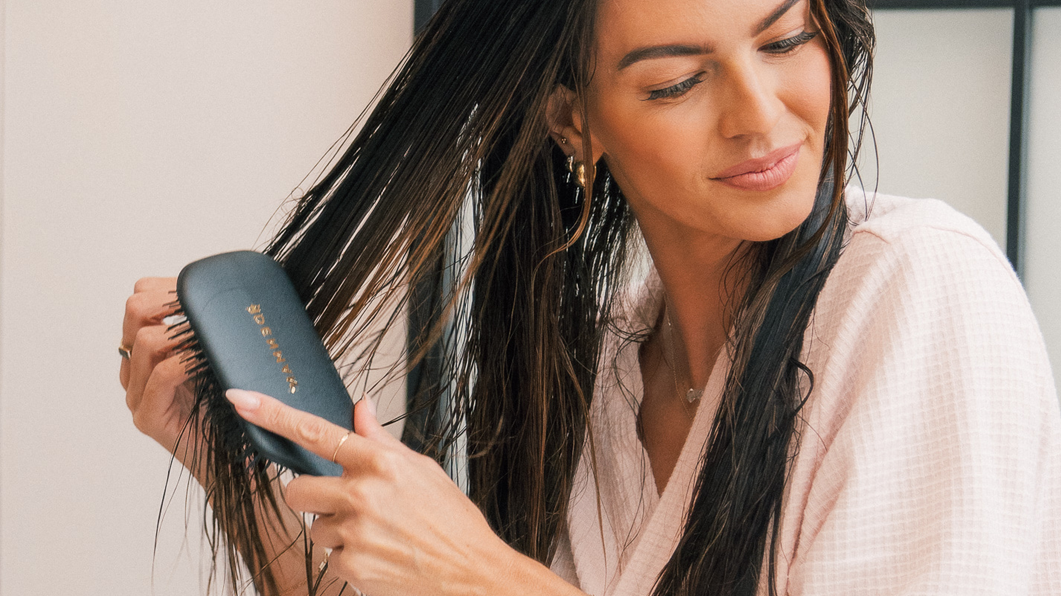
The Denman Hair Brush (7-row configuration) has a pin-cushion rubber base that flexes as it moves through hair, and the rows are spaced to provide control without creating the compression and resistance that damages fine wet strands. Fine hair should be brushed with slightly lighter grip than thick hair, allowing the flexible base to do the work rather than pressing the pins through with force.
The 7-row Denman is appropriate for fine hair specifically because it provides enough control to detangle without the density of a larger brush that would create excessive friction on a thin section of fine strands.
Technique Matters as Much as the Tool
Start from the ends, not the roots. Hold the section above where you are brushing to reduce the tension transmitted to the follicle. Work in small sections rather than brushing the full length in one stroke. Finger-detangle any significant knots before introducing the brush.
Pair the brush work with the right post-shower towel to minimize pre-brush friction. The Luxury Hair Towel removes excess water through absorption rather than friction, so hair goes into the brush-out step with less pre-existing mechanical stress.
When to Brush vs When to Comb
For very fine, fragile, or tangled wet hair, a wide-tooth comb used from ends to roots may be a lower-risk first step than a brush, because a comb creates less drag across a larger section simultaneously. Use the comb to remove major tangles, then use the Denman to smooth and style once the hair is partially detangled.
What to Avoid
Brushes with closely packed nylon bristles create too much friction on fine wet strands and should be avoided during or immediately after washing. Boar bristle brushes, while excellent for sebum distribution on dry hair, have enough resistance to cause significant breakage on wet fine hair under tension. Metal-tipped bristles can catch and snag the cuticle surface.
The common mistake is using a dry hair styling brush on wet fine hair because it is the nearest available tool. Having a dedicated post-shower brush or comb within reach of the shower prevents the default to the wrong tool when hair is at its most vulnerable.
Building Your Post-Shower Routine
The post-shower window is the highest-risk point for mechanical hair damage and the ideal moment to stack protective steps efficiently. The sequence: Luxury Hair Towel to remove excess water without friction, followed by a leave-in or detangling product if needed, followed by the Denman Brush starting at the ends, then air dry or diffuse on low heat. Each step in this sequence reduces the mechanical stress of the previous vulnerable moment.
Building this sequence as a consistent habit, rather than reaching for whatever is closest after washing, is what produces the cumulative reduction in daily breakage that shows up as better length retention and improved density over months of consistent practice.


