



The connection between sleep quality and hair health is real and documented, but it is often presented in ways that overstate the evidence. Here is what the research actually shows about sleep, the hair growth cycle, and where a sleep supplement fits into the picture.
How Sleep Affects the Hair Growth Cycle
Growth hormone is secreted primarily during slow-wave (deep) sleep, with the largest pulse occurring in the first half of the night. Growth hormone drives IGF-1 production, and IGF-1 is a well-documented promoter of hair follicle growth, extending the anagen phase and supporting dermal papilla cell activity. Disrupting deep sleep consistently reduces this growth hormone pulse.
Cortisol, the primary stress hormone, also plays a role. Chronically elevated cortisol, which can result from sustained poor sleep, suppresses the production of a protein called GAS6. Research published in Nature in 2021 showed that elevated corticosterone holds hair follicle stem cells in a quiescent state, preventing follicle regeneration. This is the mechanism through which chronic stress and poor sleep are connected to hair loss at the biological level.
What the Melatonin Research Shows
Melatonin has an interesting dual role in hair biology. As a signaling molecule and antioxidant, melatonin is present in the hair follicle independently of its sleep-regulating function. Several in vitro studies have shown that melatonin promotes hair follicle elongation and stimulates anagen-phase hair growth in cultured follicles. A controlled clinical study published in the British Journal of Dermatology in 2004 found that topical melatonin application increased anagen hair rate in women with androgenetic alopecia.
Most sleep supplements, including HAIRLOVE Beauty Sleep, use melatonin at doses designed to improve sleep onset and sleep quality rather than as a topical hair treatment. The hair benefit comes through improving the deep sleep during which growth hormone is secreted, not from melatonin acting directly on follicles at oral supplement doses.
Ashwagandha and Cortisol
Ashwagandha is the other key ingredient in the sleep support category relevant to hair. As an adaptogen, ashwagandha has documented evidence for reducing cortisol levels in chronically stressed individuals. Lowering cortisol through improved stress response reduces the stem cell quiescence effect and supports the conditions necessary for normal follicle regeneration.
The Practical Picture
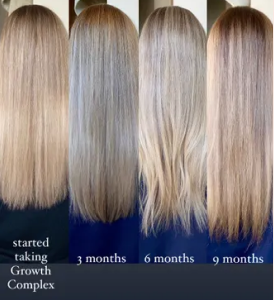
Poor sleep contributes to hair loss through the growth hormone reduction and cortisol elevation pathways. Improving sleep quality addresses both. Beauty Sleep is most effective as part of a comprehensive approach alongside internal nutritional support through Growth Complex.
How Long Before Sleep Improvement Affects Hair
Sleep quality improvements affect hair indirectly through the growth hormone and cortisol pathways, and the hair cycle takes three to six months to respond to any change in its environment. Do not expect visible hair changes within weeks of improving sleep. What you may notice earlier is reduced shedding at 60 to 90 days if the combination of improved sleep quality and internal nutritional support is addressing a real deficit in your hair's environment.
The most realistic framing for Beauty Sleep is as part of a system: the nutritional building blocks the follicle needs (Growth Complex) and the hormonal environment created by sleep quality that determines how efficiently the follicle uses those building blocks (Beauty Sleep).
Other Sleep Factors That Affect Hair
Beyond melatonin and growth hormone, sleep affects hair health through the regulation of inflammatory pathways. Chronic sleep deprivation elevates inflammatory cytokines systemically, and scalp inflammation is a documented contributor to follicle miniaturization. The anti-inflammatory effect of consistently adequate sleep is difficult to isolate from other sleep benefits, but it is part of the systemic picture. Sleep position also matters marginally: sleeping on the same side every night creates consistent friction on one area of the scalp and one side of the hair. A silk pillowcase reduces this friction regardless of sleep position.
Combining Beauty Sleep With Other Sleep Hygiene Practices
A sleep supplement addresses the physiological dimension of sleep quality: melatonin supports sleep onset, ashwagandha reduces cortisol elevation that disrupts sleep architecture, and the combination supports the deep sleep stages during which growth hormone is secreted. But supplement support works best when basic sleep hygiene is also in place.
The fundamentals: consistent sleep and wake times that anchor the circadian rhythm, a bedroom environment that is cool and dark, avoiding blue light exposure in the 90 minutes before bed, and limiting caffeine after early afternoon. These behavioral factors determine sleep architecture as much as any supplement, and Beauty Sleep is most effective when it is not fighting against chronically disrupted sleep hygiene.


