


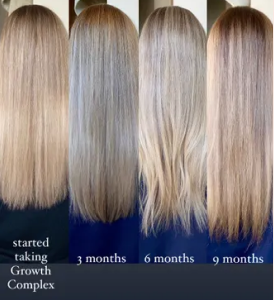


The question of how fast hair grows comes up constantly in hair care discussions, and the answer is usually given as a simple number without the context that makes it useful. Here is the complete picture: the average rate, what determines your individual rate, and the variables that genuinely affect how fast hair grows versus the ones that only appear to.
The Average Rate
Human scalp hair grows at approximately 0.35 to 0.44 millimeters per day, which translates to approximately 1 to 1.3 centimeters per month, or about half an inch per month under typical conditions. Annual growth is approximately 6 inches.
This rate is not the same for everyone. It varies by age (hair grows fastest in the 15 to 30 age range and slows gradually afterward), by hair color (blonde hair is typically finer and may grow slightly faster; black and brown hair slightly more slowly), by season (a modest acceleration has been documented in summer, believed to be related to UV exposure and vitamin D), and by individual genetic variation that sets your baseline.
The Follicle Cycle and Why It Matters
The growth rate you can measure is only part of the picture. The other critical variable is the anagen phase duration: the length of time a follicle stays in active growth before transitioning to catagen (regression) and telogen (resting/shedding). Anagen duration, not growth rate, is what determines maximum hair length. People with anagen phases that last 2 years can grow hair to a maximum of about 12 inches. People with anagen phases that last 6 years can grow hair to approximately 36 inches. The genetic ceiling for maximum length is set by anagen duration.
What Genuinely Affects Growth Rate
- Nutritional status: follicle matrix cells are among the most rapidly dividing cells in the body and have correspondingly high nutritional demands. Deficiencies in protein, ferritin, zinc, selenium, or vitamin D are associated with slowed growth rate and increased shedding. Correcting a deficiency can restore growth to the genetic baseline rate.
- Sleep quality: growth hormone (GH) is secreted primarily during slow-wave sleep. GH has documented roles in promoting anagen phase length and hair shaft growth. Chronically poor sleep reduces the GH pulse and can slow growth rate. Beauty Sleep supports the sleep quality that allows this GH pulse to function normally.
- Scalp health: a scalp with chronic inflammation, buildup, or poor circulation provides a suboptimal environment for the follicle. Regular scalp massage (documented to increase hair shaft diameter, though not hair count or growth rate directly) supports the circulatory environment.
- Age: growth rate declines gradually with age as follicle cycling slows. This is a physiological baseline change, not a deficiency.
What Does Not Genuinely Speed Up Hair Growth
Trimming: cutting the ends of the hair does not affect the follicle in the scalp. Hair appears to grow faster after a trim because split ends are removed and the hair retains more of its length. The actual growth rate at the follicle is unaffected.
Scalp oiling alone: scalp oils can reduce mechanical damage and support scalp health, but there is no evidence that any oil increases the actual rate of follicle cell division or anagen phase duration.
The Supplement Angle
Growth Complex addresses the nutritional dimension of growth rate by providing Cynatine HNS, zinc, selenium, biotin, vitamin C, vitamin E, vitamin B5, and BioPerine at doses relevant to follicle matrix cell function. For people whose growth rate is limited by a nutritional deficit, correcting that deficit through supplementation restores the rate toward the genetic baseline. It does not exceed the genetic ceiling.
The Inside-Out Bundle pairs Growth Complex with Scalp Serum for anyone who wants to address both the internal nutritional environment and the topical scalp environment simultaneously.


