


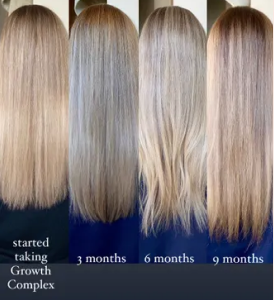


If you are several weeks postpartum and watching alarming amounts of hair fall out, you are almost certainly experiencing telogen effluvium. It is one of the most common and least discussed postpartum experiences. You are probably still taking your prenatal vitamins and wondering whether to continue them or switch to something more targeted for your hair.
Why Postpartum Hair Loss Happens
During pregnancy, elevated estrogen prolongs the anagen (active growth) phase of the hair cycle. Many women notice their hair getting noticeably thicker during the second and third trimesters. After delivery, estrogen drops sharply. The follicles that were held in the extended growth phase all shift to telogen simultaneously, and two to three months later, they shed together. The result is a dramatic increase in daily shed count, often peaking between two and five months postpartum.
This is telogen effluvium, not permanent hair loss. The follicles are not damaged. They are completing a compressed cycle.
What Prenatal Vitamins Do and Do Not Address
Prenatal vitamins are formulated for pregnancy and fetal development. They are high in folate (neural tube development), iron (increased blood volume and fetal iron stores), and calcium. They are not specifically formulated to support the postpartum hair cycle.
Most prenatals contain biotin at the standard recommended daily amount and modest zinc and vitamin D. These are relevant to hair, but the doses and overall formula orientation are not targeted at follicle recovery specifically.
Continuing prenatals if you are breastfeeding is reasonable, since lactation makes significant nutritional demands and the iron, folate, and calcium remain relevant. But prenatals are not the optimal tool for the hair recovery phase.
What the Postpartum Follicle Actually Needs
The follicles re-entering anagen after the postpartum shed need protein (keratin), adequate ferritin, zinc for matrix cell function, and selenium for antioxidant protection. Ferritin is the most commonly overlooked variable. Ferritin below 30 mcg/L is independently associated with telogen effluvium in women even when hemoglobin is normal, and pregnancy and delivery can deplete iron stores significantly. Ask your doctor to include ferritin on your next lab draw, not just hemoglobin.
Should You Switch From Prenatals to a Hair Supplement?
If you are not breastfeeding: transitioning to a dedicated hair supplement is the more targeted approach for the recovery phase.
If you are breastfeeding: discuss with your doctor. The nutritional demands of lactation are real and a prenatal or postnatal vitamin may need to continue alongside a hair-specific supplement. Do not add supplements without your care team's input.
Growth Complex provides Cynatine HNS, biotin, zinc, selenium, and BioPerine at doses formulated for hair follicle support. For sleep quality during the early postpartum months, which affects growth hormone secretion and the hair cycle, Beauty Sleep supports the deep-sleep phase. Check with your doctor before adding any new supplement while breastfeeding.
The Transition Plan
If you and your doctor have decided that transitioning from a prenatal vitamin to a dedicated hair supplement is appropriate, a practical approach is to not stop the prenatal abruptly if you are still breastfeeding. Discuss a taper or switch with your doctor. The iron and folate in prenatals are still nutritionally relevant during the breastfeeding period even if the hair-specific formulation is not optimal.
When you begin a hair supplement, track your shed count from day one. Postpartum shedding peaks at two to five months and then naturally begins to decline. Having a pre-supplement baseline lets you identify whether the supplement is contributing to the recovery or whether the recovery is following the natural telogen effluvium resolution timeline.
A Note on Dosing When Transitioning
When switching from a prenatal vitamin to a hair supplement, there is often a temporary gap in iron and folate intake. If you are not breastfeeding and your doctor has confirmed iron stores are adequate, this gap is not clinically significant for most women. However, if your ferritin was borderline low at your last check, bridging with an iron supplement separately while the hair supplement addresses the follicle-specific nutrients is worth discussing with your doctor. Ferritin recovery and hair cycle recovery happen on similar timelines, and addressing both simultaneously produces the best outcome.


