




Scalp massage has gone from a relaxing salon experience to a full-blown hair growth strategy in online wellness communities. The claims range from cautiously optimistic to extravagant. Here is what the published evidence actually shows, where it stops, and what that means practically.
The Koyama 2016 Study
The most-cited evidence for scalp massage and hair growth comes from a 2016 Japanese study published in Eplasty. Researchers had nine men perform a standardized scalp massage for 4 minutes per day over 24 weeks using a scalp massage device. At the end of the study, hair shaft diameter had increased, and hair thickness had also increased. Interestingly, total hair count did not change significantly.
The interpretation: scalp massage appears to stretch follicle cells mechanically, which may stimulate them to produce thicker hair shafts through a process of mechanical transduction. It did not appear to wake up dormant follicles or prevent shedding in a measurable way in this small sample.
What the Evidence Does Not Show
The Koyama study had nine participants. There was no control group and no randomization. It measured hair thickness, not the hair count outcomes most people are concerned about.
No large, randomized, controlled trial has established scalp massage as a proven treatment for androgenetic hair loss or telogen effluvium. The evidence is preliminary and mechanistically interesting, not clinically definitive.
The Plausible Mechanism
The mechanistic argument for scalp massage rests on two things. First, increased blood flow to the follicle and dermal papilla. The dermal papilla needs adequate circulation to receive the nutrients and hormonal signals that regulate follicle cycling. Second, mechanical stimulation of follicle stem cells. Mechanical force on cells is a recognized signal for various cellular responses, and the Koyama study's thickness findings are consistent with this mechanism.
How to Do It Effectively
The Koyama study used 4 minutes per day of standardized circular massage with a device. The Detox Scalp Massager provides that kind of consistent mechanical stimulation and doubles as a scalp prep tool before applying serum, which improves absorption. Medium pressure circular motions across the full scalp for three to five minutes, repeated consistently, is the closest practical analog to the study protocol.
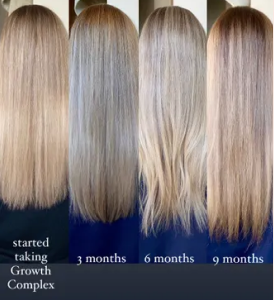
For anyone using a Scalp Serum, massaging during application increases absorption and extends the duration of mechanical stimulation. Internal support through Growth Complex addresses the nutritional layer that no amount of external stimulation can replace.
Setting Realistic Expectations
Scalp massage is not a substitute for addressing an underlying cause of hair loss. If hair is falling out due to iron deficiency, androgenetic alopecia, thyroid dysfunction, or hormonal imbalance, massage will not correct any of those causes. What it can do is support the scalp environment as one component of a comprehensive approach.
The most realistic framing for scalp massage is as a low-cost, low-risk daily practice with some mechanistic support and preliminary clinical evidence, used alongside the nutritional and topical approaches that address hair loss more directly.
Integrating Scalp Massage Into Your Existing Routine
The simplest way to build a consistent scalp massage habit is to attach it to something you already do. Using the Detox Scalp Massager during every shampoo session adds no additional time to your routine and covers the scalp consistently. On days when you apply Scalp Serum, using the massager during the application extends the stimulation and ensures even product distribution across the scalp. Three to five minutes of consistent daily practice, repeated over months, is the protocol closest to what produced results in the available research.
The Combined Protocol: Massage Plus Supplement
The most effective approach to scalp circulation and follicle nutrition works both the internal and external dimensions simultaneously. Scalp massage and derma rolling address the topical environment: clearing buildup, stimulating circulation, improving serum absorption. Growth Complex addresses the nutritional environment: supplying the protein, minerals, and antioxidants the follicle needs to produce a healthy hair shaft regardless of how well-stimulated the scalp is.
Neither approach is a substitute for the other. A follicle that is well-stimulated but nutritionally depleted will not produce optimal hair. A follicle that is well-nourished but sitting in a poorly circulated, buildup-congested scalp environment is working against a physical impediment. Both dimensions addressed together produce better outcomes than either alone.


