




PCOS (polycystic ovary syndrome) affects roughly 1 in 10 women of reproductive age in the United States. It is a hormonal and metabolic condition that disrupts ovulation and causes the body to produce elevated levels of androgens, hormones typically associated with male physiology but present in all women at lower levels.
It is these elevated androgens, particularly testosterone and its more potent derivative DHT (dihydrotestosterone), that affect the scalp. Androgens bind to receptors on hair follicles and trigger a gradual process called follicular miniaturization, where each successive hair growth cycle produces thinner, shorter, and lighter strands. Over time, follicles can shrink to the point where they stop producing visible hair altogether.
This type of hair loss is called androgenic alopecia. In women with PCOS, it typically presents as diffuse thinning along the crown and a widening part line rather than the receding hairline seen in men.
The Role of Insulin Resistance
Many women with PCOS also have insulin resistance, meaning the body does not respond to insulin efficiently. This raises circulating insulin levels, which in turn stimulates the ovaries to produce even more androgens. It also lowers levels of sex hormone binding globulin (SHBG), the protein that keeps testosterone inactive. When SHBG drops, more free testosterone is available to convert to DHT and damage follicles.
This is why addressing hair loss in PCOS often requires looking at metabolic health, not just scalp health.
What the Thinning Pattern Looks Like
Unlike stress-related shedding, which tends to happen all over and resolve on its own, PCOS-related hair loss is patterned and progressive. Common signs include:
- a widening center part
- increased scalp visibility under bright light
- a noticeably thinner ponytail
- fine, short hairs around the hairline that never seem to grow out
Many women first notice it gradually, attributing it to stress or seasonal changes. Because it progresses slowly, it can be years before the cause is identified.
What You Can Do
Addressing PCOS-related hair loss means working at two levels: the hormonal environment driving the loss, and the nutritional support your follicles need to function.
On the hormonal side, working with a doctor to manage androgen levels and insulin resistance is the most effective long-term strategy. This may involve lifestyle changes, medication, or both.
On the nutritional side, ensuring your body has the building blocks for healthy hair growth matters. Bioavailable keratin, zinc, biotin, and vitamin C are particularly relevant for women with PCOS, as the hormonal disruption can deplete the nutrients follicles need most.
Iron and ferritin should also be checked. Women with PCOS frequently experience heavy periods, which can lead to iron deficiency, one of the most common and most reversible contributors to hair shedding in women.
The Timeline to Expect
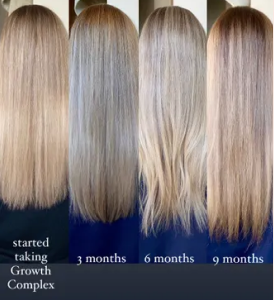
Hair growth is slow. Whether you are managing PCOS with medication, lifestyle changes, or nutritional support, meaningful progress typically takes three to six months of consistency. That is not a flaw in the approach. It is simply the biology of how hair grows.
The earlier you start, the better your outcome. Follicles that have been miniaturizing for years are harder to reactivate than those that have only recently been affected.
Sources
American Academy of Dermatology; Cleveland Clinic; PCOS Nutrition Center; Dermatologic Surgery, 2021; NIH/National Institute of Child Health and Human Development


