Caffeine
Beyond Your Morning Cup — How Caffeine Applied to the Scalp Extends the Hair Growth Phase
Topically applied caffeine acts directly on hair follicles to extend the growth phase, improve scalp circulation, and counteract DHT-related follicle suppression associated with pattern hair loss.
The Ingredient
What Is Caffeine?
Topically applied caffeine extends the hair growth phase, improves scalp circulation, and directly counteracts DHT-related follicle suppression.
Caffeine is best known as the world's most consumed psychoactive compound — but its effects extend well beyond the brain. Applied topically to the scalp, caffeine acts as a potent hair growth stimulant through mechanisms that are distinct from, and in some ways more targeted than, its systemic effects when consumed orally.
The primary mechanism of topical caffeine for hair is the inhibition of phosphodiesterase (PDE). Phosphodiesterase is an enzyme that breaks down cyclic AMP (cAMP) — a signaling molecule that promotes cell growth and division in hair follicle cells. By blocking PDE, caffeine allows cAMP to accumulate in follicle cells, sustaining the growth signals that keep follicles in the anagen (active growth) phase for longer.
A second, and highly relevant mechanism is caffeine's antagonism of dihydrotestosterone (DHT). DHT — the androgen primarily responsible for androgenetic alopecia (pattern hair loss) — suppresses hair follicle activity by shortening the anagen phase and triggering follicle miniaturization.
Research from the University of Lübeck has shown that caffeine directly counteracts DHT's suppressive effects on hair follicle cells in vitro, and that topically applied caffeine penetrates the scalp to reach follicle cells within minutes of application.
Caffeine also improves scalp microcirculation — the blood flow within the tiny capillaries that supply hair follicles with oxygen and nutrients. This vasodilatory effect means follicles receive better nourishment throughout their growth cycle, supporting both the quality and the growth rate of emerging hair shafts.
Importantly, topical caffeine is not the same as drinking coffee. Oral caffeine is rapidly metabolized and does not accumulate in scalp tissue at meaningful concentrations. Direct scalp application is required to deliver the follicle-stimulating concentrations demonstrated in research.
Key Benefits
Extends the Growth Phase Inhibits phosphodiesterase (PDE) to sustain cAMP signaling and prolong the anagen hair growth phase.
Counteracts DHT Suppression Directly opposes DHT-induced follicle miniaturization associated with androgenetic alopecia.
Rapid Follicle Penetration Research shows topical caffeine reaches follicle cells within minutes of scalp application.
Improves Scalp Circulation Supports nutrient and oxygen delivery to follicles through improved microcirculation.
Comparable to Minoxidil Studies found caffeine-based topical treatments produced patient satisfaction comparable to minoxidil.
Well-Tolerated & Lightweight Suitable for daily use across most hair types and scalp conditions.
Clinical Evidence
The Science: Clinical
Studies & Research
Research demonstrates caffeine's ability to stimulate follicles, counteract DHT suppression, extend the anagen phase, and improve scalp delivery directly through topical application.
STUDY 1
Caffeine Counteracts DHT-Induced Suppression of Hair Follicle Growth In Vitro
Fischer TW, et al. · International Journal of Dermatology · 2007
Caffeine significantly stimulated hair follicle growth and counteracted testosterone-induced suppression.
Researchers demonstrated that caffeine prolonged anagen activity and directly opposed DHT-related suppression in isolated human hair follicles.
View Study →, opens in a new tabSTUDY 2
Topical Caffeine Penetrates the Scalp and Reaches Hair Follicles Within 2 Minutes
Otberg N, et al. · Skin Pharmacology and Physiology · 2008
Topically applied caffeine rapidly penetrated the follicular route within minutes.
Using advanced imaging techniques, researchers confirmed that caffeine reaches follicle structures extremely quickly following scalp application.
View Study →, opens in a new tabSTUDY 3
Caffeine Shampoo Comparable to Minoxidil in Patient Satisfaction for Hair Loss Treatment
Völker JM, et al. · Journal of the German Society of Dermatology · 2020
Patient satisfaction scores were equivalent between caffeine and minoxidil treatment groups.
A randomized study found caffeine-based topical formulations produced meaningful improvements in density and shedding while being better tolerated than minoxidil.
View Study →, opens in a new tabSTUDY 4
Caffeine Stimulates Human Hair Growth In Vitro and Extends Anagen Phase Duration
Fischer TW, et al. · British Journal of Dermatology · 2014
Caffeine extended the anagen phase by up to 46% in male follicles.
Follow-up research confirmed caffeine's ability to prolong active follicle growth duration and improve follicle viability.
View Study →, opens in a new tabShop
HAIRLOVE Products Containing
Caffeine
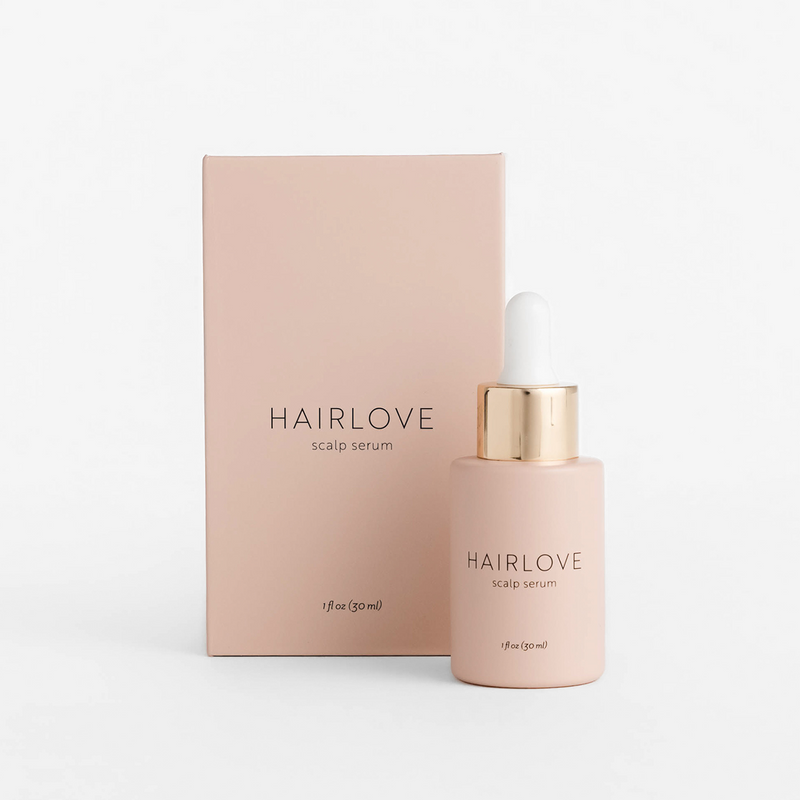
Caffeine is included in the HAIRLOVE Scalp Serum system to support follicle stimulation, scalp circulation, and healthy hair cycling.

Scalp Serum
Contains caffeine alongside Copper Tripeptide-1 and Pea Sprout Extract to support follicle activity and scalp circulation.
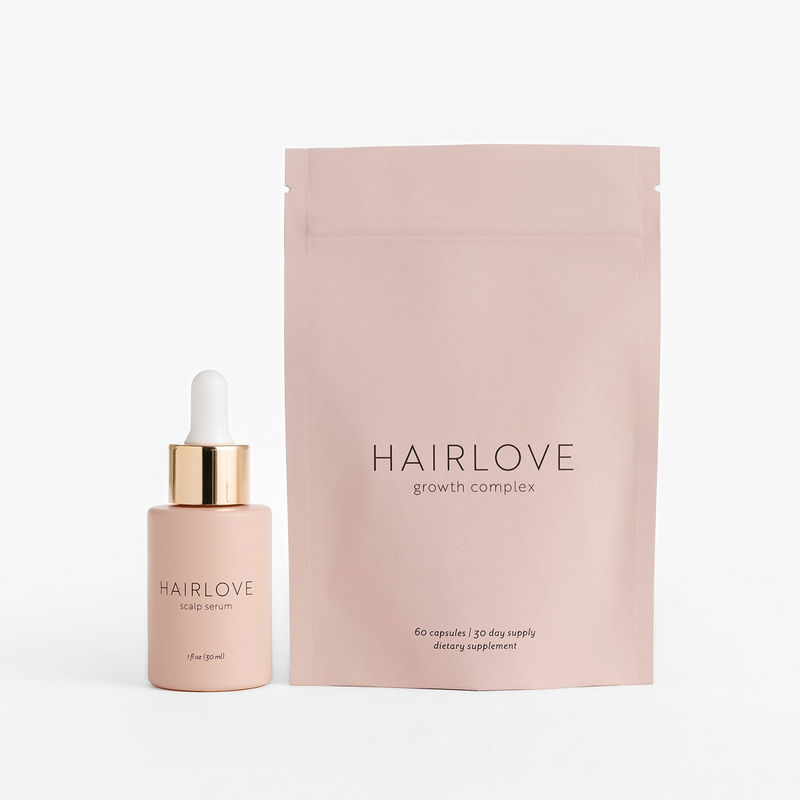
Inside-Out Bundle
Combines Growth Complex with the Scalp Serum for complete internal and topical support.
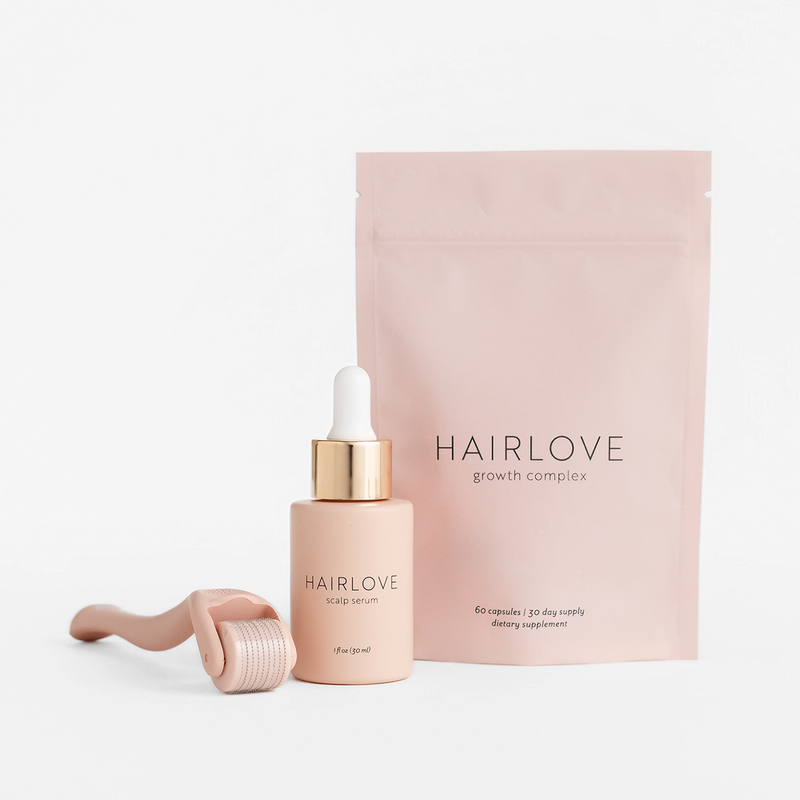
Complete Hair Revival System
Full three-product system designed for maximum follicle support and serum penetration.

Scalp Activation Bundle
Scalp Serum paired with the Derma Roller to enhance topical penetration and scalp absorption.
Editor's Note
The University of Lübeck caffeine studies are among the most respected pieces of topical hair-growth research in cosmetic dermatology. The DHT-antagonism mechanism is particularly relevant for pattern hair loss.

