


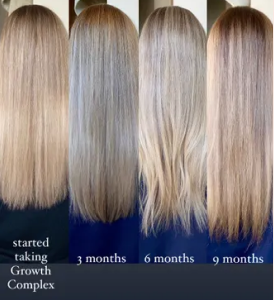


If you have spent time comparing hair serum ingredient lists, you may have come across biotinoyl tripeptide-1 and wondered how it relates to the biotin in your supplement. They are related but work differently, and understanding the distinction helps set accurate expectations for both.
What Biotinoyl Tripeptide-1 Is
Biotinoyl tripeptide-1 is a cosmetic ingredient formed by conjugating biotin (vitamin B7) to the tripeptide GHK (glycine-histidine-lysine). The design rationale is to combine biotin's role in keratin production with the dermal papilla and follicle-supporting signals of the GHK tripeptide sequence, delivered topically to the scalp rather than relying on systemic circulation from an oral supplement.
Biotin on its own has poor skin penetration. The hypothesis is that attaching it to GHK improves its ability to enter follicle structures, while the GHK sequence adds the anti-inflammatory and papilla-supporting signals documented in the copper peptide literature.
What the Evidence Actually Shows
The honest assessment of biotinoyl tripeptide-1's evidence base: it is limited, and the strongest available human data is for eyelash length and thickness rather than scalp hair density.
In vitro, manufacturer-sponsored studies have reported stimulation of hair bulb keratinocyte proliferation and upregulation of laminin 5 and collagen IV expression. These are structural proteins involved in anchoring the follicle to the dermis and maintaining the follicle's basement membrane integrity. These are plausible mechanistic findings, but they come from in-vitro systems funded by ingredient suppliers, which limits their independent evidentiary weight.
No independently conducted, peer-reviewed clinical trial demonstrates that biotinoyl tripeptide-1 increases scalp hair density or reduces hair loss in a controlled human population. This is stated explicitly because it is the honest framing for a cosmetic ingredient that is often marketed with more confidence than the evidence supports.
The Lash-to-Scalp Evidence Gap
The most cited human study for biotinoyl tripeptide-1 involves eyelash length and thickness rather than scalp hair. Eyelash follicles and scalp hair follicles share fundamental biology but differ in their regulation, cycling pattern, androgen sensitivity, and response to topical actives. Extrapolating lash evidence to scalp density is a significant leap that the evidence does not currently justify.
Oral Biotin vs Topical Biotin-Peptide: Two Different Tools
Oral biotin, as in HairLove's Women's Growth Complex: addresses systemic biotin availability for keratin synthesis throughout the body, including hair, nails, and skin. Most relevant for people with genuine biotin deficiency, which is more common in people on very low-calorie diets, those eating large amounts of raw eggs, those on certain anticonvulsant medications, or those with absorption issues.
Topical biotinoyl tripeptide-1 in a scalp serum: delivers biotin and the GHK sequence directly to the scalp surface and, ideally, into superficial follicle structures. An add-on to the foundational oral approach, not a replacement.
The appropriate framing is oral biotin as the proven baseline and topical peptide as a complementary adjunct, with honest acknowledgment that topical clinical evidence is limited. The Inside-Out Bundle captures both approaches.
The Inside-Out Approach: Oral Before Topical
For most people with hair concerns, the most important biotin question is whether they are systemically deficient, not whether the topical peptide outperforms the supplement. Deficiency is most likely in people on prolonged antibiotic courses that deplete gut bacteria that synthesize biotin, those eating large quantities of raw eggs (avidin in raw egg white blocks biotin absorption), those on certain anticonvulsant medications, and those following very restrictive diets.
If you are in one of these groups and have not assessed your biotin status, addressing potential deficiency systemically through the oral route is the higher-priority step. Once the systemic baseline is established, the topical can be added as an adjunct without the ambiguity of not knowing whether deficiency was the underlying cause.
In a serum context, biotinoyl tripeptide-1 is most rationally used alongside stronger-evidenced copper peptides rather than as a standalone. For the strongest-evidenced topical copper peptide option, see the GHK-Cu anchor post.


