




CJC-1295 is known as the long-acting GH peptide. Its defining characteristic is sustained, prolonged elevation of GH and IGF-1, in contrast to the short pulses produced by other GH-releasing peptides. That distinction shapes the hair question in ways worth understanding.
What CJC-1295 Is
CJC-1295 is a synthetic analog of growth hormone-releasing hormone (GHRH) that has been modified with a drug-affinity complex (DAC) to bind serum albumin, dramatically extending its half-life. A 2006 clinical study by Teichman et al. in healthy adults found that a single injection produced sustained elevation of GH and IGF-1 for six or more days, compared to hours for standard GHRH analogs.
Notably, Ionescu and Frohman demonstrated that even during this continuous stimulation by CJC-1295, the body's pulsatile pattern of GH secretion is preserved. The long-acting profile does not eliminate normal GH rhythm. It elevates the baseline while maintaining the natural pulsatile structure.
Why Sustained IGF-1 Elevation Is Not Automatically a Problem for Hair
IGF-1 is a hair growth factor. It extends the anagen phase and supports dermal papilla activity. Sustained IGF-1 elevation from CJC-1295 is biologically expected to support hair growth, not suppress it. This is the same logic as the MK-677 post: the direct hormonal effect of GH axis activation points toward hair benefit, not harm.
The shedding risk, when it occurs, does not come from the sustained IGF-1 itself.
The Real Risk Path: Recomp-Driven Fat Loss
CJC-1295 is most commonly used in a recomposition stack, typically combined with ipamorelin (see that post), with the explicit goal of accelerating fat loss alongside lean mass preservation. Aggressive fat loss is the trigger for telogen effluvium, and it is the fat loss, not the peptide directly, that is the most defensible mechanism for any shedding.
A 2024 retrospective study confirmed that significant weight loss independently triggers telogen effluvium. The more aggressive the recomp phase, the higher the risk of shedding two to three months into the program.
The Stacking Note: CJC-1295 and Ipamorelin
CJC-1295 is very frequently combined with ipamorelin, which has a different receptor profile. The combined stack has a different side-effect consideration than either compound alone. If you are running a CJC-1295/ipamorelin stack and experiencing shedding, attributing it to one compound over the other is difficult. The shared mechanism of fat-loss telogen effluvium applies to both.
For ipamorelin's specific profile, see the ipamorelin post. For the full shared mechanism, see the GH peptides hub.
Predisposition Gate and Temporary vs Permanent Shedding
As with all compounds in this cluster: DHT miniaturizes follicles only in people with inherited androgenetic sensitivity. Telogen effluvium from fat loss is temporary. Androgenetic acceleration, if it occurs, depends on pre-existing genetic susceptibility.
Supporting Hair Through a Recomp Phase
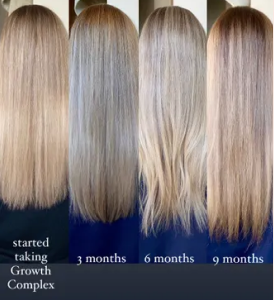
Nutritional support is the most useful tool: protein, zinc, selenium, and ferritin all support the follicle's ability to exit the resting phase and return to active growth. Women's Growth Complex provides Cynatine HNS, zinc, and selenium. The microfiber towel and silk pillowcase reduce mechanical stress on fragile shedding hair. Support through the shed, not prevention of it.
One Element of the CJC-1295 User Profile Worth Noting
Many people use it during a cut phase where sleep is also disrupted by lower caloric intake and increased training stress. Growth hormone is secreted primarily during deep sleep, and poor sleep quality both blunts the compound's effectiveness and independently stresses the hair cycle. If you are running CJC-1295 during a cut and experiencing shedding, examining sleep quality alongside diet is a useful diagnostic step.
CJC-1295 also takes four to six weeks to reach stable GH and IGF-1 elevation in many users. The early weeks of use may not produce the full benefit, while the dietary restriction that often accompanies a recomp phase is already in effect. The shed that appears two to three months in may correspond to the most aggressive weeks of cutting in the early protocol rather than the CJC-1295 dosing itself.


