



If you are weighing finasteride for hair loss, you have probably also read the fine print. Finasteride lowers DHT, the hormone most responsible for pattern thinning, and for many men it works. It also carries sexual side effects for some users, a smaller group reports symptoms that persist after stopping, and it is not an option for most women because of the risk in pregnancy. That combination is why so many people search for a natural DHT blocker instead. This guide compares the most credible finasteride alternatives by how they work, their side effect profile, and cost.
Why look for a finasteride alternative?
Finasteride and the stronger, off-label dutasteride reduce DHT across the body, not just the scalp. For most people the trade is uneventful, but the known side effects, lowered libido, erectile changes, and mood effects for a minority, are enough to make people cautious. A subset reports finasteride side effects that continue after they stop, a pattern often discussed as post-finasteride syndrome. And because the drug can affect fetal development, it is generally off the table for women who are or may become pregnant. A gentler approach is worth understanding before you commit to a daily prescription.
What is a natural DHT blocker, and how does it work?
DHT is made when the enzyme 5-alpha-reductase converts testosterone. Finasteride blocks that enzyme directly and strongly. Several natural compounds appear to nudge the same pathway more gently. Saw palmetto is the most studied, and food-based options like pumpkin seed oil have small trials behind them. The honest framing is that these are softer and less complete than the drug, so they suit people with early or moderate thinning, or those who want to support their hair without a prescription, rather than anyone looking to exactly replicate finasteride.
The best finasteride alternatives at a glance
| Option | Approach | How it targets DHT | Side effect profile | Monthly cost |
|---|---|---|---|---|
| HAIRLOVE Growth Complex | Oral supplement | Saw palmetto plus holistic nutrient support | Generally well tolerated | $57/mo (sub) |
| Saw palmetto | Oral botanical | May partially inhibit 5-alpha-reductase | Mild digestive upset for some | Low, varies |
| Pumpkin seed oil | Oral / food | Studied for hair count, mechanism debated | Well tolerated | Low, varies |
| HAIRLOVE Scalp Serum | Topical | Scalp-level support, not systemic | Low, topical only | Verify |
| Finasteride (baseline) | Oral prescription | Strong, direct 5-AR inhibition | Sexual and mood effects for some; not for women | Varies by pharmacy |
1. HAIRLOVE Growth Complex: best overall, nourish-from-within option
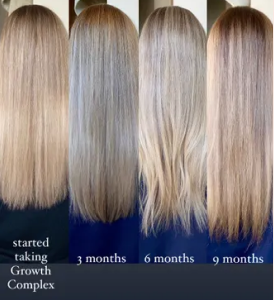
Rather than switching off DHT throughout the body the way finasteride does, Growth Complex supports the hair you have from the inside, pairing saw palmetto with Cynatine HNS keratin and a fully listed set of vitamins and minerals in a two-capsule daily dose. It is not a drug and will not replicate one, and it is not a treatment or cure for hair loss, but it carries none of the sexual or pregnancy cautions, which is exactly why it is the pick we would hand to someone who ruled finasteride out. See Growth Complex, or start with a first-order discount code.
2. Saw palmetto: best studied natural DHT blocker
Saw palmetto is the botanical most often held up next to finasteride, because it appears to inhibit the same 5-alpha-reductase enzyme, only far more gently. Small studies point to a modest benefit for pattern thinning, and because it is already one of the actives inside Growth Complex you can take it on its own or get it as part of a fuller formula. For the deeper background, see our guide to saw palmetto for hair loss and the saw palmetto ingredient page.
3. Pumpkin seed oil: best food-based option
Pumpkin seed oil has one genuinely interesting trial behind it: over 24 weeks, men taking it daily grew measurably more hair than a placebo group. One study is not the final word and the mechanism is still debated, but it is a low-risk, food-based addition that sits comfortably next to a core supplement and costs very little to try.
4. HAIRLOVE Scalp Serum: best topical support
For people who want to act at the scalp as well, the HAIRLOVE Scalp Serum delivers support topically rather than through the bloodstream, which sidesteps the hormonal questions entirely and makes it a sensible choice for women who cannot take finasteride at all. It layers cleanly on top of an oral supplement.
How to choose
Want the single best starting point? Choose Growth Complex. Want the most studied single botanical? Choose saw palmetto. Cannot use finasteride because you are a woman of childbearing age? Start with Growth Complex plus the Scalp Serum. Want a food-first add-on? Add pumpkin seed oil. Whatever you pick, give it three to six months, and talk to a doctor if your hair loss is sudden or patchy.


