




Finasteride is one of the most effective treatments for male pattern hair loss, and for many men it works. It is also the treatment people research most anxiously, because of what they have heard about its side effects. Here is a clear, evidence-based breakdown of what finasteride can cause, how common those effects are, and who should be cautious.
What Finasteride Is
Finasteride is a 5-alpha-reductase inhibitor. It blocks the enzyme that converts testosterone to DHT, the hormone most responsible for pattern hair loss, reducing DHT by roughly 65 to 70%. It has been FDA-approved for male androgenetic alopecia since 1997, taken as a daily pill, and it is prescription-only. Because it works on a hormone pathway, its side effects are hormonal in nature.
The Most Commonly Reported Side Effects
The side effects people worry about most are sexual: decreased libido, erectile dysfunction, and ejaculatory changes. It is worth putting numbers to this. In clinical trials, sexual side effects were reported by roughly 3.8% of men on finasteride versus 2.1% on placebo, and for most they were reversible on stopping. Some men also report breast tenderness or gynecomastia, and mood changes.
The Concern That Gets the Least Attention: Post-Finasteride Syndrome
The more serious and more debated concern is post-finasteride syndrome (PFS), opens in a new tab: sexual, neuropsychiatric, and physical symptoms that persist after stopping the drug. In 2012 the FDA required the label to include the possibility that sexual side effects may persist after discontinuation, and in 2022 suicidal ideation was added. PFS is not universally accepted as a formal diagnosis, and the research is still limited, but the regulatory warnings are real. One retrospective analysis found sexual dysfunction in under 1% of users, with persistence in a subset. The takeaway is not panic, it is informed consent: this is a real, if uncommon, consideration.
One firm point that is not debated: finasteride must not be handled or taken by women who are or may become pregnant, because it can cause birth defects.
Who Should Be Cautious
Men with a history of depression, sexual dysfunction, or fertility concerns should weigh finasteride carefully with their doctor. Women of childbearing potential should avoid it entirely, including handling crushed or broken tablets. Anyone starting it should understand the persistence question before they begin.
Is There a Drug-Free Alternative?
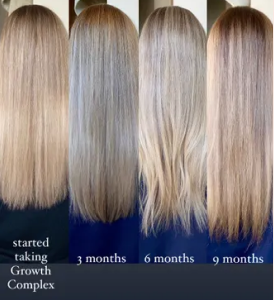
Finasteride works by altering a hormone pathway, which is exactly why its side effects exist. If you would rather support your hair without touching hormones, the HAIRLOVE Growth Complex for Men works differently: it supports hair from within with Cynatine HNS keratin, zinc, and selenium, with no DHT-blocking mechanism and none of the sexual side-effect profile that comes with it. It is drug-free and $47 a month. It is not a hormonal treatment and not a medical substitute for one, so for significant loss talk to your doctor, but it is a natural place to start. For the background on how DHT drives male hair loss, see our guide to DHT and hair loss in men.
Making Any Approach Work Better
Give any approach at least 90 days, rule out iron and vitamin D deficiency, and stay consistent. And whatever you decide, have the conversation with your doctor rather than starting or stopping a prescription based on a blog.
Reading Between the Lines
Finasteride is genuinely effective, and in trials the side effects were uncommon and mostly reversible. The persistence concern and the fact that it works on a hormone pathway are why some men look for a drug-free route instead. Neither choice is wrong. Make it with your doctor and with the real numbers in front of you.


