



Hair growth is regulated by a complex interplay of hormones, most notably estrogen and androgens. Estrogen tends to keep follicles in the anagen (active growth) phase longer, which is why many women notice their hair looking fuller during pregnancy when estrogen levels are elevated. Progestogens (synthetic progestins found in many contraceptives) vary widely in their androgenic activity, meaning some forms have a stronger androgen-like effect on the body than others.
When you introduce, change, or remove a hormonal contraceptive, the body responds to the hormonal shift by pushing a larger-than-usual number of follicles into the telogen (resting) phase simultaneously. After approximately two to three months in the resting phase, those hairs shed. This is called telogen effluvium, and it's the mechanism behind birth-control-related hair loss.
When It Happens
The timing catches most women off guard. Because hair that enters the resting phase doesn't shed immediately, the increased fall-out typically appears 2 to 4 months after the hormonal change. By then, many women have moved on from thinking about their birth control switch as a possible cause.
This pattern applies whether you're starting hormonal contraception for the first time, switching from one method to another, or stopping it entirely. The discontinuation of the pill can actually be one of the more significant triggers because estrogen drops suddenly, and the follicles that were held in the growth phase by elevated estrogen shift to resting all at once.
Which Formulations Are More Associated With Shedding
Not all hormonal contraceptives affect hair the same way. Pills with higher androgenic activity (older progestin formulations) are more likely to trigger or worsen androgenic hair loss in women who are already genetically predisposed to it. Low-androgen or anti-androgen formulations are generally less likely to contribute to shedding.
Progestin-only methods (the mini-pill, hormonal IUDs, implants, and injections) vary in their local versus systemic hormone delivery, which affects how they interact with the scalp. A dermatologist or OB-GYN can help identify whether your specific method may be a contributing factor.
What a Normal Recovery Timeline Looks Like
For most women, birth-control-related telogen effluvium is temporary. Once the body adjusts to the new hormonal environment, shedding typically slows and the growth cycle normalizes. This process usually takes 3 to 6 months, though full regrowth to previous density can take longer.
If shedding continues beyond 6 months or is accompanied by other symptoms (irregular periods, acne, changes in body hair), it's worth talking to a doctor to rule out an underlying hormonal condition like PCOS or thyroid dysfunction.
Supporting Your Hair During the Transition
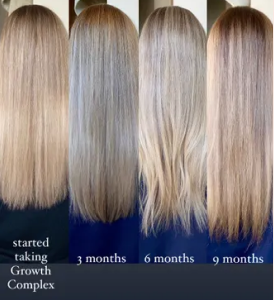
Giving your follicles the nutritional support they need during a hormonal shift can help shorten the recovery window. Bioavailable keratin strengthens the hair strand from within during the growth phase. Zinc supports the hormonal signaling involved in the hair cycle. Biotin supports keratin production. And ensuring your iron and vitamin D levels are adequate removes two of the most common compounding factors.
Consistency matters most during a disruption. Staying on a hair support routine through the shedding phase means your follicles are primed and ready when the cycle resets.
Sources
AAD; Cleveland Clinic; International Journal of Dermatology; Journal of the American Academy of Dermatology; NIH/NCBI


