



Most content about male hair loss talks about one thing: male pattern baldness. But men lose hair for many different reasons, and the cause determines the treatment. This guide covers all of them.
Male Pattern Hair Loss (Androgenetic Alopecia), By Far the Most Common
Male androgenetic alopecia (MAA) is the most common cause of hair loss in men, opens in a new tab, affecting 30 to 50% of men by age 50 and up to 80% by age 80. Genetics account for approximately 80% of predisposition.
The mechanism: DHT (dihydrotestosterone) binds to androgen receptors in scalp follicles that are genetically sensitive to it. Over successive hair cycles, the anagen phase shortens and the follicle progressively miniaturizes, producing finer, shorter hair until the follicle is no longer producing cosmetically visible hair. The pattern is predictable: bitemporal recession first, then crown involvement, following the Norwood-Hamilton scale.
Treatment: topical or oral minoxidil (FDA-approved), finasteride or dutasteride (FDA-approved DHT blockers), and hair transplantation for advanced cases. Saw palmetto has modest evidence as a natural supportive approach. The saw palmetto post and best hair growth supplements for men post cover the nutritional and botanical approaches.
Telogen Effluvium, The Shedding Type
Telogen effluvium is diffuse shedding caused by a physiological stressor pushing a large number of follicles into the resting phase simultaneously. In men, common triggers include:
- Significant illness, fever, or hospitalization
- Surgery under general anesthesia
- Rapid weight loss (including from keto or GLP-1 medications)
- Iron deficiency (check ferritin, not just hemoglobin)
- Thyroid dysfunction
- Nutritional deficiency, particularly zinc and vitamin D
- High psychological stress sustained over months
Telogen effluvium typically presents as diffuse shedding across the whole scalp rather than patterned loss, and it is reversible when the underlying trigger is addressed.
Alopecia Areata, Patchy Loss
Alopecia areata is an autoimmune condition where T cells attack hair follicles in discrete patches. In men, it presents as one or more circular bald spots, typically on the scalp but sometimes in the beard or eyebrows. Treatment includes corticosteroid injections, topical minoxidil, and JAK inhibitors for severe cases. It has a variable course, some patches regrow spontaneously, others persist.
Scalp Conditions That Cause Hair Loss
Several scalp conditions can cause or worsen hair loss in men:
-
Seborrheic dermatitis and Malassezia overgrowth: chronic scalp inflammation that may accelerate androgenetic alopecia and cause additional shedding
-
Tinea capitis (scalp ringworm): fungal infection most common in younger men; requires antifungal treatment to stop progression
- Scarring alopecias: rare conditions (lichen planopilaris, folliculitis decalvans) that destroy follicles permanently. Any man with scalp lesions plus hair loss should have a dermatology evaluation
TRT and Medication-Related Hair Loss
Testosterone replacement therapy can accelerate androgenetic alopecia in men who are genetically susceptible, not by causing pattern hair loss from scratch, but by providing more testosterone for DHT conversion. See the TRT and hair loss post for full detail.
Multiple medications can also cause diffuse hair loss in men through telogen effluvium: blood thinners (heparin, warfarin), beta blockers, retinoids, chemotherapy agents, and certain mood medications.
When the Cause Is Not Yet Known
For men with unexplained shedding that is not clearly patterned, a blood panel including ferritin, TSH, free T4, vitamin D, and zinc is the most productive first step. See the blood tests for hair loss post for the complete workup.
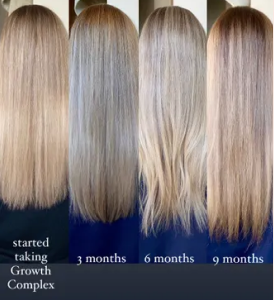
Nutritional support is a reasonable parallel approach. HairLove's Men's Growth Complex provides zinc, selenium, biotin, and Cynatine HNS, a bioavailable keratin studied for hair strength and reduced shedding, addressing the most common nutritional contributors to male hair loss.


