


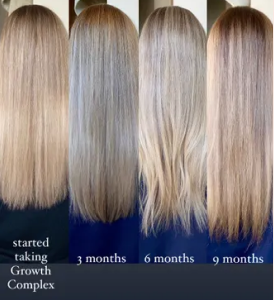


Hair loss is not one thing. It has different causes, different presentations, and different answers. Taking a supplement without understanding which category your hair loss falls into is the equivalent of taking pain medication without knowing what kind of pain you have. It might help, it might not, and you will not know why.
Category 1: Nutritional and Stress-Related Shedding (Telogen Effluvium)
The most common cause of diffuse hair loss in women is telogen effluvium: a large cohort of follicles entering the resting phase simultaneously in response to a stressor. Stressors include significant weight loss, nutritional deficit (particularly iron, ferritin, zinc, or protein), illness, surgery, extreme emotional stress, or any rapid physiological change.
What it looks like: diffuse shedding across the whole scalp rather than concentrated at the crown or hairline. Often a clear trigger event two to three months before the shed started.
What helps: address the nutritional deficit. Get ferritin checked (not just hemoglobin). Take a supplement that provides the specific minerals and proteins the follicle needs to return to anagen. Growth Complex addresses this category directly through Cynatine HNS, zinc, selenium, and biotin at meaningful doses. Sleep quality also matters because growth hormone is secreted during deep sleep, and Beauty Sleep addresses the sleep dimension.
Category 2: Hormonal Hair Loss
Hormonal hair loss in women can come from several directions: PCOS (androgen excess driving follicle miniaturization), post-birth-control hormone shifts, perimenopause and menopause (declining estrogen), thyroid dysfunction, or other endocrine imbalances.
What it looks like: varies by cause. PCOS-driven loss often shows a more male-pattern distribution (temples, crown). Estrogen decline in perimenopause tends to cause diffuse thinning rather than a defined pattern. Thyroid-driven loss is typically diffuse.
What helps: the underlying hormonal cause requires medical evaluation and management. A supplement supports follicle nutrition alongside medical treatment but does not address the hormonal driver on its own. If you suspect hormonal loss, see a dermatologist or endocrinologist.
Category 3: Androgenetic Alopecia (Female Pattern Hair Loss)
Female pattern hair loss is driven by DHT sensitivity in genetically predisposed follicles. It typically shows as widening of the part and diffuse thinning at the crown rather than hairline recession.
What helps: medical treatment (topical minoxidil, spironolactone, or finasteride in some cases) addresses the androgenetic pathway. A supplement supports the follicle environment and slows the nutritional component of progression, but does not block DHT. Combination approaches (medical plus nutritional) are more effective than either alone.
Category 4: Scalp-Related Hair Loss
Seborrheic dermatitis, scalp psoriasis, fungal infections, and chronic scalp inflammation can all disrupt the follicle environment and cause hair loss in the affected area. What it looks like: often patchy or concentrated in areas of visible scalp irritation. Accompanied by flaking, redness, or scalp symptoms. What helps: dermatology evaluation to identify and treat the scalp condition.
When to See a Doctor First
If your hair loss is sudden, patchy, accompanied by scalp symptoms, or is not explained by a clear nutritional or stress trigger, see a dermatologist before starting a supplement. Blood work (ferritin, full thyroid panel, hormone panel) is the right starting point for identifying the cause.
A Note on Medical Evaluation
This guide provides a framework for understanding categories of hair loss, but it is not a diagnostic tool and should not replace an evaluation from a dermatologist or physician who can examine your scalp directly. The scenario where a supplement adds the most value is one where the cause has been reasonably identified (or is clearly nutritional and stress-related), the androgenetic and medical categories have been considered and either ruled out or addressed medically, and you are looking to optimize the nutritional environment while the primary approach works.


