


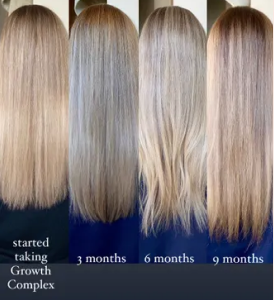

If your hair has been thinning and you can't figure out why, your thyroid is worth investigating. Thyroid dysfunction is one of the most frequently overlooked causes of hair loss in women, and one of the most treatable once it's identified.
This isn't a post about diagnosing yourself. It's about understanding the mechanism, knowing what to ask your doctor, and understanding what you can do to support your hair while you sort out the root cause. Nutritional support through a well-formulated supplement like the Growth Complex can be part of that, but it works best alongside addressing any underlying thyroid issue.
How the Thyroid Affects Hair Growth
The thyroid gland produces two primary hormones, T3 (triiodothyronine) and T4 (thyroxine), that regulate metabolism throughout the body. Every cell, including the cells in your hair follicles, depends on an adequate thyroid hormone supply to function normally.
Hair follicles are particularly sensitive to thyroid hormone levels because they cycle rapidly. When thyroid hormones are low (hypothyroidism), follicles spend more time in the resting (telogen) phase and less time in the active growth (anagen) phase. The result is diffuse thinning, hair loss spread evenly across the scalp rather than in patches, along with hair that often becomes drier, more brittle, and slower-growing.
Hyperthyroidism (excess thyroid hormone) can also cause hair loss, though through a different mechanism. Elevated metabolism speeds up the hair cycle, pushing follicles into the shedding phase earlier than they would otherwise.
Hypothyroidism: The More Common Culprit
Hypothyroidism, or underactive thyroid, is significantly more common in women than in men, and it's frequently underdiagnosed in its early stages. The most common cause is Hashimoto's thyroiditis, an autoimmune condition in which the immune system attacks thyroid tissue.
Hair loss from hypothyroidism is typically diffuse and gradual. You might notice your ponytail getting thinner over months before you connect it to anything systemic. Other symptoms that often accompany it:
- fatigue
- cold intolerance
- dry skin
- weight gain
- brain fog
If you're experiencing several of these together, a full thyroid panel is worth requesting.
The test to ask for: TSH (thyroid-stimulating hormone) is the standard first screen, but it doesn't tell the whole story. Ask for Free T3, Free T4, and thyroid antibodies (TPO and TgAb) to get a more complete picture. Many women with Hashimoto's show normal TSH while experiencing symptoms.
Why Hair Loss Continues Even After Treatment Starts
One thing that catches many women off guard: treating hypothyroidism with levothyroxine or other thyroid medications doesn't immediately reverse hair loss. In fact, shedding sometimes increases in the weeks after starting treatment. This is because normalizing thyroid hormone levels releases follicles from the prolonged telogen phase, so they all start shedding at once before the new growth cycle begins.
This phase typically resolves within 3 to 6 months of stable treatment. Understanding the telogen effluvium mechanism helps put the timeline in context. It's the same process that drives postpartum shedding.
The Nutritional Layer
Even with thyroid hormone levels stabilized, nutritional deficiencies can slow hair recovery. Several nutrients are particularly relevant for women with thyroid-related hair loss:
- Selenium. The thyroid contains more selenium per gram of tissue than almost any other organ. Selenium is essential for converting T4 to the active T3 form, opens in a new tab, and deficiency impairs thyroid function directly. Look for selenium in your supplement formula.
- Zinc. Both hypothyroidism and hyperthyroidism can deplete zinc levels. Zinc is required for thyroid hormone synthesis and for the enzyme activity that supports hair follicle function.
- Iron. Hypothyroidism impairs iron absorption and can cause iron-deficiency anemia even in women eating adequate iron. Ferritin (stored iron) is worth checking specifically, serum iron can look normal while ferritin is low, which is enough to drive shedding.
- Biotin. Thyroid conditions and their treatments can sometimes deplete B vitamins, including biotin. Worth including in your supplement regimen, but note that biotin supplementation can interfere with thyroid lab results, opens in a new tab, opens in a new tab. Discuss timing with your doctor.
What to Do
If you suspect thyroid-related hair loss, the sequence matters:
- get a full thyroid panel: TSH, Free T3, Free T4, TPO antibodies, TgAb antibodies
- check iron and ferritin separately (they're not always included in standard panels)
- treat the thyroid issue first (nutrition supports recovery; it doesn't replace hormonal treatment)
- give treatment time (expect 3 to 6 months before hair noticeably responds)
- support follicles nutritionally while you wait (a formula with selenium, zinc, biotin, and bioavailable keratin addresses the deficiency layer that often compounds thyroid-related loss)
For a broader look at how hormones affect hair loss across different life stages, that post covers the full hormonal picture: thyroid, estrogen, androgens, and their interactions.
Where to Start If You Suspect Thyroid Is Behind Your Hair Loss
Thyroid-related hair loss is real, common, and addressable, but only after getting the diagnosis right. If diffuse thinning is accompanied by fatigue, cold intolerance, or brain fog, a full thyroid panel is the right first step. Nutritional support accelerates hair recovery once the underlying issue is being treated. It's not a replacement for hormonal treatment, but it removes the deficiency layer that often compounds the loss.
Frequently Asked Questions
Will treating hypothyroidism stop hair loss?
Eventually, yes, but not immediately. Many women experience a temporary increase in shedding in the weeks after starting thyroid medication, because follicles that were stuck in telogen all begin cycling at once. This resolves within 3 to 6 months of stable thyroid hormone levels. Nutritional support during this window helps reduce the severity of the transition shedding.
What thyroid tests should I ask for if I'm losing hair?
The standard TSH screen often misses subclinical or Hashimoto's-related dysfunction. Ask for TSH, Free T3, Free T4, TPO antibodies (thyroid peroxidase), and TgAb (thyroglobulin antibodies). Many women with Hashimoto's show a "normal" TSH while experiencing symptoms, and the antibody tests catch what TSH alone can miss.
Can hyperthyroidism also cause hair loss?
Yes, though the mechanism is different from hypothyroidism. An overactive thyroid accelerates metabolism, which speeds up the hair cycle and pushes follicles into the shedding phase earlier than normal. The hair loss tends to be diffuse and is typically accompanied by other hyperthyroid symptoms: rapid heartbeat, weight loss, heat sensitivity, and anxiety.
How long after thyroid treatment does hair start growing back?
Expect 3 to 6 months from when thyroid levels are consistently stabilized on medication. Hair changes are always delayed from the internal shift because the cycle takes time to reset. Tracking with consistent photos at the crown and part line gives a more accurate read than daily mirror checks.
Sources
Selenium and thyroid function, Pubmed 22381456; FDA Biotin Lab Interference Safety Communication; American Academy of Dermatology; Cleveland Clinic


