




Zinc shows up on nearly every hair supplement label, but the actual research on zinc and hair loss is more nuanced than the marketing suggests. Here's what the evidence actually supports, and where it's still uncertain.
What Zinc Does at the Follicle Level
Zinc is a mineral involved in protein synthesis, cell division, and DNA repair, three of the processes hair follicles depend on to sustain the active growth (anagen) phase. It also plays a role in regulating the enzyme 5-alpha reductase, which converts testosterone into DHT, the hormone most associated with androgenic hair thinning in women.
What the Studies Show
The research on zinc and hair loss is mixed, and it's worth being honest about that instead of overselling it. A cross-sectional study published in Healthcare (2025), opens in a new tab found that people with hair loss had significantly lower serum zinc levels than people without hair loss, with the lowest levels seen in those with telogen effluvium. But the same body of research includes studies where the association was inconsistent, and at least one recent analysis concluded the difference, while measurable, was too small to be clinically meaningful on its own.
Where the evidence is stronger is alopecia areata, an autoimmune form of hair loss. Research on serum zinc concentration in alopecia areata patients, opens in a new tab has consistently found lower zinc levels compared to people without the condition, and supplementation studies have shown zinc levels normalize with treatment in people who started out deficient.
The Honest Takeaway
Zinc deficiency isn't confirmed as a primary driver of every type of hair loss. But it's a real, correctable deficiency that shows up disproportionately in people already dealing with hair thinning, particularly restrictive dieters, vegetarians and vegans, and anyone with absorption issues from gut conditions. The National Institutes of Health Office of Dietary Supplements, opens in a new tab sets the recommended dietary allowance for adult women at 8 mg per day, rising during pregnancy and breastfeeding.
Who Should Pay Attention
A few groups are more likely to run low on zinc: vegetarians and vegans, since plant-based zinc sources are less bioavailable than animal sources; anyone with chronic gut inflammation or malabsorption issues, including celiac disease or Crohn's; and women on prolonged restrictive diets, where overall micronutrient intake drops across the board, not just zinc.
What to Do With This Information
If you suspect zinc might be part of your picture, a serum zinc test is the place to start, ideally alongside the ferritin and thyroid panel most dermatologists already recommend for diffuse hair loss. Correcting an actual deficiency through diet or supplementation is straightforward. Megadosing zinc without a confirmed deficiency isn't recommended, since excess zinc can interfere with copper absorption and cause its own problems.
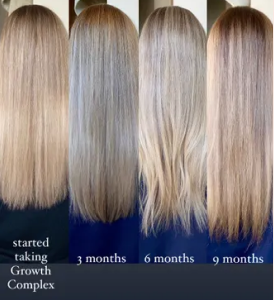
Zinc is one piece of a larger nutritional picture that includes iron, biotin, vitamin D, and protein intake, not a standalone fix. HAIRLOVE's Growth Complex includes zinc alongside Cynatine® HNS, biotin, and vitamin C as part of a broader formula built around the idea that hair loss is rarely caused by a single nutrient gap.


