



Rice water has been circulating on TikTok and YouTube for years as a miracle hair growth treatment, usually accompanied by footage of someone with floor-length hair attributed to the practice. The Yao women of Huangluo, China — whose village holds a Guinness World Record for longest average hair length — are frequently cited as cultural proof.
The tradition is real. The clinical evidence for hair growth is not what the content would lead you to believe. Here is where the research actually stands.
What Rice Water Contains
Rice water is the starchy liquid left after soaking or boiling rice. It contains small amounts of proteins and amino acids, traces of B vitamins (primarily B2), vitamin E, minor minerals including zinc and magnesium, and inositol, a carbohydrate shown to reduce surface friction on hair and improve combing ease.
On paper, this sounds promising. In practice, the question is whether topically applying these compounds in the dilute concentrations present in rice water produces measurable effects on hair growth. No published clinical study has yet answered that question positively.
What the Research Does and Doesn't Show
No clinical trial has demonstrated that rice water promotes hair growth or prevents hair loss in humans. This is the central claim being made, and it has no direct human trial evidence behind it.
What does have some evidence: rice bran. A 2022 systematic review published in the Journal of Drugs in Dermatology found that rice bran extract appears to increase expression of growth factors associated with the anagen phase, inhibit 5-alpha reductase, and reduce scalp inflammation in animal and in-vitro studies. One animal study found rice bran supercritical extract showed hair growth potential similar to 3% minoxidil.
These findings are for rice bran — the outer hull of the grain — in concentrated extract form. Not the dilute starchy water from rinsing unprocessed rice. The distinction matters enormously for what you'd actually experience.
What Rice Water Most Likely Does
- Temporarily reduces surface friction due to starch content, making hair feel smoother and easier to detangle
- May modestly improve shine by creating a light film on the hair shaft
- May reduce protein-induced breakage in damaged or porous hair — inositol in particular has evidence for reducing breakage after chemical treatment
- None of these effects grow new hair from the follicle. They are surface-level conditioning effects on existing hair
Why the Before-and-After Videos Mislead
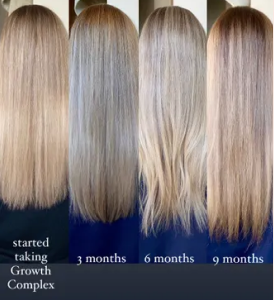
People who use rice water and report longer, thicker hair over several months are usually experiencing improved retention of existing length because of reduced breakage, or normal hair growth that would have occurred anyway. Neither is evidence that rice water stimulates follicles to produce more hair.
What Actually Grows Hair
- Minoxidil (topical or oral): FDA-approved for pattern hair loss with multiple clinical trials
- Finasteride/dutasteride: FDA-approved 5-alpha reductase inhibitors with documented evidence
- Nutritional support: zinc, selenium, biotin, and Cynatine HNS — a bioavailable keratin studied for hair strength and reduced shedding. HAIRLOVE's Women's Growth Complex is built around these evidence-based mechanisms
- Addressing nutritional deficiencies: iron, vitamin D, B12, and zinc deficiencies are among the most common and treatable causes of diffuse shedding
Should You Still Try Rice Water?
There is nothing wrong with trying it. It is inexpensive and unlikely to cause harm. If it makes your hair feel smoother, that is a legitimate conditioning benefit. Just be clear about what it is achieving — surface texture improvement, not follicle stimulation. If you're dealing with actual thinning, the 12 power ingredients for hair growth post covers what the evidence actually supports.


